


Listen to the article
FactCheckAfrica Launches Digital Democracy Suite to Boost Civic Engagement Ahead of 2027 Elections
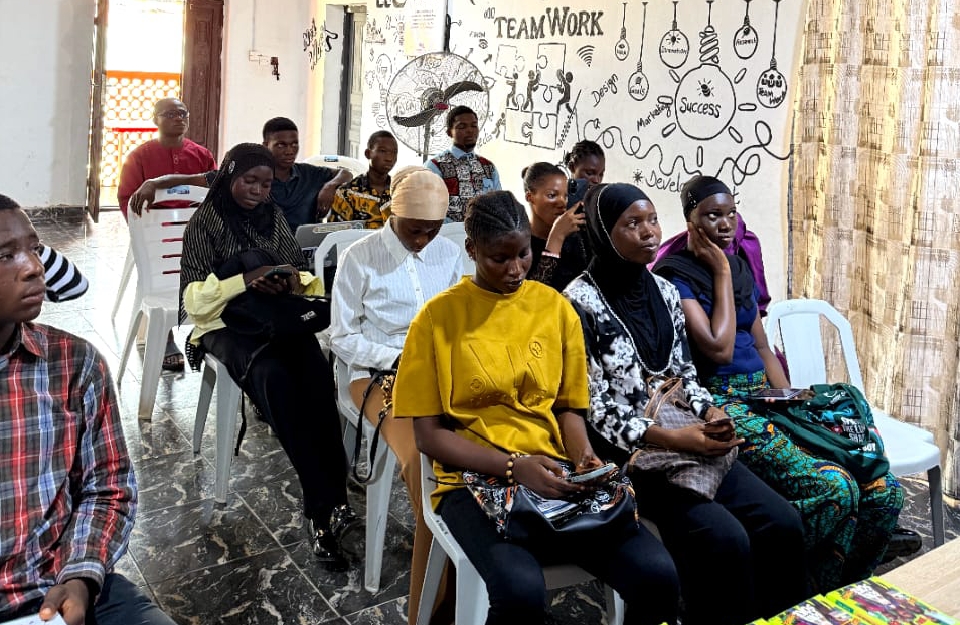
A new set of civic technology tools aimed at enhancing public accountability and democratic participation has been unveiled by FactCheckAfrica, a civic media and digital democracy organization. The initiative, dubbed the Digital Democracy Suite, was launched Tuesday at Oroki Hub in Osogbo, Osun state.
Developed under FactCheckAfrica’s Digital Democracy Lab initiative, the suite comprises three interconnected products designed to bridge the accountability gap between citizens and government institutions: KedereAI, GovQuest, and The Power Deck.
“For too long, accountability has been treated as a spectator sport in Nigeria, something that happens to citizens rather than something citizens do,” said Lukman Adeoti, project lead of the Digital Democracy Lab, during the launch. “The Digital Democracy Suite changes that.”
The tools aim to address a critical challenge in Nigeria’s democracy: the inaccessibility of governance information to ordinary citizens. Many Nigerians remain excluded from democratic processes because governance documents and public finance data are often too technical or difficult to access.
“Nigeria recently passed an Electoral Act. It is a document of democratic significance and the vast majority of Nigerian citizens have never read it,” Adeoti explained. “What we have done is take that Electoral Act, take the Nigerian Constitution, and break them down into knowledge that citizens can engage with directly.”
KedereAI, the suite’s flagship platform, employs artificial intelligence to track local government allocations, budgets, contracts, and infrastructure projects using official public records. The platform currently monitors approximately N2.8 trillion in federal allocations across Nigeria’s 774 local government areas while indexing more than 35,000 government contracts and mapping over 18,000 infrastructure projects nationwide.
“A citizen in Osogbo can ask KedereAI in plain words exactly how much their local government received from the Federation Account last month, which contractors were paid for local projects, and whether those projects were ever delivered,” Adeoti said.
Importantly, KedereAI was designed with Nigeria’s digital infrastructure limitations in mind, functioning on low-data mobile networks without requiring downloads or high-end smartphones.
The second component, GovQuest, takes a gamification approach to civic education, transforming the Nigerian Constitution, Electoral Act, and civic concepts into interactive learning experiences. The platform introduces users to key democratic concepts such as the social contract, vote buying, constituency projects, and the Freedom of Information Act through scenario-based games.
“Designed for a generation that learns by doing rather than by reading, GovQuest turns foundational democratic concepts into interactive scenarios and challenges that young Nigerians actually want to engage with,” Adeoti noted.
Recognizing that digital access remains a barrier for many Nigerians, FactCheckAfrica also developed The Power Deck, a physical set of 24 civic flashcards for schools, community workshops, and grassroots programs. Each card combines a governance concept with a “Power Move” – a practical civic action users can immediately implement in their communities.
“From identifying abandoned constituency projects to exercising the right to request government records under the FOI Act, The Power Deck transforms civic knowledge from passive awareness into active democratic participation,” Adeoti explained.
The suite’s development involved extensive community input, with more than 1,000 journalists, youth civic actors, students, and community leaders participating in workshops across six southwestern states: Ekiti, Lagos, Ogun, Ondo, Osun, and Oyo. This co-design process ensured the tools addressed real accountability challenges faced by Nigerians at the grassroots level.
The initiative comes at a critical time, as Nigeria prepares for the 2027 general elections amid growing concerns about misinformation, weak civic engagement, and limited government transparency. FactCheckAfrica highlighted that while trillions of naira are allocated annually to local governments across Nigeria, many citizens lack the tools or expertise to verify how these funds are spent or whether public projects are properly executed.
“We believe that access to accurate information about how government operates and how public funds are spent is not a technical matter. It is a democratic right,” Adeoti emphasized.
FactCheckAfrica announced plans to begin school and community activation programs across Osun, Oyo, and Ogun states in the coming weeks to introduce students and civic groups to the platforms. The Digital Democracy Lab received support from the Nigeria Youth Futures Fund alongside civic and philanthropic partners including the Ford Foundation and MacArthur Foundation.
Fact Checker
Verify the accuracy of this article using The Disinformation Commission analysis and real-time sources.

29 Comments
Anything that can increase public scrutiny of government activities and empower citizens to participate in democratic processes is a welcome development. FactCheckAfrica’s new civic tech suite appears to be a step in the right direction.
I’m curious to learn more about how the suite’s features were designed to address the specific challenges and needs of the Nigerian context. Effective civic tech requires deep local knowledge and engagement.
Anything that boosts civic engagement and government accountability in Nigeria is welcome. I hope FactCheckAfrica’s initiative can help bridge the information gap and empower more citizens to participate in the political process.
FactCheckAfrica’s new platform for AI accountability in governance is an intriguing development. I’m curious to see how it evolves and whether it can truly empower citizens to meaningfully engage with their government.
It’s great to see organizations like FactCheckAfrica working to enhance democratic participation through innovative civic tech. I hope this suite of tools gains widespread adoption and leads to meaningful change.
Kudos to FactCheckAfrica for launching these innovative civic tech tools. Empowering citizens with easy-to-use platforms to monitor government activities and participate in democratic processes is crucial for good governance.
I hope the Digital Democracy Suite gains traction and inspires similar initiatives across Africa. Strengthening public accountability is key to addressing corruption and improving public services.
Anything that can increase civic engagement and public oversight of government is a positive development. FactCheckAfrica’s Digital Democracy Suite seems well-designed to address critical challenges around information access and accountability.
I’m curious to see how the tools’ features and functionality will be tailored to the Nigerian context. Effective civic tech needs to meet the specific needs of local communities.
This new platform from FactCheckAfrica sounds like an interesting step towards greater transparency and civic engagement. Anything that empowers citizens to hold their government accountable is a positive development for democracy.
I agree. Providing accessible tools to access and understand governance information is crucial for meaningful public participation.
While the intentions behind this initiative are laudable, I have some reservations about relying too heavily on AI-powered tools for issues as complex and sensitive as government accountability. A balanced approach that also leverages human-driven efforts may be more effective.
That’s a fair point. Overreliance on AI in this context could lead to unintended consequences. A hybrid approach combining technological solutions and human expertise is likely the best way forward.
The launch of this Digital Democracy Suite is certainly a positive step, but the real test will be in its real-world implementation and impact. I’ll be curious to see how it’s received and utilized by Nigerian citizens.
Absolutely. Execution and adoption will be key to determining the platform’s effectiveness in strengthening democracy.
A platform focused on AI accountability in the context of governance is a timely and important initiative. I’m curious to learn more about the specific features and functionalities of the Digital Democracy Suite.
Same here. The details on how the different components (KedereAI, GovQuest, The Power Deck) work together to achieve the stated goals would be helpful to understand.
This is an important step toward making governance more transparent and accessible to Nigerian citizens. FactCheckAfrica’s Digital Democracy Suite seems well-designed to bridge the information gap between government and the public.
I look forward to seeing how the KedereAI, GovQuest, and Power Deck tools are received and utilized by Nigerian citizens. Civic engagement platforms like these have immense potential to drive democratic reforms.
Empowering citizens with greater access to governance information is crucial for strengthening democracy. FactCheckAfrica’s new platform seems like a step in the right direction, but the real challenge will be ensuring equitable and effective implementation.
As someone with a keen interest in civic technology and democracy, I’m eager to learn more about the specific features and functionalities of FactCheckAfrica’s Digital Democracy Suite. Bridging the information gap between citizens and government is crucial.
Digital tools that empower citizens to track government performance and hold officials accountable are much needed in many African countries. I hope FactCheckAfrica’s suite sees widespread adoption and has a meaningful impact ahead of the 2027 elections.
Initiatives like this can play an important role in strengthening democracy by making the political process more accessible and transparent to the general public.
This sounds like a promising initiative to improve civic engagement and government accountability in Nigeria. Providing citizens with user-friendly tools to access and understand governance information is a critical step toward more transparent and responsive democracy.
I’m curious to see how the KedereAI, GovQuest, and Power Deck tools will work in practice. Bridging the information gap between government and citizens is key for meaningful public participation.
While the goals of this platform seem admirable, I have some concerns about the potential for AI to be misused or to reinforce existing biases. Careful design and oversight will be crucial.
That’s a valid concern. The risks of AI in governance must be thoroughly addressed to ensure the tools truly serve the public interest.
While AI can play a role in improving accountability, I hope FactCheckAfrica will also focus on building human capacity and grassroots movements for civic engagement. Sustainable change often requires a multi-pronged approach.
That’s a fair point. A balance between technological solutions and community-driven initiatives is important for long-term impact.