


Listen to the article
In a striking moment that has Euphoria fans dissecting every frame, character Jules delivered an artwork so provocative it momentarily derailed both the narrative and viewer expectations during the show’s most recent episode.
What initially appeared as a catastrophic professional misstep has evolved into one of the season’s most nuanced and deliberately crafted scenes, revealing layers that weren’t immediately apparent.
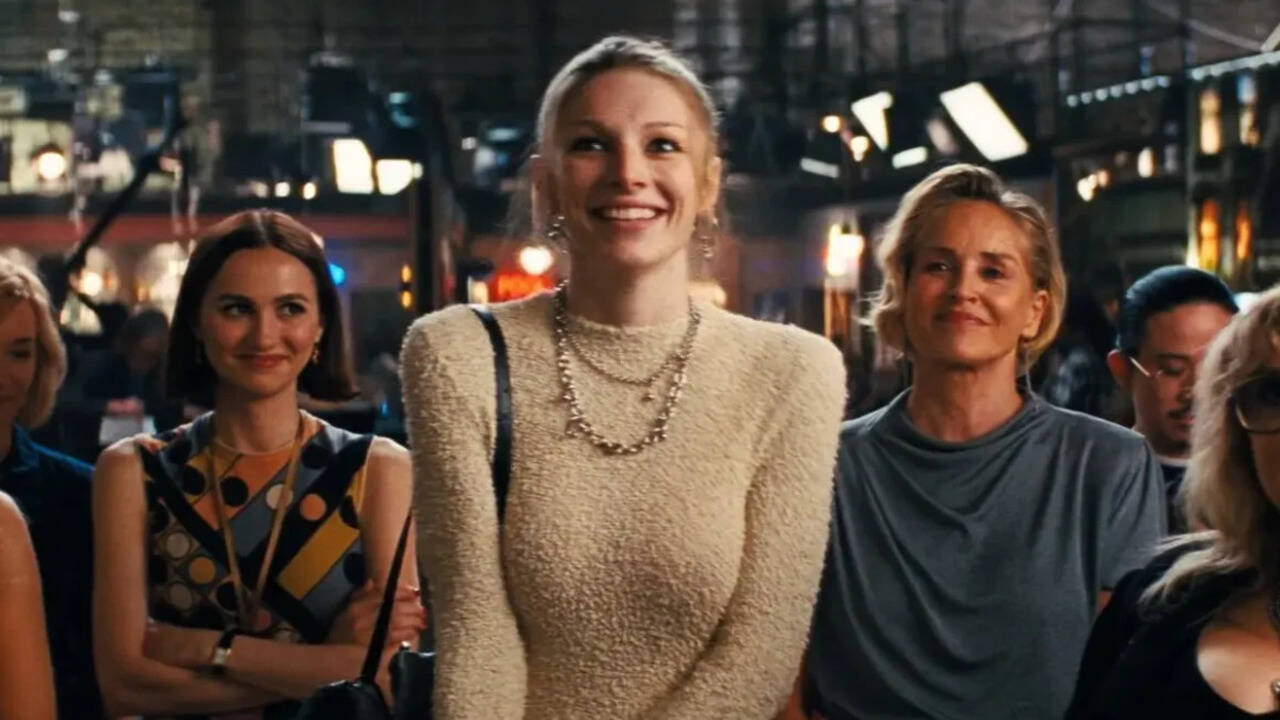
Episode four presented Jules with what should have been a career-defining opportunity – creating a commissioned piece for Lexi’s network show. With significant professional stakes and visibility on the line, Jules made a decision that left executives visibly uncomfortable and audiences at home equally surprised.
Rather than producing something conventionally appealing or aligned with typical broadcast standards, Jules unveiled a garden scene populated with nude figures. The conference room’s reaction was immediate and palpable – stunned silence followed by awkward exchanges that made it clear this was not the direction they had anticipated.
Art historians and attentive viewers quickly recognized that beneath the surface controversy lies significant artistic intention. The painting deliberately references Georges Seurat’s pointillist masterpiece “A Sunday Afternoon on the Island of La Grande Jatte,” a work celebrated for its serene depiction of leisure in late 19th-century Parisian society.
Jules’ interpretation maintains the structural composition and peaceful setting of the original but transforms it by removing what society deems “appropriate.” Her version strips away the veneer of propriety, replacing Victorian-era clothing and social constraints with unfiltered human forms – creating something that feels simultaneously familiar in structure yet radical in execution.
The artistic choice resonates particularly deeply when considered alongside Jules’ character journey throughout the series. Online communities have observed that the painting functions as visual metaphor rather than mere provocation, addressing how society accepts certain expressions of identity while rejecting others that challenge established norms.
“It perfectly encapsulates Jules’ entire struggle with acceptance,” wrote one viewer in an analysis that gained significant traction across social media platforms. “The painting shows bodies existing naturally in a space that traditionally only welcomed them when they conformed to specific expectations.”
This reading gains further credibility when examined through the lens of Jules’ established narrative arc, which has consistently explored themes of identity, perception, and societal acceptance. Her artwork becomes not just a creative expression but a manifestation of her worldview – one that refuses to conform to external expectations even when professional advancement hangs in the balance.
The network executives’ rejection of the piece consequently carries symbolic weight beyond simple creative differences. Their discomfort with the artwork mirrors broader societal reactions to expressions that challenge conventional boundaries, making their dismissal feel personal rather than purely professional.
Jules’ emotional response to this rejection has been noted by viewers as one of the season’s most authentic moments. Her reaction conveys not simply disappointment over professional criticism but the deeper wound of having her perspective – and by extension, aspects of her identity – deemed inappropriate for mainstream consumption.
The scene’s complexity extends to character dynamics as well, particularly in how Lexi navigates the uncomfortable situation. Several viewers have pointed out problematic elements in Lexi’s handling of the moment, especially her decision to explicitly connect Jules’ personal identity to her artistic choices in front of the network executives.
What initially registered as an awkward professional mishap has, through closer examination, revealed itself as one of the season’s most thematically rich sequences. The painting scene encapsulates central tensions of the show – authenticity versus acceptance, self-expression versus social conformity – while advancing character development in meaningful ways.
In refusing to dilute her artistic vision to secure professional approval, Jules’ character demonstrates a commitment to authenticity that transcends career advancement. This moment, initially read as failure, transforms into a powerful statement about remaining true to one’s perspective even when facing institutional rejection.
As one fan succinctly observed: “Jules didn’t misunderstand the assignment. She understood exactly what they wanted – and chose her truth instead.”
Fact Checker
Verify the accuracy of this article using The Disinformation Commission analysis and real-time sources.

16 Comments
Fascinating insight into the creative process behind that provocative painting on Euphoria. It seems the artist had a very deliberate vision, even if it caught the network by surprise. I’m curious to hear more about the deeper artistic intentions behind it.
Absolutely, the nuance and symbolism in that scene seem to be really compelling. I’m looking forward to learning more about the creative choices and what the artist was trying to convey.
As a viewer, I found the Euphoria painting scene to be a really interesting and thought-provoking moment. It’s clear the artist had a strong creative vision, even if it didn’t align with the network’s expectations. I’m curious to learn more about the symbolism and artistic commentary they were trying to convey through the provocative imagery.
Great point. The artist’s willingness to challenge the status quo and push boundaries is really admirable. I’m looking forward to seeing how this storyline unfolds and whether the deeper meaning behind the painting is further explored.
The Euphoria painting scene sounds like a really thought-provoking moment in the show. I’m impressed that the artist had such a clear and deliberate creative vision, even if it clashed with typical broadcast standards. I’m curious to learn more about the symbolism and artistic intentions behind the provocative imagery.
Absolutely, the artist’s defiant stance in the face of the network’s discomfort is really compelling. It will be fascinating to see how this storyline develops and whether the deeper meaning and significance of the painting is further explored.
Wow, that painting on Euphoria sounds like it really pushed the boundaries. I’m impressed that the artist had such a strong creative vision, even if it clashed with the network’s expectations. It makes me curious to learn more about the deeper meaning and symbolism behind the provocative imagery.
Agreed, the artist’s defiant stance in the face of the network’s discomfort is really intriguing. I’m looking forward to seeing how this storyline develops and whether the artist’s intentions are further explored.
As someone interested in art and media, I found the details about the Euphoria painting scene really fascinating. It’s impressive that the artist was able to maintain their creative vision, even when it challenged typical broadcast standards. I’d love to learn more about the symbolism and commentary they were trying to convey.
That’s a great point. The artist’s willingness to take a risk and create something bold and unconventional is really admirable, even if it made the network executives uneasy. It will be interesting to see how this storyline unfolds and whether the deeper meaning behind the painting is explored further.
As a fan of Euphoria, I was intrigued by that painting scene. It sounds like the artist had a clear artistic vision, even if it didn’t align with typical broadcast standards. I wonder what the deeper meaning or commentary was behind the nude figures in the garden setting.
That’s a great point. The choice of subject matter and style seems intentional, even if it made the network executives uncomfortable. It will be interesting to see how that scene and the artist’s intentions are explored further.
Wow, the Euphoria painting scene sounds like it really made an impact. I’m impressed that the artist had such a clear and deliberate creative vision, even if it clashed with typical broadcast standards. I’d love to learn more about the symbolism and artistic intentions behind the provocative imagery they chose to depict.
Absolutely, the artist’s defiant stance in the face of the network’s discomfort is really intriguing. It will be fascinating to see how this storyline develops and whether the deeper meaning and significance of the painting is further explored.
As someone who appreciates art and media, I found the details about the Euphoria painting scene really compelling. It’s admirable that the artist was able to maintain their creative vision, even when it challenged conventional broadcast standards. I’m curious to learn more about the symbolism and commentary they were trying to convey through the provocative imagery.
That’s a great point. The artist’s willingness to take risks and create something bold and unconventional is really impressive. I’m looking forward to seeing how this storyline unfolds and whether the deeper meaning and significance of the painting is explored further.