


Listen to the article
In the wake of the recent terror attack near Delhi’s Red Fort, Indian authorities have pledged swift justice against those responsible. Amid heightened tensions, misleading information has begun circulating online, including a video purportedly showing Pakistani military movements in response to potential Indian retaliation.
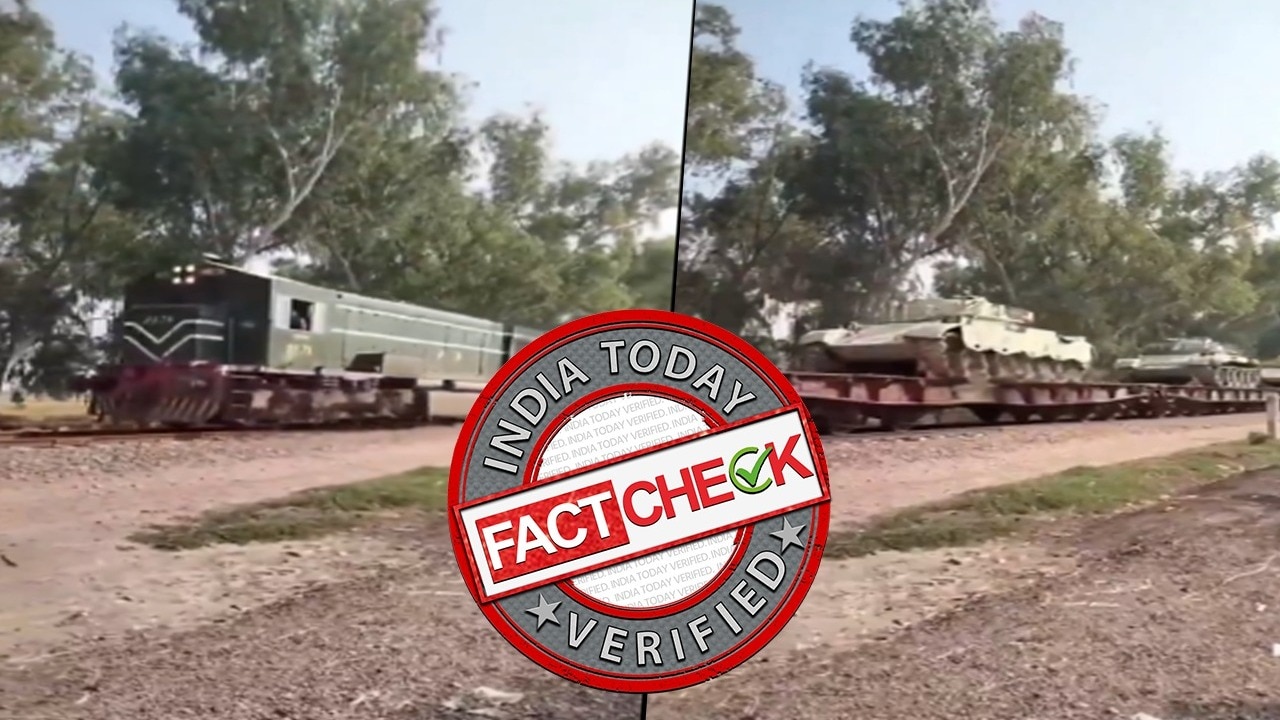
The five-second video clip, which shows a train transporting military tanks, has been widely shared on social media platforms with claims that it depicts the “Pakistan Army moving troops, arms and ammunition from Balochistan to the Indian border” out of fear of Indian retaliation following the Delhi blast.
However, a fact-check investigation has revealed that the video significantly predates the November 10 terror attack, having been in circulation since at least April of this year. The footage was initially shared on TikTok on April 26 by a user with the handle “mrbeast66,” whose profile contains content geotagged to Karachi, Pakistan.
The original TikTok post included hashtags such as “pak fooj zindabad” (Long live Pakistan Army) and “pakistan zindabad” (Long live Pakistan), suggesting the video does indeed show Pakistani military movements, though not related to the recent Delhi attack.
The timing of the original video’s appearance is noteworthy, as it was posted shortly after the Pahalgam terror attack in April. This period preceded Operation Sindoor in May, when India reportedly conducted retaliatory actions against Pakistan. This historical context suggests the footage may be connected to those earlier tensions rather than current events.
The circulation of such misleading content comes at a particularly sensitive time in Indo-Pakistani relations. According to recent reports, Pakistani-based terrorist organizations Jaish-e-Mohammad and Ansar Ghazwat-ul-Hind may be linked to the terror module apprehended in Faridabad on the morning of the Delhi attack.
This incident highlights the ongoing challenge of misinformation in conflict situations. False or misleading content can inflame tensions and complicate already delicate diplomatic and security situations between the neighboring nuclear powers.
Security analysts note that border movements and military repositioning are closely monitored by both nations through intelligence channels and satellite surveillance. Any significant troop movements would likely be detected through official channels rather than appearing first on social media.
The fact-checking process involved reverse image searching of screenshots from the video, which confirmed its earlier existence online. While the exact location of the train and its destination could not be determined with certainty, the digital trail clearly establishes that the footage is several months old.
Media literacy experts emphasize the importance of verifying information before sharing, particularly during times of heightened tensions. “Content that plays on existing fears can spread rapidly, especially when it seems to confirm pre-existing beliefs about potential conflicts,” said one expert who studies misinformation in South Asian geopolitics.
The Indian government has remained focused on its investigation into the Delhi attack, with security agencies working to establish the full network behind the incident. Officials have not commented on the misleading video circulation, maintaining their attention on the actual security situation.
As investigations into the Delhi attack continue, authorities urge citizens to rely on official sources for information about national security matters and to exercise caution when encountering unverified claims on social media platforms, particularly those that could heighten regional tensions.
Fact Checker
Verify the accuracy of this article using The Disinformation Commission analysis and real-time sources.

8 Comments
This highlights the importance of critical thinking when consuming online content, especially around sensitive geopolitical issues. Fact-checkers play a vital role in cutting through the noise and providing reliable information.
The details provided in the fact-check are quite thorough. It’s good to see the investigation tracing the video back to its original source and context. This level of scrutiny helps maintain public trust in reporting.
Absolutely. Identifying the original TikTok post and the user’s location was a key step in debunking the misleading claims. Rigorous fact-checking is essential for responsible journalism, especially during times of heightened tensions.
It’s concerning to see how quickly misinformation can spread, even on relatively innocuous videos. This fact-check serves as a good reminder to always verify claims, especially those related to sensitive topics or current events.
The video being unrelated to the Delhi attack is a helpful clarification. Viral content can be misleading, so it’s wise to approach such claims cautiously and look for authoritative sources to confirm the facts.
Agreed. The timing and geotagging details provided in the fact-check help establish the context here. Verifying the origin and timeline of this footage was important to prevent further propagation of misinformation.
Interesting to see fact-checking in action on this viral video. Separating truth from fiction is important, especially during heightened tensions. I wonder what other misinformation might be circulating related to this incident.
You raise a good point. In these situations, it’s crucial to verify claims before spreading them further online. Fact-checking helps maintain accountability and prevent the spread of false narratives.