


Listen to the article
Mamata Banerjee’s Misinterpreted Speech: Viral Clip Takes Election Rally Comment Out of Context
As West Bengal prepares for its upcoming Assembly elections scheduled for April 23 and 29, political tensions are mounting with campaigns reaching fever pitch across the state. In this charged atmosphere, a deceptively edited video of Chief Minister Mamata Banerjee has gone viral on social media platforms, creating confusion among voters.
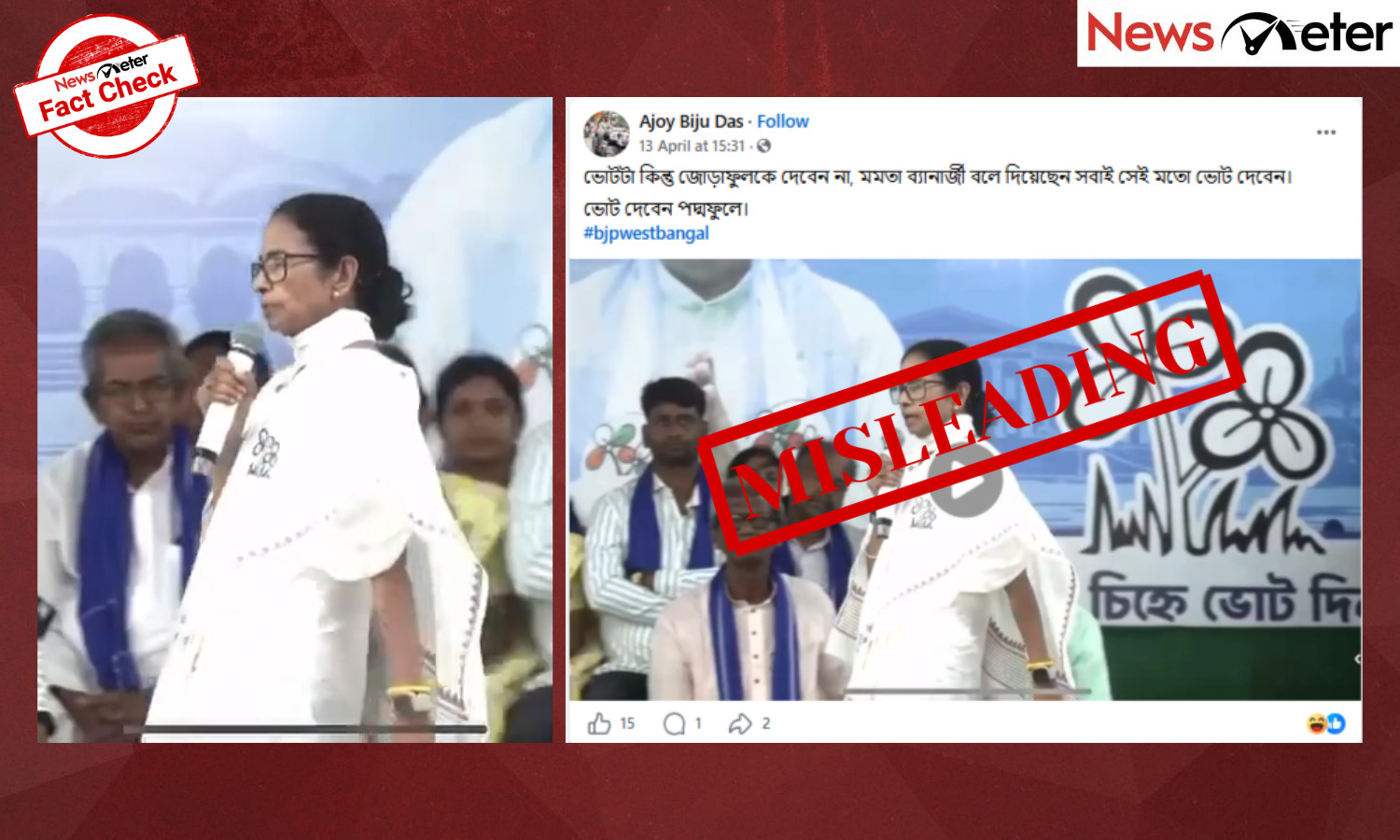
The misleading clip, lasting just five seconds, appears to show the Trinamool Congress (TMC) leader instructing supporters: “Give your vote to Trinamool, don’t give it to Joraphul” – referring to the party’s own flower symbol. The video has been widely shared by opposition supporters, particularly those aligned with the BJP, suggesting Banerjee had inadvertently told voters not to support her own party.
An investigation reveals the viral clip was selectively edited from a much longer speech delivered by Banerjee at a public rally in Chhatna, Bankura district on April 12. The original video, which runs for nearly 38 minutes, shows that immediately after making the statement, Banerjee recognized her verbal slip and promptly corrected herself.
“Sorry, vote for Joraphul but do not vote for the BJP’s symbol,” she clarified moments later in the full recording. “I’m withdrawing this. I’m asking you to delete this. Sometimes, while speaking and doing continuous meetings… vote in the morning and vote for Joraphul. Do not vote for any other parties except Trinamool Congress. I’m officially withdrawing this statement.”
The Chief Minister went further, directly addressing media representatives at the rally: “I’m requesting the media not to unnecessarily politicize this because I’m asking you not to. If not, then I’ll have to file a case against you and I don’t want that. I request you with folded hands, do not play this game. I do not know anyone except Trinamool.”
Despite her immediate correction, the truncated clip gained significant traction online. Several BJP leaders shared the edited version on their social media accounts, as did the official West Bengal BJP handle on X (formerly Twitter), amplifying its reach and potential impact.
The incident highlights the increasingly contentious nature of political campaigns in West Bengal, where the ruling TMC faces a strong challenge from the BJP. Both parties have been holding large rallies across the state in an effort to secure voter support ahead of the critical elections.
Political analysts note that such selective editing of campaign speeches has become a common tactic in today’s digital-first election landscape. The practice can potentially influence voter perception, especially when shared widely through social media channels where context is often lost.
West Bengal’s elections are particularly significant in India’s political landscape, with the eastern state representing one of the few regions where the BJP has been struggling to establish dominance against strong regional parties. The TMC, under Banerjee’s leadership since 2011, has maintained control of the state through multiple election cycles.
As the election date approaches, voter awareness regarding misleading content becomes increasingly important. Fact-checking organizations have emphasized the need for citizens to verify information from multiple sources before accepting claims made in brief social media clips, particularly those emerging during heated campaign periods.
The incident serves as a reminder of how easily political speeches can be manipulated in the digital age, and the importance of seeking complete context before drawing conclusions from viral content during election seasons.
Fact Checker
Verify the accuracy of this article using The Disinformation Commission analysis and real-time sources.

7 Comments
Interesting that a brief video clip could be so misleading. It’s important to look at the full context of a politician’s statements to really understand their meaning. Selective editing can distort the truth.
It’s troubling to see how a few seconds of edited video can create such confusion and division. Maintaining transparency and accuracy in political discourse should be a top priority.
This highlights the need to be cautious about viral videos and social media posts, especially during election seasons when tensions are high. Fact-checking is crucial to separate truth from misinformation.
Agreed. It’s worrying how easily misinformation can spread these days. We should all strive to be more critical consumers of online content.
The original 38-minute speech provides important context that the brief viral clip omits. It’s a good reminder to seek out primary sources and not blindly believe sensational snippets.
Absolutely. Responsible reporting and fact-checking are essential to maintain the integrity of the democratic process. Voters deserve the full story, not distortions.
This story underscores the power of social media to amplify misinformation, even when it’s easily debunked. We must all be vigilant about verifying claims, especially during elections.