


Listen to the article
The Indian government issued a stern warning Monday about a digitally manipulated video of Army Chief General Upendra Dwivedi circulating on social media, labeling it a foreign disinformation campaign designed to undermine trust in the country’s armed forces.
According to the Press Information Bureau’s (PIB) fact-check unit, the fabricated clip, which has been shared widely by Pakistan-based propaganda accounts, falsely attributes statements to General Dwivedi claiming that the government plans to remove 50 percent of “non-caste Hindu soldiers” from the Army by 2028 as part of an alleged “saffronization” effort.
“Neither the Chief of the Army Staff, General Upendra Dwivedi, has made ANY such statement, nor has the Government of India passed any such orders,” the PIB stated categorically. Officials described the video as an AI-generated forgery specifically created to sow division and distrust among the Indian public.
The government’s swift response comes amid growing concerns about the use of artificial intelligence to create convincing deepfakes for political and military disinformation campaigns. Security analysts have warned that such sophisticated forgeries represent an evolving threat to national security communications, particularly in regions with existing geopolitical tensions like South Asia.
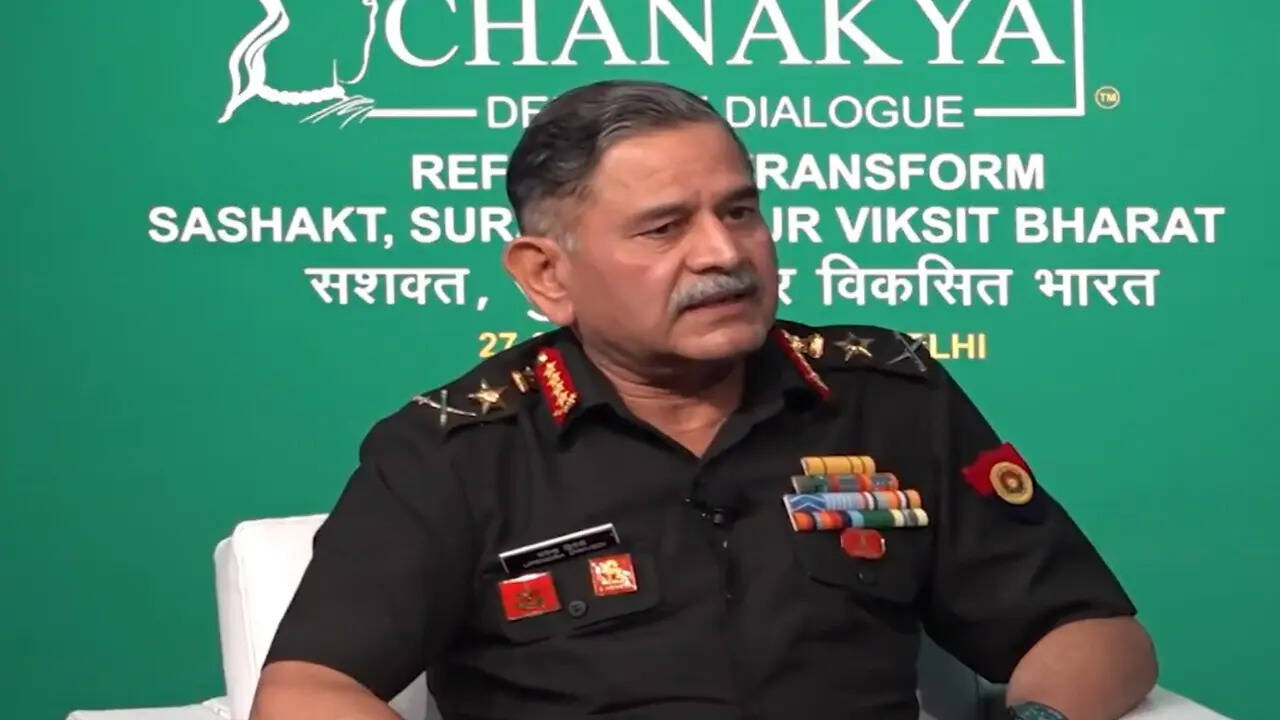
To counter the false narrative, authorities released the authentic, unedited footage from General Dwivedi’s recent appearance at the Chanakya Defence Dialogue curtain-raiser event in New Delhi. In the genuine video, the Army Chief discusses entirely different topics, focusing on India’s defense preparedness and the security situation in Jammu and Kashmir.
“Deterrence works when there is political will, trust in military power, and the required military capability. As of now, we have all three,” General Dwivedi actually stated in his authentic remarks, making no reference to any changes in the Army’s recruitment or composition policies.
The Army Chief also provided an assessment of the improving security situation in Jammu and Kashmir following the 2019 revocation of Article 370, noting that “many positive changes” had occurred. He cited statistics showing significant reductions in terrorist activity and militant recruitment in the region.
“Twenty-one terrorists have been killed, 61% of them from Pakistan. There has been just one recruitment – and even he was caught,” General Dwivedi stated in the authentic footage.
The circulation of the doctored video appears to be part of a coordinated effort to exploit India’s social and religious dynamics by suggesting discriminatory practices within one of the country’s most respected institutions. The Indian Army has historically maintained a secular ethos with soldiers from diverse religious and cultural backgrounds serving together.
Military experts note that India’s armed forces have rigorous recruitment standards based on physical fitness, educational qualifications and other merit-based criteria, not religious or caste considerations. Any suggestion of policy changes along religious lines would represent a fundamental departure from the military’s long-established traditions.
The PIB has urged the public to exercise critical thinking when consuming content online, particularly videos making extraordinary claims about sensitive national security matters. “Stay alert. Do not forward content of this type,” the agency advised citizens, emphasizing the importance of verifying information through official channels.
This incident highlights the growing challenge faced by governments worldwide in combating increasingly sophisticated digital misinformation, particularly when it targets military leadership or seeks to inflame communal tensions. Social media platforms continue to struggle with the rapid detection and removal of such manipulated content before it reaches a wide audience.
Fact Checker
Verify the accuracy of this article using The Disinformation Commission analysis and real-time sources.

14 Comments
This is a concerning example of how deepfake technology can be weaponized for disinformation campaigns. I commend the Indian government for their swift response in calling out this fabricated video and warning the public. Combating such threats requires ongoing vigilance.
This is clearly a malicious deepfake video intended to sow discord and distrust. I’m glad the Indian government quickly debunked this false claim and warned the public. We must be vigilant against such sophisticated disinformation campaigns.
Deepfake technology is becoming a serious problem, enabling the creation of very convincing but completely false content. I’m glad the Indian government was able to quickly call out this specific instance as a foreign disinformation campaign.
Spreading falsehoods about the military through manipulated videos is a serious issue that can undermine public trust and national security. I’m glad the Indian government was able to quickly identify and debunk this particular instance of foreign disinformation.
Absolutely. Maintaining confidence in key institutions like the military is critical, and we must be vigilant against attempts to erode that through sophisticated forgeries.
Fabricated videos like this one are a growing threat, as AI-generated deepfakes become increasingly sophisticated. The Indian government’s prompt response to identify and refute this claim is an important step in combating such malicious disinformation campaigns.
It’s concerning to see how advanced AI-generated forgeries have become. This video is a clear attempt to sow division and undermine confidence in the Indian military. Kudos to the government for their prompt fact-checking and public warning.
Absolutely. The proliferation of deepfakes is a major threat that requires a multi-pronged response from both government and tech companies. Vigilance and transparency will be key to combating this issue.
Attempts to undermine public trust in the military through manipulated videos are deeply concerning. I’m glad the Indian government took swift action to call out this specific instance as a foreign disinformation campaign. We must remain vigilant against such threats.
It’s concerning to see how advanced deepfake technology has become, enabling the creation of highly convincing yet completely false content. This video is a clear example of how it can be used for political and military disinformation. Kudos to the government for their swift action.
I’m glad the Indian government moved quickly to identify and refute this fabricated video. Spreading false claims about the military is a serious matter that can have real consequences. We need to remain vigilant against such disinformation campaigns.
Trying to undermine public faith in the military through fabricated videos is a dangerous tactic. I appreciate the government’s swift action to identify and refute this disinformation. We need more transparency and fact-checking to counter these threats.
Agreed. Maintaining trust in institutions like the military is critical for national security. Spreading falsehoods to erode that trust is reckless and harmful.
Deepfake technology is a real challenge, as it enables the creation of highly convincing yet completely false content. This case is a clear example of how it can be weaponized for political and military disinformation. The government’s swift action is commendable.