


Listen to the article
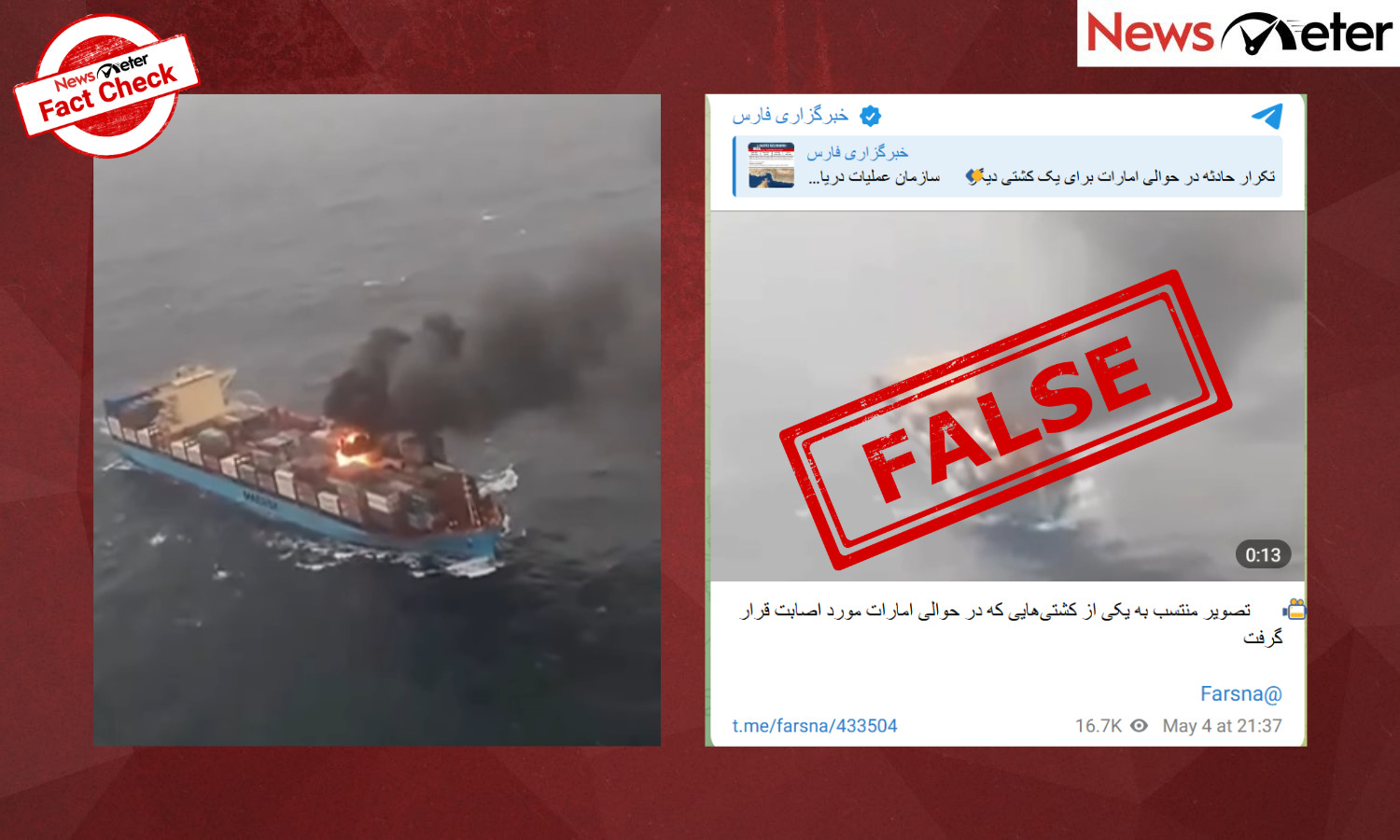
In a misleading move, Iran’s Fars News Agency circulated a video on May 4, falsely claiming it showed a vessel on fire near the United Arab Emirates. The footage, which depicts a cargo ship engulfed in flames, actually shows an incident that occurred months later off India’s western coast, according to a detailed investigation.
The video emerged during heightened tensions in the region. Just hours before, the US military had announced it sank six Iranian small boats allegedly attempting to interfere with commercial shipping in the Strait of Hormuz. This confrontation came after a temporary reprieve in hostilities, as a ceasefire between US-Israel and Iran had been announced on April 7 following 39 days of conflict. Iran has denied US reports about the small boat incident.
Against this backdrop, Fars News Agency shared the video alongside announcements from the United Kingdom Maritime Trade Operations (UKMTO) about vessels catching fire. The footage was specifically connected to a UKMTO report concerning an incident 14 nautical miles west of Mina Saqr, with Fars captioning it: “Image attributed to one of the ships hit near the UAE.”
However, a comprehensive fact check reveals the footage shows an entirely different maritime incident. The video actually depicts a Maersk container vessel that caught fire approximately 102 nautical miles southwest of Goa, India, on July 19, 2024 – more than two months after Fars claimed the incident occurred near UAE waters.
Multiple Indian news outlets, including Mirror Now, Republic Bharat, Karwar Plus Konkani, and The Times of India, published the same footage with accurate reporting about the Goa incident. The extended versions of the clip clearly show “Maersk” written on the vessel’s side, identifying it as belonging to the global container logistics company that operates one of the world’s largest shipping fleets.
According to reports from prominent Indian news sources including NDTV and Hindustan Times, the merchant vessel was traveling from Mundra, Gujarat, to Colombo, Sri Lanka, when the fire broke out. The vessel was carrying International Maritime Dangerous Goods (IMDG) cargo, adding significant risk to the situation.
Despite challenging conditions including rough seas and inclement weather, an Indian Coast Guard ship responded to the emergency and conducted firefighting operations. The dramatic footage of these efforts is what Fars News Agency misappropriated for its misleading claim.
This incident highlights the ongoing information warfare that often accompanies physical conflicts in geopolitical hotspots. The Strait of Hormuz remains a critical chokepoint for global oil shipments, and tensions there have significant implications for energy markets and international shipping. Approximately 20% of the world’s oil passes through the strait, making security incidents in the region particularly concerning for global commerce.
The misattribution of the video also underscores the challenges in verifying information during times of conflict, when various actors may repurpose unrelated content to support particular narratives about ongoing events.
Through reverse image searches, extended video analysis, and cross-referencing with multiple news sources, it’s clear that the Fars News Agency’s claim was false, as the footage has no connection to any maritime incident near UAE waters on May 4.
Fact Checker
Verify the accuracy of this article using The Disinformation Commission analysis and real-time sources.

8 Comments
This case underscores the importance of rigorous journalism and the need to be cautious about relying on unverified claims, especially during geopolitical tensions. Fact-checking is crucial.
Agreed. Responsible reporting that avoids sensationalism and focuses on verifiable facts is essential to maintain public trust and prevent escalation of conflicts.
While regional tensions are concerning, the dissemination of misleading information is counterproductive and can further inflame the situation. Reliable, fact-based reporting is key.
It’s concerning to see misinformation being spread, especially during a time of heightened regional tensions. Fact-checking is crucial to prevent the spread of false narratives.
Agreed. Verifying information sources and timestamps is important to avoid contributing to the problem. Responsible journalism is key in these situations.
The misattribution of this video footage is troubling. Thorough fact-checking and source verification should be standard practice to prevent the spread of disinformation.
This incident highlights the need for greater transparency and accountability when it comes to reporting on regional security issues. Unsubstantiated claims can easily escalate tensions.
Absolutely. It’s concerning to see state media outlets spreading misinformation. Fact-based, objective reporting is vital to provide the public with accurate information.