


Listen to the article
Iran did not strike a U.S. warship in a recent attack, as falsely claimed in a viral social media post that has spread misleading information about military engagements between the two nations.
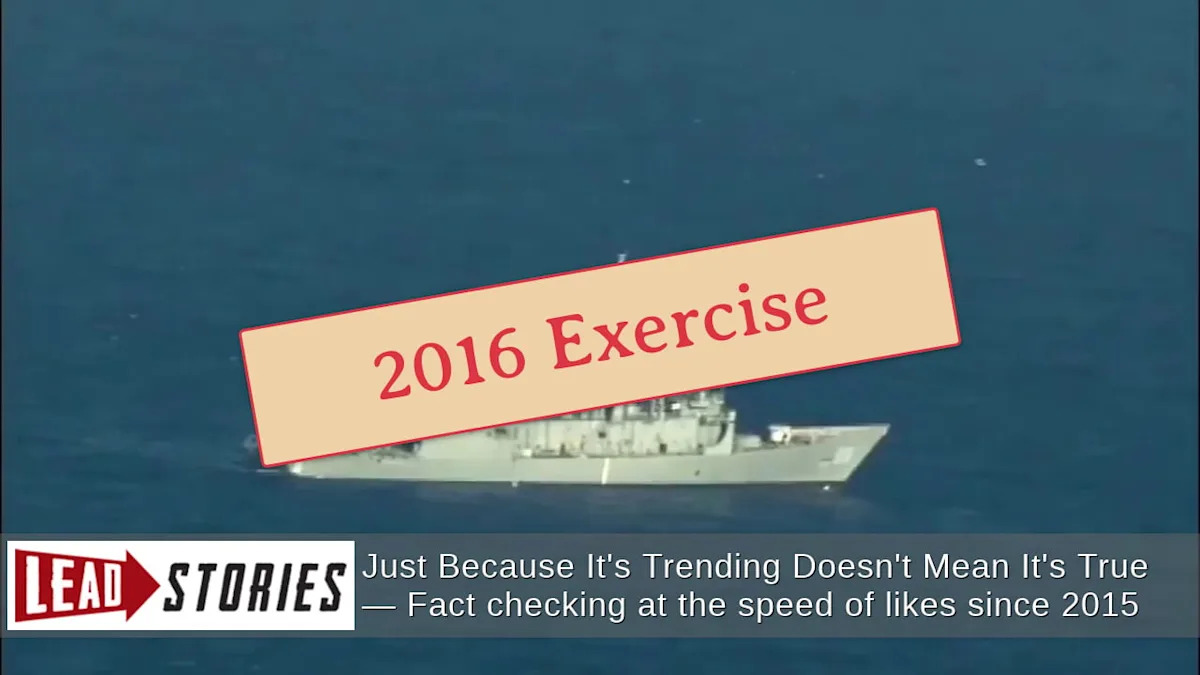
A video circulating on social media platform X falsely claimed to show “two Iranian missiles” striking “multiple U.S. military ships or frigates near Jask Island” in what was described as “a first direct strike on U.S. forces.” The post, shared by the account @rkmtimes on May 4, included footage of a warship being struck by missiles.
Maritime security experts and military analysts have confirmed the video actually shows a controlled U.S. Navy sinking exercise from 2016, not a recent Iranian attack. The ship in the footage is the decommissioned USS Thach (FFG-43), an Oliver Hazard Perry-class frigate that was deliberately targeted during the biennial Rim of the Pacific (RIMPAC) multinational naval exercises.
“This is classic misinformation using repurposed footage,” said Commander John Sanders, a retired U.S. Navy officer and maritime security consultant. “The video shows a controlled military exercise from years ago, not current hostilities between Iran and the United States.”
The USS Thach, which served in the U.S. Navy for nearly 30 years before being decommissioned in 2013, was used as a target vessel during RIMPAC 2016. These exercises, held biennially in the waters surrounding Hawaii, are the world’s largest international maritime warfare exercises and involve forces from numerous allied nations.
During the 2016 exercise, the decommissioned frigate was subjected to bombardment from missiles, torpedoes, and bombs as part of what the military calls a “sink exercise” (SINKEX). Such exercises provide valuable data on weapons effectiveness and ship vulnerability, while also offering realistic training opportunities for participating forces.
The multinational nature of the exercise was evident in the coordinated strikes from U.S., South Korean, and Australian forces that participated in sinking the vessel. After absorbing multiple hits, the USS Thach eventually sank in deep waters in the Pacific Ocean, approximately 55 nautical miles north of Kauai, Hawaii.
This is not the first time that footage from military exercises has been misrepresented as evidence of actual combat. Military footage is frequently repurposed with false captions during periods of international tension, particularly involving countries like Iran and the United States, which have experienced strained relations for decades.
“The spread of such misinformation can be particularly dangerous during times of heightened international tension,” noted Dr. Emily Richards, an expert in information warfare at the International Institute for Strategic Studies. “False claims about military strikes can influence public opinion, pressure political leaders, and potentially escalate conflicts.”
The false post gained significant traction on social media platforms, accumulating thousands of shares and comments before fact-checkers identified the misleading nature of the claim. Social media companies have implemented various measures to combat the spread of misinformation, though challenges remain in quickly identifying and labeling false content.
Tensions between Iran and the United States have fluctuated over the years, with occasional naval encounters in the Persian Gulf region. However, direct military strikes between the two nations would represent a significant escalation that would likely prompt immediate international response and extensive media coverage from verified news sources.
Experts advise social media users to verify information through multiple reputable sources before sharing potentially inflammatory content, particularly regarding alleged military actions that could have significant geopolitical implications.
“The deliberate spread of false information about military engagements is a serious matter,” said Sanders. “In today’s interconnected world, misinformation can spread faster than the truth and potentially contribute to real-world consequences.”
Fact Checker
Verify the accuracy of this article using The Disinformation Commission analysis and real-time sources.

18 Comments
Thanks for the detailed breakdown. It’s concerning how easily misleading narratives can spread on social media. Fact-checking is crucial to counter the proliferation of false claims, especially around sensitive topics like military operations.
Absolutely. Social media amplifies the spread of misinformation, so it’s critical that reputable sources thoroughly investigate and debunk these kinds of false claims.
It’s concerning to see how quickly misinformation can spread, even when it involves serious matters like military engagements. I’m glad to see this issue thoroughly investigated and the facts clearly laid out. Rigorous fact-checking is vital to counter the proliferation of false narratives online.
Well said. The ability to quickly debunk claims using specific details is a testament to the expertise of the analysts involved. Their work helps maintain public trust and prevent the amplification of dangerous misinformation.
This is an important fact check that highlights the need for caution when encountering dramatic claims, especially those involving military action. It’s crucial to verify the source and context of information before sharing it, to avoid inadvertently spreading misinformation. Kudos to the experts for their diligent investigation.
I agree completely. Disinformation around military matters can have serious consequences, so it’s essential that reputable sources provide thorough, fact-based reporting to counter false narratives. This kind of rigorous fact-checking is commendable.
Thanks for taking the time to debunk this false claim. It’s disturbing how easily old footage can be repurposed to create misleading narratives, especially when they involve military conflicts. Fact-checking is vital to maintaining public trust and preventing the spread of disinformation.
Absolutely. Verifying the source and context of information, especially for sensitive topics, is crucial. Kudos to the experts for their diligence in correctly identifying this as an old training exercise, not a recent attack.
The level of detail in this fact check is impressive. Identifying the specific ship and exercise from 2016 helps to clearly debunk the false claims. It’s concerning how quickly misinformation can spread on social media, so rigorous fact-checking is essential to counter the proliferation of disinformation.
Well said. Providing that level of specificity and context is key to effectively refuting misleading narratives. Kudos to the analysts and experts for their thorough investigation and clear explanation.
I appreciate the thorough investigation into this misleading video. Differentiating between actual military engagements and controlled exercises is crucial, especially when tensions are high. Fact-checking is an important service that helps counter the spread of disinformation.
Well said. Responsible reporting and diligent fact-checking are essential to upholding journalistic integrity and preventing the amplification of false narratives, particularly around sensitive geopolitical issues.
This is a good reminder to be cautious of viral social media posts, even if they seem compelling. Verifying the source and context of videos and claims is essential to avoid falling for disinformation. Kudos to the experts for setting the record straight.
Agreed. It’s worrying how quickly misinformation can spread online. Rigorous fact-checking is the best way to combat the problem and maintain public trust in reporting.
This is a great example of the importance of verifying information, especially when it comes to sensitive military-related claims. Fact-checking is crucial to prevent the spread of false narratives that could potentially escalate tensions or cause harm. Thanks for taking the time to thoroughly investigate and debunk this misleading video.
Agreed. Responsible reporting that distinguishes between real military actions and controlled exercises is essential, especially in volatile geopolitical situations. Kudos to the experts for their diligence in setting the record straight.
Interesting fact check. It’s important to verify claims, especially those involving military action, to avoid the spread of misinformation. The video showing a controlled sinking exercise from 2016 is a good example of how old footage can be misleadingly repurposed.
Agreed, disinformation about military engagements can be dangerous. Kudos to the experts and analysts who correctly identified this as an old training exercise, not an actual attack.