


Listen to the article
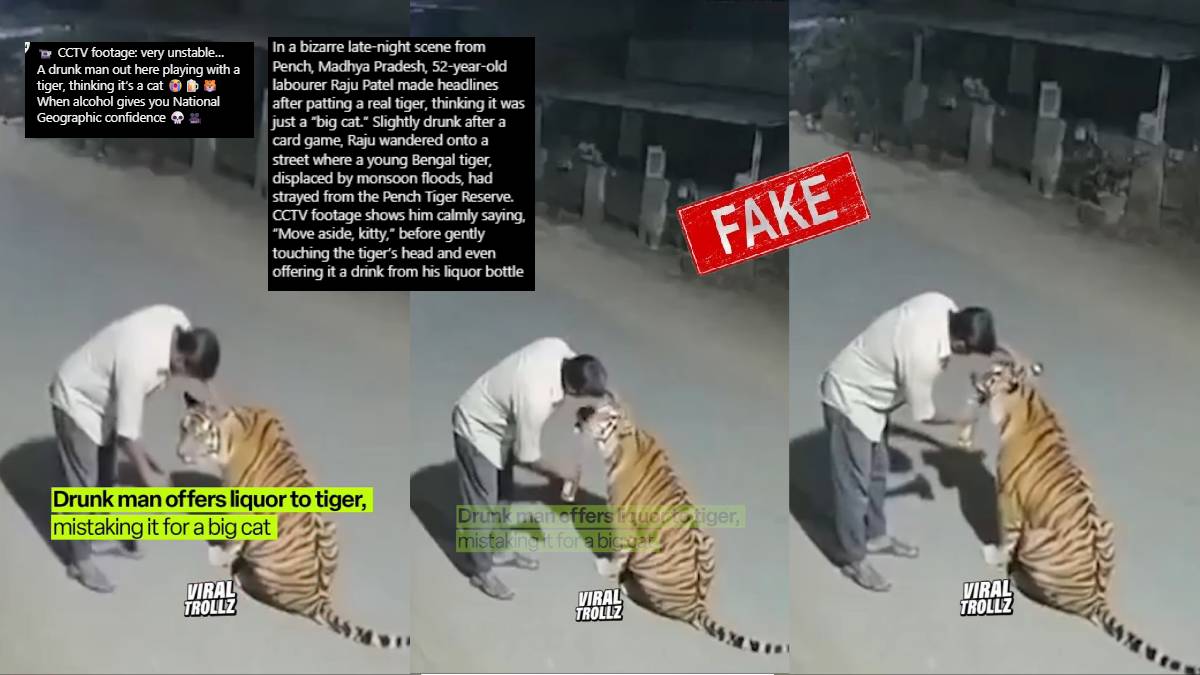
A viral video purportedly showing a man petting a tiger on an Indian street has been confirmed as an AI-generated fake, according to an investigation by Lighthouse Journalism. The widely shared clip, which claimed to show an intoxicated man offering alcohol to a tiger in Pench National Park in Madhya Pradesh, has been circulating across multiple social media platforms with misleading captions.
The deceptive footage quickly gained traction online, with numerous users sharing it alongside detailed but fabricated narratives. Instagram user “viraltrollz” was among those who promoted the video with specific claims about the incident occurring in Pench, a protected area known for its significant tiger population.
When researchers at Lighthouse Journalism began investigating the video’s authenticity, they employed a combination of reverse image searches and keyword analysis. Their findings led them to posts explicitly identifying the footage as AI-generated, contradicting the viral narrative.
Further verification came through an article published by Hindi news outlet “The Sootr,” which had contacted Rajneesh Singh, the Deputy Director of Pench Tiger Reserve, to verify the video’s authenticity. Singh categorically dismissed the footage as fake, stating that it was not filmed within the reserve.
“Such a situation cannot arise with a tiger unless the tiger is domesticated,” Singh told the publication, adding that the video was likely entirely fabricated, possibly through artificial intelligence technology.
To confirm these suspicions, Lighthouse Journalism subjected keyframes from the video to analysis using specialized AI-detection tools. The platform wasitai.com indicated “some chance that this image, or parts of it, was created by AI.” A second evaluation using HIVE moderation.com provided additional evidence supporting the conclusion that the footage was artificially generated.
This incident highlights the growing challenge of distinguishing between authentic and AI-generated content on social media platforms. As AI technology becomes more sophisticated, manipulated or entirely fabricated videos can appear increasingly realistic, making critical assessment of viral content essential.
Wildlife experts note that encounters between wild tigers and humans rarely unfold as depicted in the video. Tigers are naturally wary of human presence, and their behavior in the video contradicts known patterns of wild tiger conduct. Conservation authorities emphasize that genuine footage of such an unusual encounter would likely trigger immediate investigation by forest officials.
The circulation of such misleading content poses potential risks for wildlife conservation efforts by potentially normalizing dangerous behavior around wild animals. It could also undermine public trust in legitimate wildlife documentation and reporting.
Social media platforms continue to grapple with the rapid spread of AI-generated content that can be difficult to identify without specialized tools. As this case demonstrates, even content making specific claims about identifiable locations can be entirely fabricated, underscoring the importance of verification before sharing sensational wildlife footage.
The Pench Tiger Reserve, spanning parts of Madhya Pradesh and Maharashtra, remains one of India’s premier protected areas for Bengal tigers and continues its conservation work without any confirmed incidents matching the fabricated scenario depicted in the viral video.
Fact Checker
Verify the accuracy of this article using The Disinformation Commission analysis and real-time sources.

12 Comments
It’s impressive that the researchers were able to identify this as an AI-generated fake so quickly. Their approach of using reverse image searches and keyword analysis sounds like an effective way to fact-check viral content. This is an important lesson in media literacy.
Absolutely. With the increasing sophistication of AI, we all need to be more discerning consumers of online content. Fact-checking skills are becoming essential to navigate the digital landscape responsibly.
Fascinating that this video was AI-generated. It’s a good reminder to always verify the authenticity of viral content, even when it seems plausible. I’m curious to learn more about the techniques used to identify this as an AI creation.
Yes, it’s important to be cautious about such videos, especially ones that seem too sensational or unbelievable. The use of reverse image searches and keyword analysis sounds like a smart approach to verify the footage.
This is a concerning development, but I’m glad the Lighthouse Journalism team was able to expose the truth behind this viral video. It’s a good reminder that we should always view sensational or unbelievable content with a critical eye, no matter how convincing it may seem.
You’re right. AI-generated fakes can be extremely difficult to spot, so it’s crucial that we rely on reputable sources and verified information, rather than just going by what’s trending on social media.
This is a sobering example of how AI can be used to spread misinformation. I commend the Lighthouse Journalism team for their diligent investigation and for setting the record straight. It’s a good reminder that we should always approach viral content with a healthy dose of skepticism.
Agreed. The ability of AI to generate such convincing fake footage is both impressive and concerning. We need to continue developing robust verification techniques to stay ahead of these types of deceptions.
This is a concerning example of how AI can be used to spread misinformation. The video seemed quite realistic, so I’m glad the Lighthouse Journalism team was able to debunk it. It’s a good wake-up call to be extra vigilant about the content we consume online.
Agreed. The ability of AI to generate convincing fake footage is definitely worrying. We need to stay informed about the latest verification techniques to combat the spread of this type of disinformation.
The ability of AI to create such realistic-looking footage is truly remarkable, but it’s also concerning. I’m glad the researchers took the time to thoroughly investigate this video and uncover the truth. It’s a valuable lesson in the importance of critical thinking and fact-checking.
Definitely. As AI technology continues to advance, we’ll likely see more and more of these types of deceptive videos circulating online. It’s up to all of us to stay vigilant and rely on trusted sources to separate fact from fiction.