


Listen to the article
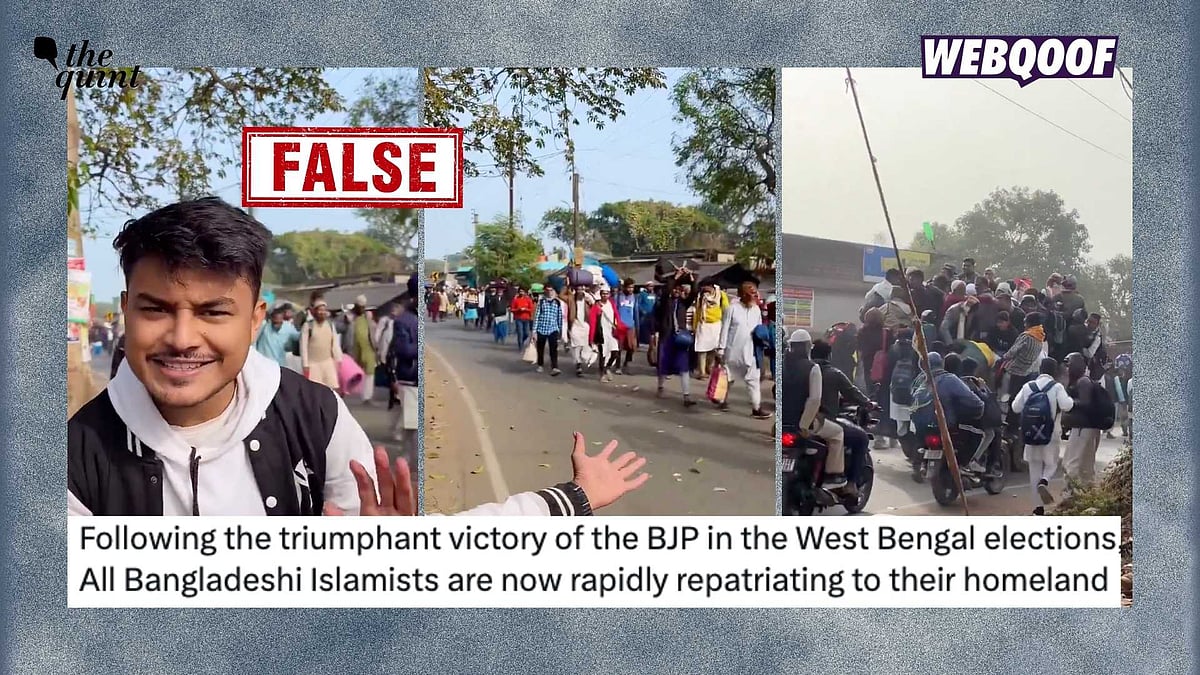
A video circulating widely on social media purportedly showing Bangladeshi immigrants fleeing West Bengal following the Bharatiya Janata Party’s recent electoral victory has been debunked as false.
The footage, which depicts a large crowd of people walking while carrying luggage, has gained significant traction online, accumulating nearly 260,000 views on a post by X user @erbmjha alone. Similar claims have appeared across multiple social media platforms in recent days.
Fact-checkers have determined that the viral video does not show Bangladeshi immigrants leaving West Bengal in response to BJP’s electoral performance. The footage has been taken out of context and repurposed to support a politically charged narrative in the aftermath of India’s recent elections.
The dissemination of this false claim comes amid heightened political tensions in West Bengal, a state that shares a 2,217-kilometer border with Bangladesh and has long been at the center of immigration debates in Indian politics. The BJP has frequently campaigned on promises to address what it describes as illegal immigration from Bangladesh, making such claims particularly resonant with certain segments of its support base.
Immigration from Bangladesh to India, particularly to border states like West Bengal, Assam, and Tripura, has been a contentious political issue for decades. The partition of Bengal in 1947 and the Bangladesh Liberation War in 1971 led to significant population movements across the border, with economic factors continuing to drive migration in subsequent years.
Social media platforms have increasingly become battlegrounds for political narratives in India, with misleading videos and images often going viral during and after election periods. Digital literacy experts point to the rapid spread of this particular video as an example of how easily misinformation can proliferate in politically charged environments.
The viral nature of the false claim underscores the challenge facing both social media companies and fact-checking organizations in combating misinformation in real-time. While platforms have implemented various measures to flag potentially misleading content, the speed at which such material spreads often outpaces verification efforts.
Political analysts note that immigration-related claims tend to gain particular traction during electoral transitions, as they play into existing anxieties and political narratives. The timing of this viral video, coming on the heels of election results, appears calculated to reinforce certain political viewpoints regardless of factual accuracy.
The Border Security Force (BSF), which guards India’s border with Bangladesh, has not reported any unusual movement of people following the recent elections. Official channels have not acknowledged any mass exodus as suggested by the viral video.
Demographic experts point out that population movements between Bangladesh and India are complex phenomena influenced by economic opportunities, family connections, and changing political landscapes on both sides of the border. Simple narratives suggesting immediate mass movements in response to election results typically fail to capture this complexity.
This incident highlights the ongoing challenge of information verification in the digital age. Media literacy advocates recommend that viewers approach such politically charged content with skepticism, seeking confirmation from multiple reliable sources before accepting or sharing claims, particularly those involving sensitive topics like immigration.
As election results continue to be processed and political realignments take shape across India, fact-checkers anticipate additional waves of misleading content targeted at various regional and national audiences, making vigilance and critical media consumption increasingly important.
Fact Checker
Verify the accuracy of this article using The Disinformation Commission analysis and real-time sources.

8 Comments
I appreciate the diligence of the fact-checkers in investigating this claim and providing clarity. Maintaining objectivity and accuracy in reporting, even on sensitive political topics, is essential for a well-informed public discourse. Fact-checking plays a vital role in combating the spread of misinformation.
While the video may have initially seemed convincing, I’m glad the fact-checkers were able to determine that it was taken out of context and did not accurately represent the situation. Maintaining a critical eye and verifying claims is crucial, especially on social media.
It’s disappointing to see this kind of misinformation spreading, but I’m glad the facts have been established. Responsible journalism and fact-checking are essential to counter the rising tide of disinformation, particularly around issues like immigration that can be politically charged.
I appreciate the diligence of the fact-checkers in investigating this claim. Distinguishing truth from fiction is critical, especially when it comes to sensitive political topics that can inflame tensions. Maintaining impartiality and focusing on the facts is the best way forward.
This video seems to have been intentionally taken out of context to serve a particular political narrative. It’s important to be cautious about unverified claims, especially when they align with certain agendas. Fact-checking is essential to cut through the noise and identify the truth.
The sharing of unverified footage and the propagation of politically charged narratives around immigration issues are worrying trends. I hope this fact-check helps to dispel the misinformation and encourages more responsible reporting and social media practices.
It’s concerning to see misinformation like this spreading online. I’m glad fact-checkers were able to debunk the false claim about Bangladeshi immigrants fleeing West Bengal. Maintaining accuracy and objectivity in reporting is crucial, especially on sensitive political topics.
This fact-check is a good reminder of the importance of scrutinizing claims, especially those that align with particular political narratives. I hope it encourages more people to approach online content with a discerning eye and to rely on verified information from reputable sources.