


Listen to the article
Fake Trump “Vatican Files” Post Circulates on Social Media, Investigation Reveals
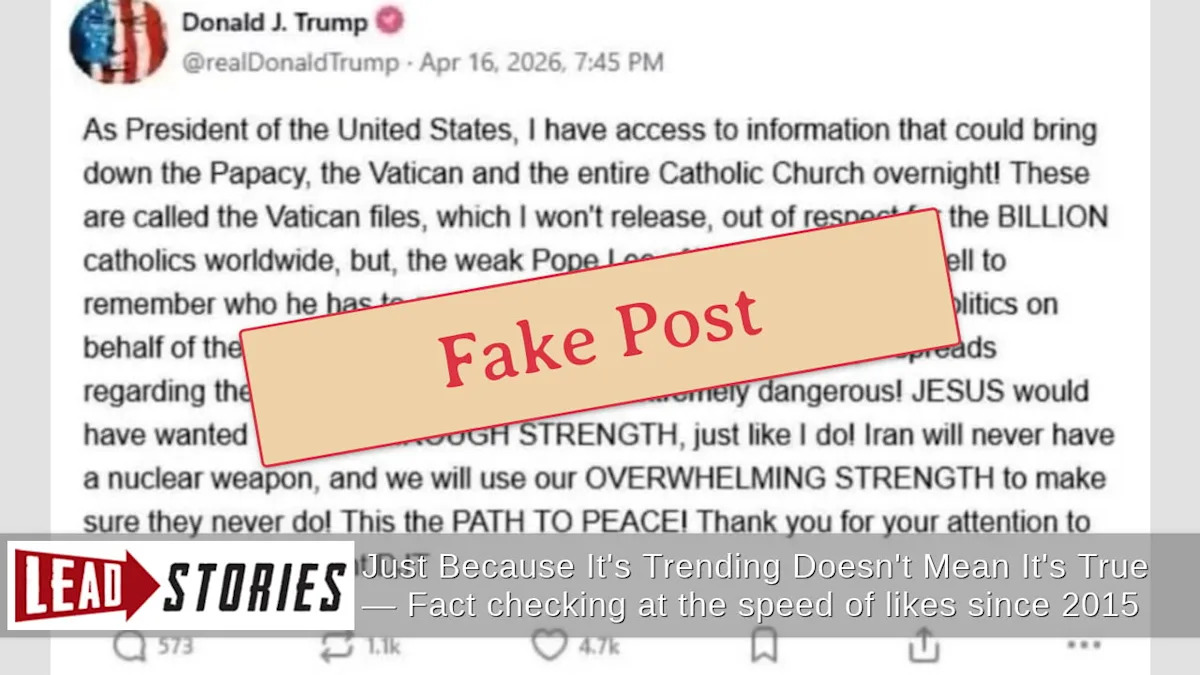
A fabricated post purportedly from Donald Trump’s Truth Social account claiming access to secret “Vatican files” is making rounds on social media, an investigation has found. The counterfeit message, which never appeared on Trump’s official account, falsely depicts the former president threatening that he could “bring down the Papacy, the Vatican and the entire Catholic Church overnight.”
The fabricated screenshot first gained traction after being shared on X (formerly Twitter) by user @PrincessBravato on April 19. The post included harsh criticism of Trump, accusing him of hypocrisy for allegedly threatening the Pope while refusing to release files related to Jeffrey Epstein.
In the doctored image, a message dated April 16 appears to come from Trump’s verified Truth Social account. The fabricated post contains inflammatory statements about a “weak Pope Leo” and warns the pontiff against “interfering in politics on behalf of the Terrorist Regime of Iran.” It also makes claims about Jesus wanting “peace through strength” and contains assertions about preventing Iran from obtaining nuclear weapons.
A thorough review of Trump’s Truth Social account reveals no such post was ever published on April 16 or any surrounding dates. Furthermore, comprehensive searches through Google News archives for terms like “Vatican files” in connection with Trump yield no credible reporting of such a message ever being posted or subsequently deleted.
This fabrication appears to be part of a troubling trend of manipulated content circulating on social media platforms. Just days before this incident, fact-checking organization AFP debunked another fake Trump post dated April 15, which contained different but similarly inflammatory remarks about the Pope, falsely connecting him to former President Obama and claiming Trump had ordered his attorney Todd Blanche to investigate the Catholic Church.
The creation and distribution of such fabricated content highlights growing concerns about misinformation in the digital age. Social media platforms continue to struggle with effectively identifying and limiting the spread of manipulated content, particularly when it involves high-profile political figures.
Digital literacy experts warn that such fabrications often exploit existing political tensions and religious sensitivities to generate engagement and reactions. The believability of these posts is sometimes enhanced by mimicking the writing style and formatting of genuine posts from the impersonated account.
The Catholic Church, with its global influence and approximately 1.3 billion adherents worldwide, represents a significant religious and cultural institution. False claims about threats against it can potentially inflame tensions between religious communities and political factions.
Fact-checkers recommend that social media users verify information through official accounts and credible news sources before sharing potentially inflammatory content. Digital forensics tools can also help identify manipulated images, though these resources aren’t always accessible to average users.
As election cycles approach in various countries, including the United States, experts anticipate an increase in manipulated content targeting high-profile political figures. This incident serves as a reminder of the importance of critical evaluation of political content encountered online, particularly explosive claims that lack verification from reliable sources.
For those concerned about digital misinformation, media literacy organizations recommend checking dates, examining source credibility, and cross-referencing information with established news outlets before accepting or sharing provocative political content on social platforms.
Fact Checker
Verify the accuracy of this article using The Disinformation Commission analysis and real-time sources.

14 Comments
It’s troubling to see how easily fabricated content can gain traction, even when it involves such an inflammatory and unsubstantiated claim. Rigorous fact-checking is essential to maintain trust in our information ecosystem.
Absolutely. The proliferation of misinformation online is a serious problem that requires a multi-pronged approach, including education, media literacy, and dedicated fact-checking efforts.
Hmm, I’m not surprised to see this kind of doctored screenshot making the rounds. It’s concerning how easily misleading content can gain traction on social media these days.
You’re right, it’s a serious issue. We need to be vigilant and rely on credible sources when it comes to information, especially related to political figures and institutions.
This story serves as a reminder to always double-check the authenticity of online content, no matter the source. Fabricated posts can quickly spread and cause real harm if left unchecked.
Absolutely. Fact-checking and media literacy are essential skills in the digital age. It’s important we all do our part to combat the spread of misinformation.
I appreciate the detailed investigation into this fabricated post. It’s critical that we address the proliferation of disinformation, as it can undermine public trust and discourse.
Well said. Maintaining the integrity of information and public dialogue should be a top priority, especially when it involves high-profile figures and sensitive topics.
While I’m not surprised to see this kind of content online, I’m glad the Disinformation Commission is taking it seriously and working to fact-check the claims. Combating the spread of misinformation is crucial.
Agreed. Fact-checking initiatives like this play a vital role in ensuring the public has access to accurate information, particularly on sensitive political and social issues.
This investigation highlights the importance of verifying the authenticity of online content, especially when it comes to high-profile political figures. Fact-checking is crucial to prevent the spread of harmful misinformation.
Well said. We must remain vigilant and rely on credible, fact-based sources to ensure we have a clear and accurate understanding of events and claims, particularly in the digital age.
This appears to be a case of misinformation and fabricated content being spread on social media. It’s important to verify the accuracy of claims, especially those involving high-profile figures, before sharing them widely.
Agreed. Fact-checking is crucial to combat the spread of false information online. I hope this investigation helps set the record straight.