


Listen to the article
Trump Visit to Philippines Rumors Debunked Following US-Iran Ceasefire
Unfounded claims circulating on social media suggesting that U.S. President Donald Trump plans to visit the Philippines following a recent U.S.-Iran ceasefire have been confirmed to be false, according to fact-checkers.
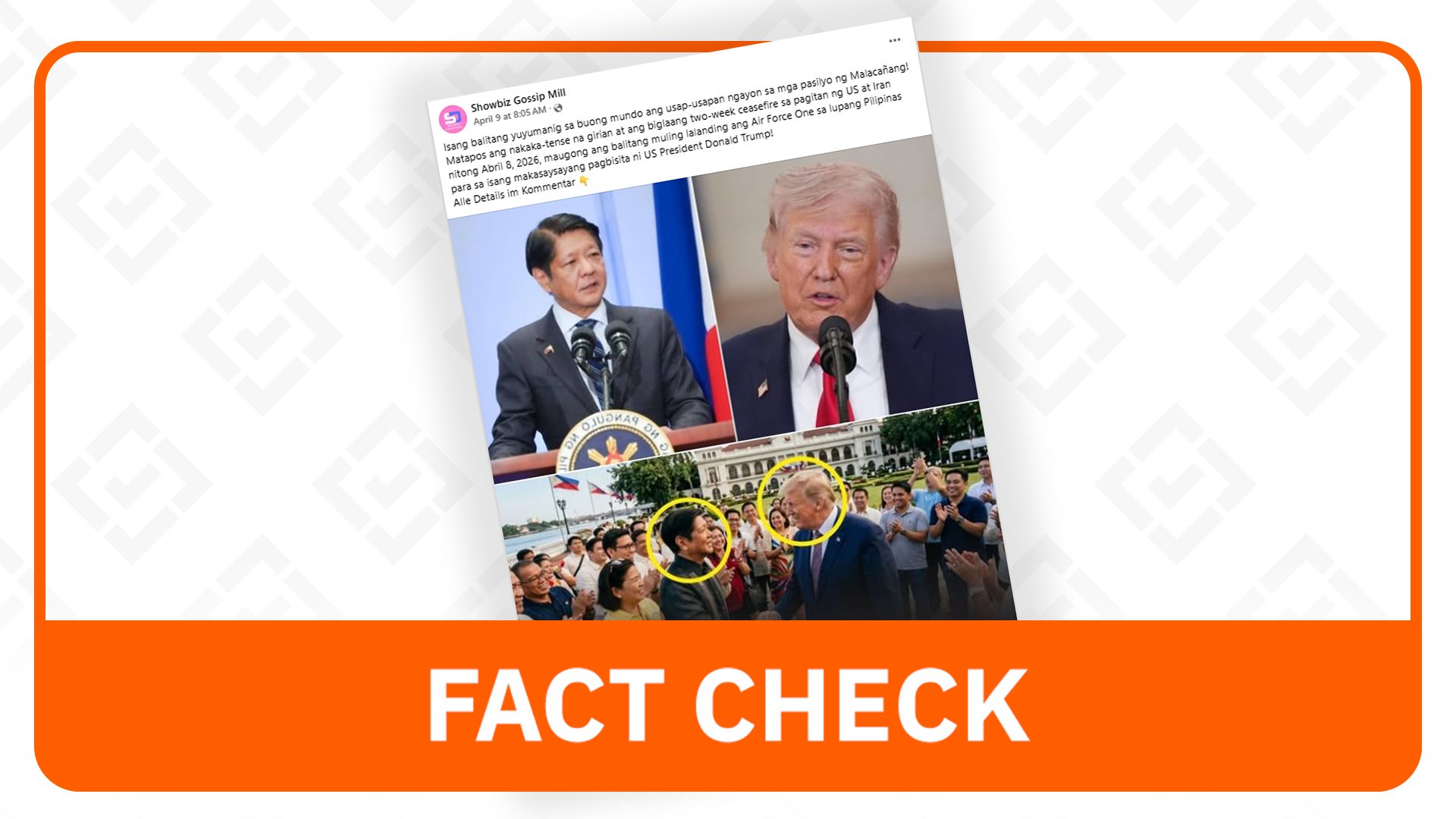
The rumors gained traction on Facebook when a page posing as a news outlet with over 51,000 followers published a post claiming that Trump would make a “historic visit” to the Philippines aboard Air Force One. The viral post, which garnered hundreds of likes and dozens of shares, suggested this development was directly connected to the two-week ceasefire between the United States and Iran announced on April 7, 2026.
“A widely discussed claim is circulating in Malacañang corridors that the recent two-week US-Iran ceasefire has triggered a major geopolitical development, including speculation that US President Donald Trump will soon arrive in the Philippines for a historic visit aboard Air Force One,” the misleading post stated in Filipino.
Fact-checkers have confirmed that no official announcements or plans for such a visit exist. Neither the White House nor the Philippine government has issued any statements regarding a potential presidential visit. No credible news sources have reported on any connection between the ceasefire agreement and diplomatic plans involving the Philippines.
The false claim appears to have capitalized on recent diplomatic developments in the Middle East, specifically the temporary halt to the 40-day period of escalating U.S.-Israeli strikes on Iran that had significantly heightened regional tensions. Under the ceasefire agreement, the United States suspended military operations against Iran for 14 days, while Iran agreed to pause retaliatory actions. Israel also announced a parallel suspension of attacks during this period.
Iran’s acceptance of the truce came with the condition that all attacks cease first, and included an agreement to coordinate the reopening of the Strait of Hormuz, a critical global shipping route essential to international commerce and energy supplies.
Further complicating the regional picture, a separate 10-day ceasefire between Israel and Lebanon took effect on April 16, though Lebanese reports later indicated continued Israeli shelling in parts of southern Lebanon shortly after implementation.
Adding to the deceptive nature of the claim, analysis using Hive Moderation technology revealed that an image purporting to show Philippine President Marcos and Trump shaking hands was likely AI-generated, with a 61.1% probability of being synthetic content. Technical analysis suggested contributions from multiple generative AI models.
The false information appears to have resonated with some Filipino social media users who expressed enthusiasm about potential increased job opportunities resulting from Trump’s supposed visit. Comment sections revealed numerous messages welcoming and congratulating the U.S. President on his “upcoming” arrival.
This incident highlights ongoing concerns about misinformation spreading through social media channels, particularly those posing as legitimate news sources. Digital literacy experts continue to emphasize the importance of verifying information through multiple reliable sources before accepting or sharing claims about significant diplomatic developments.
Trump reportedly stated that the U.S. and Iran may hold meetings in the near future, noting that Washington and Tehran were “very close” to reaching a deal that could help resolve aspects of the ongoing conflict, but made no mention of Philippine diplomatic engagements or travel plans.
As tensions in the Middle East continue to evolve, fact-checkers urge heightened vigilance against misleading claims that may exploit complex international situations for engagement or political purposes.
Fact Checker
Verify the accuracy of this article using The Disinformation Commission analysis and real-time sources.

12 Comments
It’s concerning to see how quickly misinformation can spread on social media, even about something as specific as a presidential visit. Kudos to the fact-checkers for setting the record straight.
Yes, the speed at which unverified claims can go viral is alarming. We must all be vigilant in scrutinizing information, especially around important geopolitical developments.
It’s concerning to see how quickly misinformation can spread, even around something as specific as a potential presidential visit. Kudos to the fact-checkers for setting the record straight.
Agreed. Verifying information from reliable sources is essential in this age of rapid information sharing, where unsubstantiated claims can quickly gain traction.
This highlights the importance of having reliable news sources and fact-checking mechanisms to combat the circulation of false information online. It’s a crucial step in maintaining transparency.
Absolutely. Fact-checking is an essential part of responsible journalism and helps ensure the public has access to accurate, well-substantiated information.
Interesting to see the fact-checking around the rumored Trump visit to the Philippines. It’s important to verify claims, especially on social media, before spreading them further.
Absolutely. Fact-checking is critical to combat the spread of misinformation these days.
Good to see the media and fact-checkers quickly addressing these false claims about a Trump visit. Transparency is key, especially around high-profile political figures.
Agreed. Verifying information from credible sources is the best way to counter the proliferation of rumors and unsubstantiated stories.
The debunking of these rumors about a Trump visit to the Philippines is a good reminder to be cautious of unverified claims, especially those related to high-profile political figures and geopolitical events.
Yes, it’s crucial that we all take the time to verify information from credible sources before sharing or believing it, especially on social media platforms.