


Listen to the article
False Claims of Putin Criticizing Muslim Leaders Over Iran and Palestine Spread on Social Media
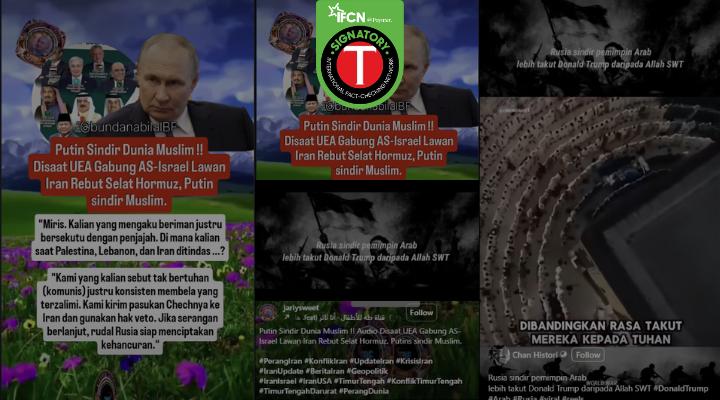
A viral social media post falsely attributed statements to Russian President Vladimir Putin about Muslim leaders’ stance on Iran and Palestine, according to Tempo’s fact-checking investigation. The claims, which began circulating on Instagram and Facebook on April 12, 2026, have no basis in official statements or credible news sources.
The misleading post featured a photograph of Putin alongside text claiming he criticized the United Arab Emirates and other Muslim nations for aligning with the United States and Israel against Iran. The alleged quote read: “It’s heartbreaking. You who claim to be believers are actually allying yourselves with the occupiers. Where were you when Palestine, Lebanon, and Iran were being oppressed?”
Tempo’s Fact Check Team conducted a thorough investigation by reviewing official statements and news reports from credible international sources between March 1 and April 12, 2026. Their research revealed no evidence of Putin making such remarks regarding Muslim leaders’ positions on the Iran-U.S. conflict.
In fact, diplomatic records show Putin’s recent interactions with Muslim leaders have been cordial. On March 11, 2026, Putin called UAE President Mohammed bin Zayed Al Nahyan to wish him a happy 65th birthday and discuss bilateral relations. During this conversation, reported by TRT and Anadolu Agency, Putin praised the strategic partnership between Moscow and Abu Dhabi and expressed satisfaction with their developing relationship across multiple sectors.
Similarly, Putin engaged in diplomatic discussions with Saudi Crown Prince Mohammed bin Salman on April 2, 2026. The two leaders called for an immediate end to hostilities in the Middle East and emphasized the need for diplomatic solutions that respect all parties’ legitimate interests. Their conversation also focused on coordination within the OPEC+ framework, highlighting the critical roles that Russia and Saudi Arabia play in stabilizing global oil markets.
Radityo Dharmaputra, Head of the Center for European and Eurasian Studies at Airlangga University, confirmed to Tempo that Putin had made no statements criticizing Muslim or Arab leaders regarding their positions on the Iran-Palestine situation. “There are no such statements from Putin,” Dharmaputra told reporters on April 29, 2026.
The circulation of this misinformation comes at a sensitive time for Middle Eastern diplomacy, as tensions continue to simmer between Iran and Western powers. False attributions to world leaders can potentially inflame regional tensions and complicate diplomatic efforts.
This incident highlights the persistent challenge of misinformation on social media platforms, where unverified claims can rapidly spread without proper attribution or context. Users are encouraged to verify information through multiple credible sources before sharing content, especially when it involves purported statements from global leaders on sensitive geopolitical issues.
Based on their comprehensive verification process, Tempo has definitively concluded that the claim about Putin criticizing Muslim leaders over their stance on Iran and Palestine is false. The fabricated statement appears designed to create division and misrepresent Russia’s diplomatic position in the complex geopolitical landscape of the Middle East.
Fact Checker
Verify the accuracy of this article using The Disinformation Commission analysis and real-time sources.

10 Comments
While the alleged Putin quote may have resonated with some, it’s good to see it was thoroughly debunked. Fact-checking is crucial in an era of widespread misinformation, especially when it involves sensitive international and political issues.
This fact check serves as a reminder to be cautious of unverified claims, even when they align with our own views or perceptions. It’s encouraging to see the diligence of the fact-checking team in uncovering the truth behind this viral social media post.
Agreed. Maintaining a critical eye and relying on credible sources is key to navigating the complex information landscape we find ourselves in today.
This highlights the need for caution when it comes to social media claims, even about geopolitical topics. It’s valuable that the fact-checkers took the time to review official statements and credible news sources to determine the truth behind this viral post.
Absolutely. Verifying the authenticity of quotes and statements, especially from high-profile figures, is essential to maintain trust in the information we consume online.
Interesting fact check. It’s important to verify claims, especially those attributed to high-profile figures like Putin. Social media can spread misinformation quickly, so it’s good to see credible sources investigate these viral posts.
Agreed. Fact-checking is crucial in today’s digital landscape to combat the spread of false narratives. It’s reassuring to see thorough investigations into these kinds of social media claims.
This fact check highlights the importance of verifying the authenticity of online claims, even when they seem to align with our own beliefs or perceptions. It’s reassuring to see the diligent efforts of the fact-checking team to uncover the truth behind this viral post.
Absolutely. In today’s digital landscape, it’s crucial that we approach information with a critical eye and rely on credible sources to separate fact from fiction.
The detailed investigation into this viral claim is commendable. It’s important that we don’t hastily accept or spread information, especially when it involves high-profile political figures. Fact-checking is a vital process to uphold journalistic integrity.