


Listen to the article
UAE President’s Name Found in Epstein Files, but Viral Photo Is Manipulated
In the wake of the U.S. Department of Justice’s release of approximately three million pages of documents related to Jeffrey Epstein, social media has been flooded with claims connecting various world leaders to the disgraced financier. One such claim involving UAE President Mohammed bin Zayed Al Nahyan requires closer scrutiny.
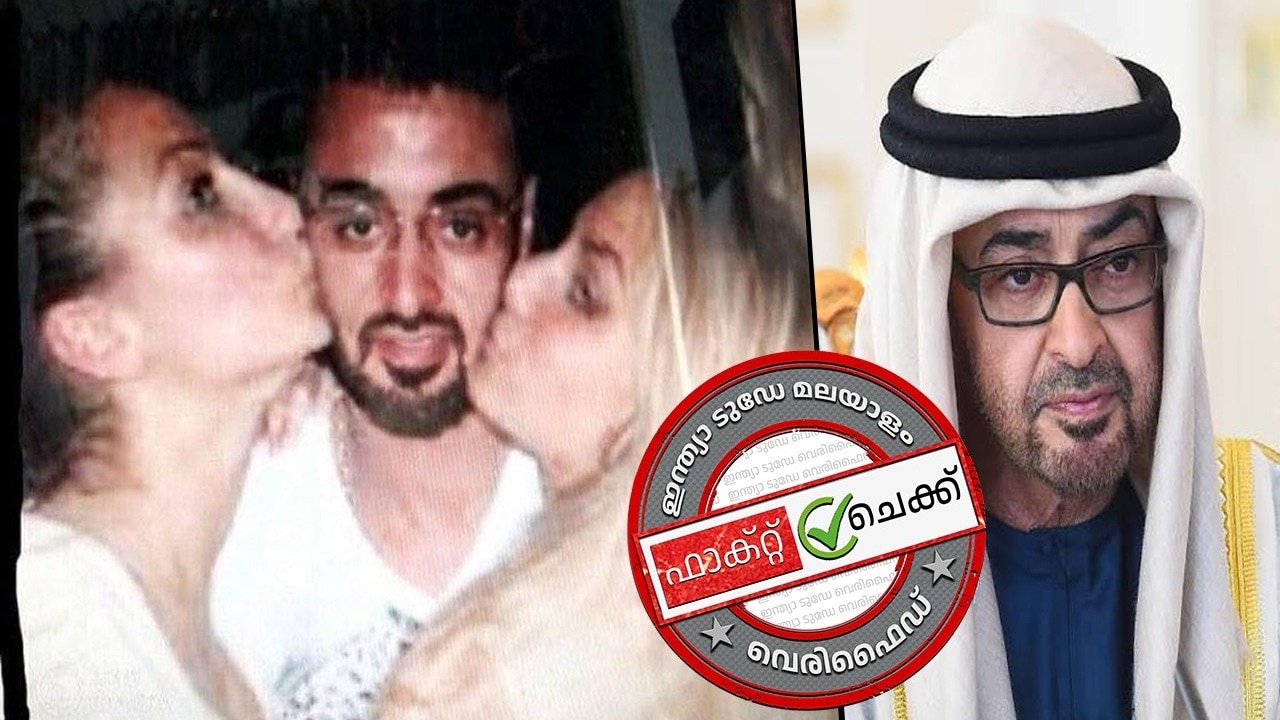
A photograph purportedly showing the Abu Dhabi ruler in a compromising position with two women has circulated widely online, with claims it originated from the recently released “Epstein files.” The image has been shared alongside allegations that the UAE leader “went to Epstein’s private island for pleasure at Epstein’s invitation.”
However, a thorough investigation reveals the image has been digitally manipulated. A keyword search through the declassified Epstein documents yielded no record of such a photograph. Further research using reverse image search technology traced the original image to a Facebook post from January 25, 2012.
The original photograph featured former Moroccan footballer Marouane Chamakh between the same two women. Multiple Arabic news reports have used this authentic image when covering stories about the Moroccan national football team. A side-by-side comparison clearly demonstrates that Chamakh’s face was digitally replaced with that of the UAE President in the manipulated version circulating online.
While the photograph is fabricated, Mohammed bin Zayed Al Nahyan’s name does appear in the Epstein files in an entirely different context. According to reporting by Middle East Eye from January 31, Epstein exchanged messages with an individual named Anas al-Rashid following the killing of Saudi journalist Jamal Khashoggi in Istanbul in October 2018.
In these exchanges, dated October 12, 2018, al-Rashid described Khashoggi’s killing as “ugly… very ugly.” Epstein responded with speculation, writing: “smells like something bigger to me. I wouldn’t be surprised if MBZ set him up,” referring to Mohammed bin Zayed by his commonly used initials. Al-Rashid reportedly responded with “mmmmmm.”
The Khashoggi case sent shockwaves through international relations when the Saudi journalist was killed inside the Saudi consulate in Istanbul on October 2, 2018. U.S. intelligence agencies later concluded that Saudi Crown Prince Mohammed bin Salman had approved the operation, adding tension to an already complex geopolitical situation in the Gulf region.
The massive document release by the Justice Department has provided unprecedented insight into Epstein’s network and operations. The files include thousands of videos and images related to the investigation of the convicted sex offender, who died in prison in 2019 while awaiting trial on federal sex trafficking charges.
The documents have revealed Epstein’s connections to numerous high-profile individuals across business, politics, and entertainment, causing considerable public interest and speculation. The case continues to highlight concerns about human trafficking, the influence of wealth on the justice system, and accountability for powerful figures.
The spread of manipulated images related to the Epstein case underscores the challenges of information verification in the digital age. As investigations into Epstein’s network continue, distinguishing between factual evidence and misinformation remains crucial for both journalists and the public.
While Mohammed bin Zayed Al Nahyan’s name does appear in the authentic Epstein files, the viral image purportedly showing him with two women is demonstrably fake – a digitally altered photograph of a former Moroccan footballer that has been repurposed to make false claims about the UAE President’s connection to Epstein.
Fact Checker
Verify the accuracy of this article using The Disinformation Commission analysis and real-time sources.

12 Comments
This serves as a good reminder to be critical consumers of information, especially when it comes to sensational claims or viral content. It’s important to cross-reference sources and verify the authenticity of evidence before drawing conclusions or sharing it further.
Well said. In today’s digital landscape, it’s crucial that we all exercise caution and skepticism when encountering potentially misleading or unverified information.
It’s good to see fact-checking efforts around these claims. Verifying the authenticity of photos and documents is crucial, especially when dealing with high-profile figures. The Epstein case has raised many questions, and it’s important to rely on credible sources and avoid spreading misinformation.
Agreed. Fact-checking is vital to maintain public trust and ensure accurate reporting, especially on sensitive topics like this.
It’s encouraging to see news outlets taking the time to fact-check these types of allegations. Maintaining journalistic integrity is crucial, especially when dealing with high-profile figures and sensitive topics like this. Fact-checking helps to counter the spread of misinformation.
Absolutely. Verifying the authenticity of evidence is essential to uphold the credibility of reporting and avoid perpetuating false narratives.
This underscores the importance of scrutinizing viral social media claims, no matter who they involve. Doctored images can be very misleading, and it’s commendable that the news outlet took the time to thoroughly investigate the origins of this particular photo.
Absolutely. Rigorous fact-checking is essential to counter the spread of misinformation, which can have serious consequences.
The careful fact-checking in this case is commendable. It’s a good example of the importance of journalistic rigor in an era of rampant misinformation. Verifying the source and authenticity of media is essential to maintaining public trust and reporting accurate information.
Agree completely. Diligent fact-checking is a vital safeguard against the spread of false narratives, especially around high-profile figures and sensitive issues.
While the Epstein case has brought many unsavory connections to light, it’s critical that we rely on verified information rather than unsubstantiated claims. This example shows how easily photos can be manipulated to create false narratives.
Agreed. In the age of digital media, it’s more important than ever to be cautious about the sources we trust and the claims we amplify.