


Listen to the article
Viral Video Falsely Attributed to FBI Director Amid Iranian Hacking Claims
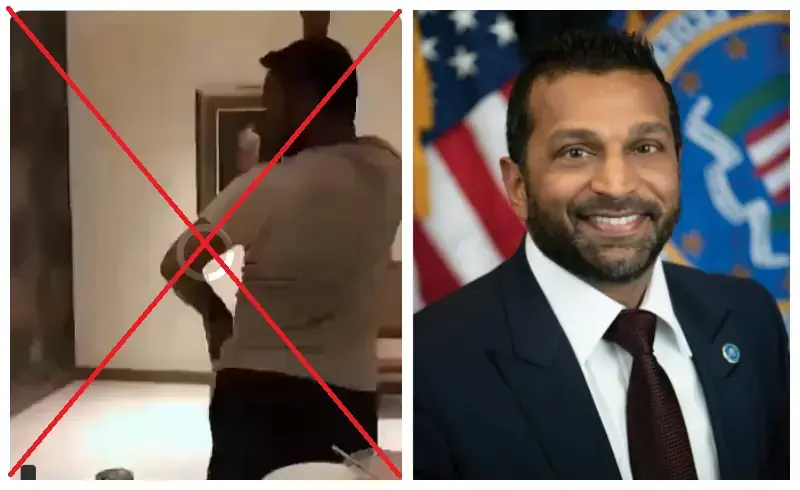
A video widely circulated across social media platforms since March 29 has been falsely presented as leaked footage of FBI Director Kash Patel dancing, following a confirmed breach of his personal email account. The footage, which garnered millions of views across multiple platforms, actually shows an unidentified man and predates the recent hacking incident by more than a year.
The misattribution comes in the wake of a legitimate cybersecurity incident involving Patel. On March 27, Iran-linked hackers operating under the name ‘Handala’ claimed to have accessed the FBI director’s personal email inbox, publishing photographs and documents online. A Justice Department official has confirmed the authenticity of the breach and the materials released.
This cybersecurity incident unfolds against a backdrop of escalating tensions between the United States and Iran. On February 28, the U.S. and Israel conducted coordinated airstrikes targeting Iran’s military infrastructure, including missile systems and nuclear-related facilities, marking a significant escalation in the ongoing regional conflict.
The falsely attributed dance video spread rapidly across social media ecosystems. On X (formerly Twitter), posts sharing the video accumulated millions of views. One post by an Indian user claiming it was “The only leaked Video from Kash Patel’s Gmail account” received 4.2 million views, while another post by a Pakistani user garnered 6 million views.
The misinformation crossed political boundaries, with accounts appearing to represent various political affiliations sharing the content. One American user with seemingly pro-Democratic leanings claimed the video demonstrated the FBI director’s susceptibility to phishing attacks, a post that received 2.3 million views.
The false narrative extended beyond X to other major platforms. On Facebook, a page sharing the video with an elaborate backstory about Iranian hackers leaking “a private dance video of FBI Director Kash Patel” accumulated 520,000 views. Similar posts spread across TikTok, Instagram, and YouTube, collectively amassing hundreds of thousands of additional views.
A fact-check investigation revealed the true origins of the footage. A reverse image search using keyframes from the video traced it back to December 26, 2022, when Indian media outlet Times Now shared it in an article titled: “Man’s enthusiastic dance to celebrate wife leaving for her home will crack you up!” According to the article, the video depicted a man celebrating his wife’s temporary departure to her family home.
The same footage appeared on YouTube as early as August 6, 2023, months before the recent hacking incident. Additionally, no credible mainstream international or American news organizations have reported this video as being connected to Patel or the Iranian hacking operation.
This incident highlights the challenge of misinformation in the digital age, particularly during geopolitical tensions when public interest in security matters is heightened. The rapid spread of the misattributed video across platforms and demographic groups demonstrates how quickly false narratives can gain traction regardless of political alignment or geographic location.
While the dance video claim has been debunked, the confirmed breach of the FBI director’s personal email remains a serious cybersecurity concern, especially given the current state of U.S.-Iran relations following recent military actions. Cybersecurity experts continue to emphasize the importance of digital hygiene and security protocols, even for high-ranking government officials.
The fact-check was originally conducted by iVerify Pakistan, a project of CEJ-IBA and UNDP, as part of efforts to combat misinformation in digital spaces.
Fact Checker
Verify the accuracy of this article using The Disinformation Commission analysis and real-time sources.

12 Comments
As someone following the mining and energy sectors, I’m curious to see if this hacking event has any implications for related industries or commodity markets. Geopolitical risks can certainly impact those areas.
That’s a good point. Tensions between the US and Iran have historically led to volatility in oil and other key commodity markets, so this is definitely worth keeping an eye on.
It’s concerning to see the continued rise in state-sponsored cyber attacks targeting government officials and critical infrastructure. Robust cybersecurity measures are essential to protect against these threats.
I agree. Cybersecurity needs to be a top priority for both public and private sector organizations, especially those dealing with sensitive information or national security.
While the leaked video seems to be a case of misinformation, the underlying hacking incident is still a serious matter. I hope the authorities are able to thoroughly investigate the breach and hold the perpetrators accountable.
Absolutely. Proper attribution and response to these types of cyberattacks is crucial, both to deter future incidents and to maintain the integrity of government institutions.
It’s good to see the disinformation around the leaked video being fact-checked and debunked. Verifying the authenticity of sensitive materials is crucial, especially when dealing with high-profile government figures.
Absolutely. In the age of misinformation, it’s important to rely on credible sources and fact-based reporting to get the full picture.
The tensions between the US and Iran are indeed worrying. I wonder how this latest hacking incident might impact the broader geopolitical situation and any potential for further escalation.
That’s a great question. Cyber attacks can often be a precursor to more overt military or political actions, so this is definitely a situation to monitor closely.
Interesting story on the alleged Iranian hack of the FBI director’s email. I’m curious to learn more about the specific details and implications of this cybersecurity incident, especially in the context of the rising tensions between the US and Iran.
Yes, the geopolitical backdrop here is certainly concerning. These types of hacks can have serious national security repercussions that go beyond just the individual targeted.