


Listen to the article
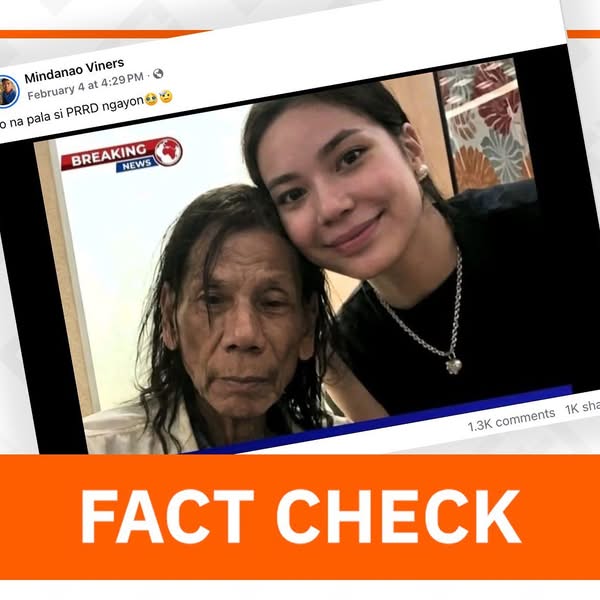
In a concerning development of online misinformation, digital forensics experts have identified a manipulated image circulating on social media that falsely depicts former Philippine President Rodrigo Duterte and his daughter Veronica “Kitty” Duterte.
The doctored image has gained significant traction across multiple platforms, prompting fact-checkers to issue a clarification regarding its authenticity. According to the verification team at #FactsFirstPH, the manipulated photo is an altered version of an original image shared by Senator Christopher “Bong” Go in April 2024.
The original photograph, posted on Senator Go’s official social media accounts, showed the former president and his youngest daughter Kitty during her birthday celebration earlier this year. The image was apparently modified and recirculated with misleading context, contributing to the spread of false information.
This incident highlights the growing challenge of digital manipulation in the Philippines’ political landscape, where deepfakes and altered images increasingly blur the line between fact and fiction. Political figures, particularly high-profile ones like Duterte, frequently become targets of such manipulation.
“The proliferation of manipulated images involving political figures can significantly impact public discourse and potentially influence opinions based on false premises,” said a digital media analyst who requested anonymity. “This is particularly concerning in the Philippines’ highly polarized political environment.”
The Duterte family remains influential in Philippine politics even after Rodrigo Duterte’s presidential term ended in 2022. His daughter Sara Duterte currently serves as Vice President, while his son Sebastian Duterte is the mayor of Davao City. Veronica “Kitty” Duterte, his daughter with common-law wife Honeylet Avanceña, though younger and less politically active, still attracts significant public attention.
Senator Bong Go, who shared the original image, is a long-time aide and close ally of the former president. His post of the authentic photo was reportedly a simple birthday greeting for Kitty Duterte, with no political undertones.
The #FactsFirstPH initiative, a collaborative effort among media organizations, academic institutions, and civil society groups in the Philippines, has been actively combating misinformation since its launch before the 2022 national elections. Their fact-checking process involves rigorous verification protocols including image analysis, source verification, and context examination.
Media literacy experts point out that such incidents demonstrate the importance of digital literacy among social media users. “It’s crucial for the public to develop skills to identify potentially manipulated images by looking for inconsistencies in lighting, unnatural edges, or distortions,” explained Dr. Maria Santos, a communications professor at a leading Philippine university.
Facebook and other social media platforms have implemented measures to flag potential misinformation, though the effectiveness of these systems varies. Users who encounter suspected manipulated images are encouraged to report them through the platforms’ reporting mechanisms.
The Philippine government, through the Department of Information and Communications Technology, has also intensified efforts to combat digital disinformation, especially as the country prepares for future electoral cycles.
This incident serves as a reminder of the challenges facing democratic discourse in the digital age. As manipulation technology becomes more sophisticated and accessible, the responsibility falls on multiple stakeholders—from tech platforms and government agencies to media organizations and individual users—to safeguard the integrity of information.
For those encountering questionable content online, fact-checking organizations recommend verifying images through reverse image searches, checking credible news sources, and examining the posting history and credibility of accounts sharing such content before accepting or sharing it further.
Fact Checker
Verify the accuracy of this article using The Disinformation Commission analysis and real-time sources.

11 Comments
The manipulation of images for political gain is a concerning trend that undermines public trust. I’m glad the original context of this photo has been verified and the misinformation has been addressed. Fact-checking is crucial in the digital age.
The use of deepfakes and photo manipulation in political discourse is a growing problem that undermines trust. I’m glad the authorities were able to debunk this specific instance, but we need stronger safeguards against the spread of doctored media.
The use of manipulated images in political discourse is a growing concern that undermines trust and informed decision-making. I’m glad the original context of this photo has been verified, and I hope this incident serves as a reminder of the importance of critical thinking when consuming online content.
It’s worrying to see how easily images can be altered and shared online, especially when they involve prominent political figures. I commend the diligence of the fact-checkers in exposing this particular case of misinformation.
This highlights the need for greater media literacy and critical thinking when consuming online content. While convenient, we must be cautious about blindly believing what we see, especially when it comes to sensitive political issues.
While it’s disheartening to see such attempts at misinformation, I’m reassured that the authorities were able to swiftly address this issue. Fact-checking is crucial in the digital age, and I commend the diligence of the verification team in exposing the altered photo.
This incident highlights the importance of verifying the authenticity of online content, especially when it involves high-profile individuals. I’m glad the fact-checkers were able to identify and debunk the manipulated image, but it’s concerning to see such blatant attempts to distort the truth.
This is concerning, as manipulated images can spread misinformation quickly online. It’s important to verify the authenticity of photos, especially those involving public figures. The fact-checkers did a good job in identifying the altered version and clarifying the original context.
While it’s disheartening to see such blatant attempts to distort the truth, I’m glad the authorities were able to swiftly identify and debunk the manipulated image. Fact-checking is essential in the digital age.
Fact-checking is crucial in the digital age to prevent the proliferation of fake news. While it’s concerning to see this kind of manipulation, I’m reassured that the original photo has been verified and the truth has been revealed.
This is a sobering reminder of the need for vigilance when consuming online content. The proliferation of deepfakes and altered images poses a serious threat to informed decision-making. Kudos to the fact-checkers for their diligence.