


Listen to the article
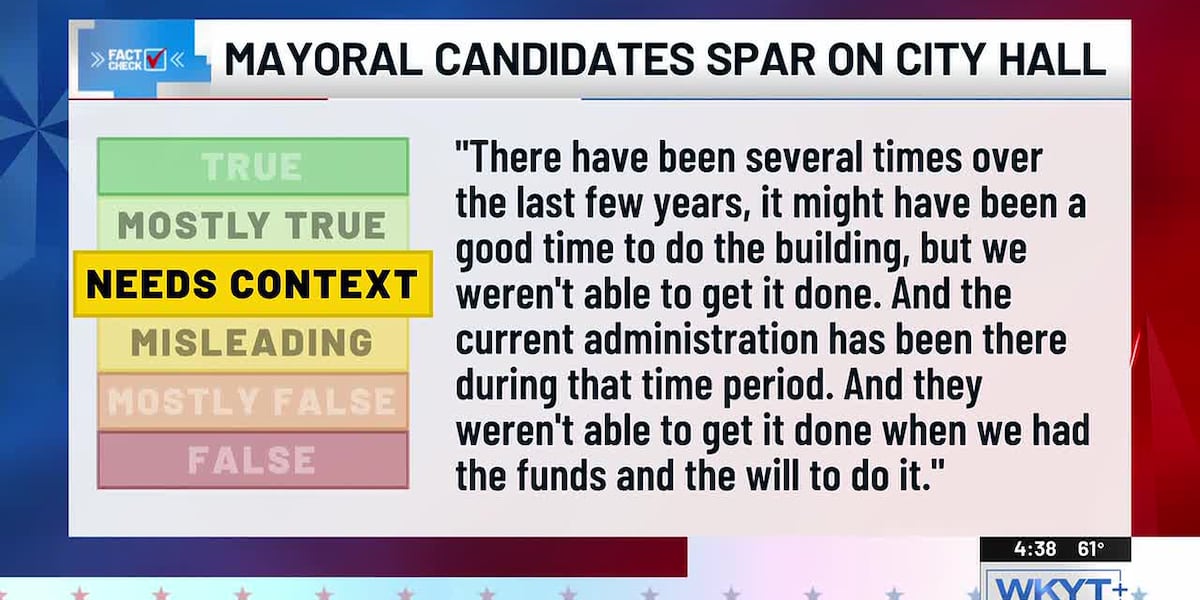
Economic concerns and downtown Lexington’s future dominated a recent mayoral debate where candidates clashed over plans for a new city hall complex, with incumbent Frank Friedman defending his administration’s decision against challenger Marylin Alexander’s criticism of the project’s financial implications.
During the heated exchange at Lexington’s Lenfest Center, both contenders outlined sharply differing visions for addressing the city’s aging administrative facilities. Friedman, seeking another term as mayor, emphasized the necessity of the $16.5 million project, describing it as the culmination of years of careful planning and fiscal responsibility.
“This decision wasn’t made overnight,” Friedman told the audience of nearly 200 local residents. “We’ve spent nearly a decade evaluating options, conducting engineering studies, and ensuring we had the financial capacity to undertake this project without placing an undue burden on taxpayers.”
The current city hall building, constructed in the 1960s, has faced mounting maintenance issues including water damage, outdated electrical systems, and accessibility concerns. According to city assessments, retrofitting the existing structure would cost approximately $12 million while failing to address fundamental space and efficiency problems.
Challenger Alexander, a local business owner and community activist, questioned the timing and scale of the project amid economic uncertainty. “With inflation squeezing local families and businesses still recovering from pandemic losses, now is not the time for the city to take on substantial new debt,” Alexander argued, suggesting that the funds could be better directed toward immediate community needs.
Alexander proposed a phased approach that would begin with essential repairs while deferring major construction until economic conditions improve. Her plan would initially allocate $3.5 million for critical infrastructure repairs while establishing a citizen advisory committee to review alternative solutions.
The debate highlighted broader tensions about Lexington’s development priorities. Friedman pointed to the project’s potential to revitalize the downtown corridor and create construction jobs, with economic impact studies suggesting the development could generate $2.1 million in related economic activity during the construction phase.
“This investment represents our commitment to maintaining a vibrant downtown where government services remain accessible to all residents,” Friedman said. “The new complex will incorporate energy-efficient systems that will reduce operating costs by an estimated 30% annually.”
City financial director Thomas Wilkins, who attended the debate, confirmed that the city secured financing at favorable interest rates last year. “The 2.8% fixed-rate financing we obtained is significantly below current market rates,” Wilkins explained. “Delaying the project would likely result in higher borrowing costs if interest rates continue their upward trajectory.”
Alexander challenged these projections, citing examples from neighboring communities where similar projects exceeded initial budgets. “Winchester’s administration building went 22% over budget just last year,” she noted. “We need to be realistic about the financial risks we’re assuming.”
Local business owners in attendance expressed mixed reactions. Sarah Jenkins, who operates a downtown café, supported the development. “Anything that brings more foot traffic downtown benefits all businesses in the area,” Jenkins said. “The current city hall doesn’t draw people in or encourage them to stay downtown.”
However, hardware store owner James Patterson aligned with Alexander’s concerns. “Small businesses like mine are already navigating difficult economic waters,” Patterson said. “If this project leads to tax increases down the road, it could push some of us over the edge.”
The city council voted 4-1 earlier this year to proceed with the project, with construction scheduled to begin in early 2023. The planned complex will consolidate several municipal departments currently housed in separate locations throughout the city.
Independent financial analysts have given the project mixed reviews. Moody’s maintained the city’s credit rating following the financing approval but noted that the debt would limit financial flexibility for other capital improvements in the near term.
With the election scheduled for November 8, both candidates pledged to focus their remaining campaign efforts on economic development strategies and government transparency. Early voting has already begun, with election officials reporting higher than usual participation for a municipal election cycle.
Fact Checker
Verify the accuracy of this article using The Disinformation Commission analysis and real-time sources.

11 Comments
The clash over Lexington’s city hall project reflects the difficult decisions local leaders often face in balancing infrastructure needs with fiscal responsibility. It’s good to see the candidates engaging in a substantive debate on this important issue.
This debate on the new city hall project in Lexington highlights the important balance between upgrading aging infrastructure and managing taxpayer costs. Both candidates raise valid points that will be crucial for voters to weigh carefully.
The mayor’s emphasis on careful planning and fiscal responsibility is reassuring, but the challenger’s concerns about the project’s financial implications deserve close scrutiny as well.
This debate highlights the importance of transparent decision-making and public input when it comes to major municipal projects. Voters will want to see a clear justification for the $16.5 million price tag and assurances that it won’t place an undue burden on taxpayers.
The challenger’s criticism of the financial implications is understandable, and the mayor will need to provide a compelling case for why this investment is necessary and fiscally responsible.
This debate highlights the complexities involved in upgrading aging municipal facilities. While the need for action is clear, the financial impact on taxpayers is a legitimate concern that warrants careful consideration.
I appreciate the mayor’s emphasis on the planning process, but the challenger also raises valid points. Voters will have to weigh the tradeoffs carefully to determine the best path forward for Lexington.
It’s good to see the candidates laying out their contrasting visions for Lexington’s downtown and administrative facilities. Addressing aging infrastructure is important, but the price tag will be a key factor for many voters.
I’m curious to learn more about the engineering studies and financial assessments the mayor referenced. Transparency around the project’s costs and funding sources could help inform the public’s decision.
The contrasting visions on display in this debate underscore the difficult tradeoffs involved in upgrading aging infrastructure. Voters will need to carefully weigh the candidates’ arguments and their potential impact on Lexington’s downtown and taxpayers.
The debate over Lexington’s new city hall project touches on the broader challenges cities face in balancing development needs with fiscal prudence. It will be interesting to see how the candidates’ positions resonate with local residents.