


Listen to the article
Microwave Use Raises Concerns About Microplastics in College Student Diets
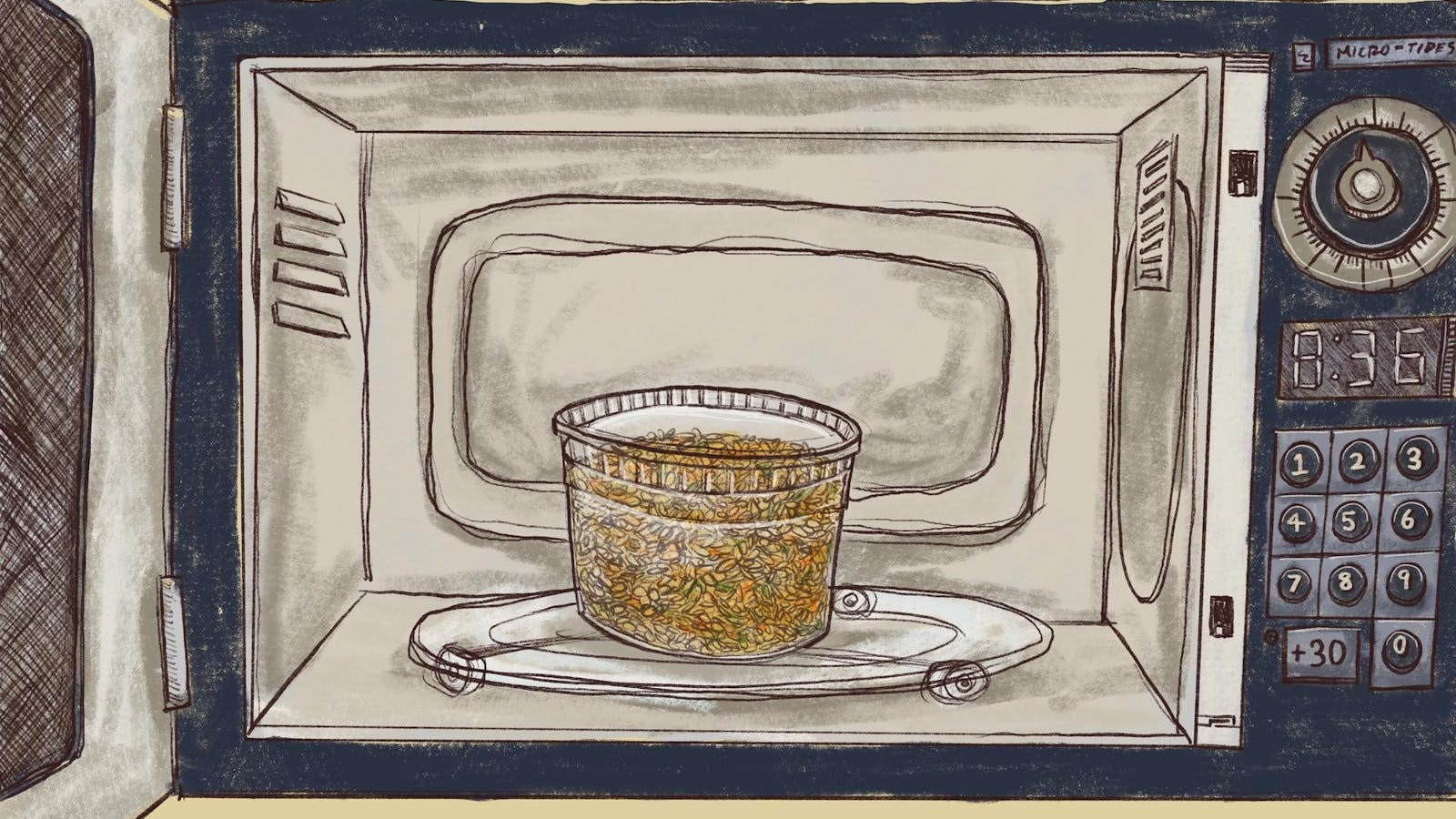
When college students seek alternatives to dining hall meals, many turn to takeout or leftovers warmed in the microwave. However, experts warn that heating food in plastic containers—a common practice in dormitories—may expose students to potentially harmful microplastics.
Microplastics, defined by the U.S. Environmental Protection Agency as plastic particles between one nanometer and five millimeters in size, can form when larger plastic materials break down. Research indicates these tiny particles may pose health risks that many college students are only vaguely aware of.
A 2023 study by Kazi Albab Hussain, a researcher at the University of Nebraska-Lincoln, found that just three minutes of microwave heating can release millions of microplastic particles from common food storage containers.
“Anything unexpected inside our body is bad,” Hussain said in an interview. He explained that studies have documented microplastic accumulation in various organs, including the brain, lungs, and kidneys, though the long-term health effects remain incompletely understood.
The microwave heating process creates what Hussain describes as “localized heat,” where heat energy concentrates in specific regions rather than distributing evenly. This creates stress within the plastic material, causing cracks in the polymers that release microplastics.
Several factors can exacerbate this effect. “If oily food or acidic food is present, that can actually change the chemistry… and that can actually accelerate the release” of microplastics, Hussain explained. Moreover, longer heating times produce smaller particles that can more easily travel through and accumulate in the body.
Changmin Yan, an associate professor at the University of Nebraska-Lincoln who specializes in health communication and has researched microplastics, confirms that extended heat exposure increases the quantity of microplastics that can leach into food or beverages.
Despite these findings, awareness and concern among college students vary considerably. Annabel Tu ’29 acknowledged knowing about microplastics but doesn’t consider them “a very pressing issue.” Similarly, Kaya Gehlbach ’29 tries to avoid them when possible but doesn’t make it a “top priority.”
Both Tu and Gehlbach noted that avoiding plastic use in microwaves is more challenging in a college environment than at home, where alternative containers might be more readily available.
Sophia Dean ’27 tries “not to worry too much” but does avoid microwaving food in plastic containers when possible. “I feel like I should be more worried, but it feels very normalized,” Dean remarked, highlighting how ubiquitous the practice has become in college settings.
Some students have been more thoroughly educated on the issue. Andrea Yiu ’28 learned about microplastics from her mother, who consistently warned her against microwaving plastic. Yiu observed that awareness of this issue isn’t universal among her peers, noting that “not everyone knows about this.”
The constraints of dorm living present particular challenges for students trying to make healthier choices. Limited kitchen access, minimal storage space, and tight budgets often lead students to rely on convenience options that may involve plastic food containers.
While plastic containers offer affordability and convenience—qualities especially valuable to college students—experts like Yan recommend using glass or ceramic containers when heating food in microwaves. These alternative materials don’t release microplastics when heated, making them safer options despite their higher cost and potential fragility.
For students looking to minimize exposure while working within dorm constraints, experts suggest simple steps like transferring takeout from plastic containers to microwave-safe dishes before heating, investing in a few quality glass containers that can serve multiple purposes, and being particularly cautious with oily or acidic foods.
Hussain’s guidance remains straightforward: “Don’t use plastics in the microwave.” This advice, while simple in theory, requires both awareness and practical alternatives to implement effectively in college settings where convenience often dictates food preparation choices.
As research continues to explore the long-term health implications of microplastic exposure, the gap between scientific findings and everyday student practices highlights the need for greater education on this emerging health concern.
Fact Checker
Verify the accuracy of this article using The Disinformation Commission analysis and real-time sources.

8 Comments
Wow, I had no idea microwaving plastic could release so many microplastic particles. This is really eye-opening. I’ll definitely be more cautious about my microwaving habits going forward. Protecting our health should be the top priority.
This is really troubling. Microplastics are already pervasive in our environment, and the fact that microwaving can release even more of them into our food is alarming. I appreciate the researchers bringing this issue to light. It’s crucial that we find safer alternatives to plastic food storage and preparation.
Interesting to learn more about the potential risks of microwaving plastic containers. I’ll have to be more mindful about that, especially for college students who may not be as aware of the dangers of microplastics. Food safety is so important.
Absolutely, it’s an important issue to be aware of. Modifying our behaviors, like using glass or ceramic containers instead of plastic, could really help reduce exposure.
As someone who frequently heats up leftovers in the microwave, this information is quite concerning. I’ll need to rethink my food storage and reheating practices to reduce microplastic exposure. Thanks for sharing this important research.
Yes, it’s a good wake-up call. Simple switches to glass, ceramic or other non-plastic containers can make a real difference. Health should come before convenience when it comes to food safety.
This is concerning. Microplastics in our food and bodies is a growing problem that needs more attention. I appreciate the research highlighting the risks, even for something as simple as reheating leftovers. Small changes can make a big difference.
I agree. It’s an issue that requires more public awareness and action, especially for vulnerable populations like college students. Simple swaps to safer containers are a good start.