


Listen to the article
Viral Image of Trump’s Undamaged Ear After Assassination Attempt Revealed as AI Fake
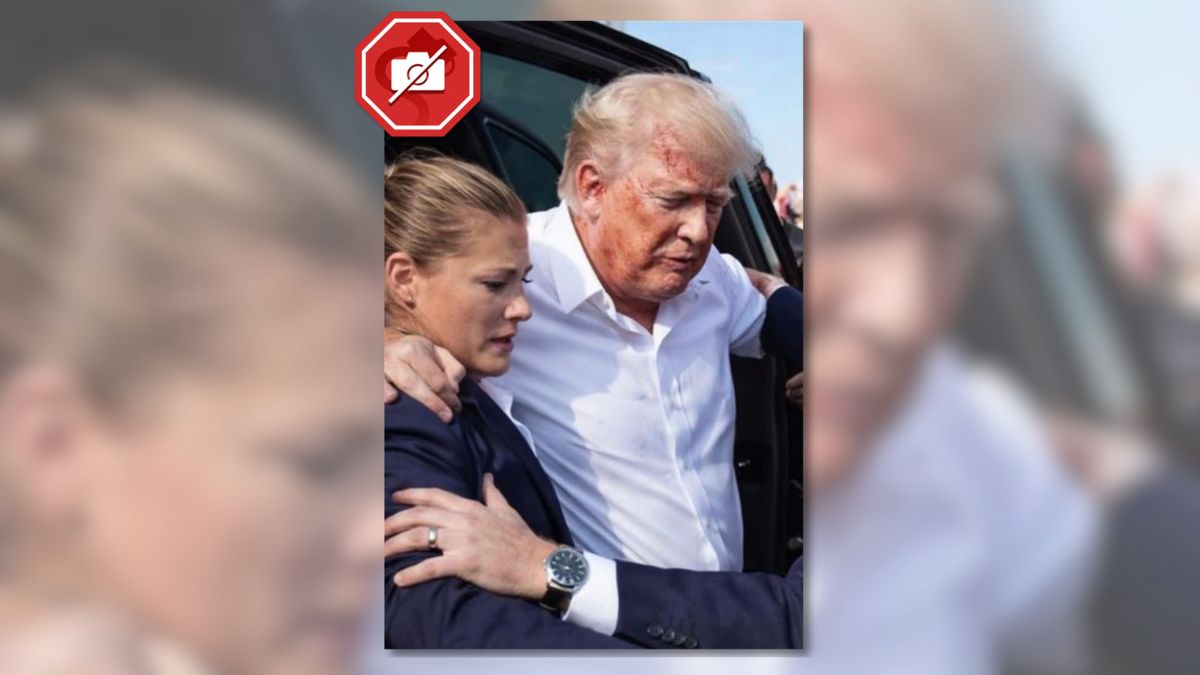
A digitally manipulated image purporting to show former U.S. President Donald Trump with an intact right ear following the July 2024 assassination attempt in Butler, Pennsylvania has been conclusively identified as fake, according to a comprehensive investigation.
The image, which began circulating widely across social media platforms in April 2026, showed Trump being escorted to a vehicle with his ear appearing undamaged, contradicting official reports and verified photographs from the incident. The social media posts implied that the lack of visible injury was evidence the assassination attempt had been staged.
“Please point to the bullet hole,” read one caption on X (formerly Twitter) from April 19, accompanied by the fabricated image. Similar posts quickly spread to Facebook and Reddit, prompting numerous inquiries about the photograph’s authenticity.
When compared with genuine images from reputable news sources and Getty Images archives, several discrepancies became immediately apparent. Authenticated photographs from the assassination attempt clearly show blood collected around Trump’s right ear with two distinct streaks visible on his face. Images verified by The Washington Post and other major news organizations documented a small chunk missing from Trump’s ear as he was escorted to safety.
By contrast, the fabricated image showed minimal bleeding with blood spots on Trump’s forehead that don’t appear in any verified photographs. Additionally, no credible news organizations had published or referenced the image in question, a significant red flag given the high-profile nature of the event.
Further analysis revealed the viral image was a cropped version of content posted to a Facebook account called “Emery gaming” on April 17, 2026. This account has a documented history of sharing AI-generated imagery, including fabricated images of Trump with convicted sex offender Jeffrey Epstein.
Two critical details exposed the manipulation. First, all legitimate photographs from the assassination attempt show Trump wearing his blue suit jacket while being escorted to his vehicle. In both the cropped and uncropped versions of the fake image, Trump appears in only a white collared shirt. Second, in the uncropped version, the vehicle’s door is oriented incorrectly compared to verified images from the scene.
When subjected to AI detection software, results were mixed. Sightengine incorrectly classified both images as authentic, while Hive Moderation assessed the full uncropped image as 99.9% likely to be AI-generated but rated the cropped version as only 45.7% likely to be artificially created. This inconsistency highlights the ongoing challenges in reliably detecting sophisticated AI-generated media.
The incident represents a growing trend of manipulated media being used to spread misinformation about high-profile political events. Just days before this image circulated, fact-checkers had debunked another AI-generated image purporting to show former First Lady Melania Trump kissing Jeffrey Epstein.
The assassination attempt on July 13, 2024, at a campaign rally in Butler, Pennsylvania, injured Trump’s ear when a bullet grazed it during the shooting. The incident resulted in one rally attendee’s death and seriously injured two others before the shooter was killed by Secret Service agents.
Digital manipulation experts warn that as AI technology advances, distinguishing between authentic and generated imagery will become increasingly difficult, requiring greater vigilance from media consumers and improved detection tools from technology companies.
Fact Checker
Verify the accuracy of this article using The Disinformation Commission analysis and real-time sources.

14 Comments
Interesting to see the technical analysis that exposed the manipulated image. Fact-checking is crucial to counter the spread of misinformation, especially around high-profile events.
Fact-checking is an important safeguard against the proliferation of false narratives, even on sensitive political topics. Transparency around the methodology is commendable.
While I don’t have strong political views on this, I think it’s important to maintain a skeptical yet open-minded approach when evaluating claims, especially those that seem sensational.
Appreciate the diligence in verifying the authenticity of this image. Maintaining public trust requires rigorous fact-checking.
While I don’t have a strong political stance on this, I think it’s important to maintain a critical eye when evaluating claims, especially those that seem sensational or unverified.
Fact-checking is essential to uphold the integrity of public discourse, even on sensitive topics. Kudos to the team for the thorough investigation.
The ability to accurately detect manipulated or synthetic media is critical in today’s digital landscape. I appreciate the thoroughness of this investigation.
It’s concerning to see the spread of misinformation, even around significant political events. Fact-checking plays a vital role in combating the issue.
The ability to reliably detect synthetic media is an important skill in the digital age. I’m curious to learn more about the techniques used to identify this image as a fake.
Fact-checking is essential to maintain public trust, especially around high-stakes events. Appreciate the diligence in verifying the authenticity of this claim.
This is a timely and important fact check. It’s concerning to see the spread of misinformation, even around significant political events. Rigorous verification is crucial.
Fact-checking is a vital tool to combat the proliferation of false narratives. Appreciate the transparency around the methodology used to identify this image as a fake.
This is an interesting fact check. I’m curious to learn more about the technical details behind identifying the image as an AI-generated fake.
It’s important to rely on verified information from reputable sources when assessing claims, especially around sensitive events like assassination attempts.