


Listen to the article
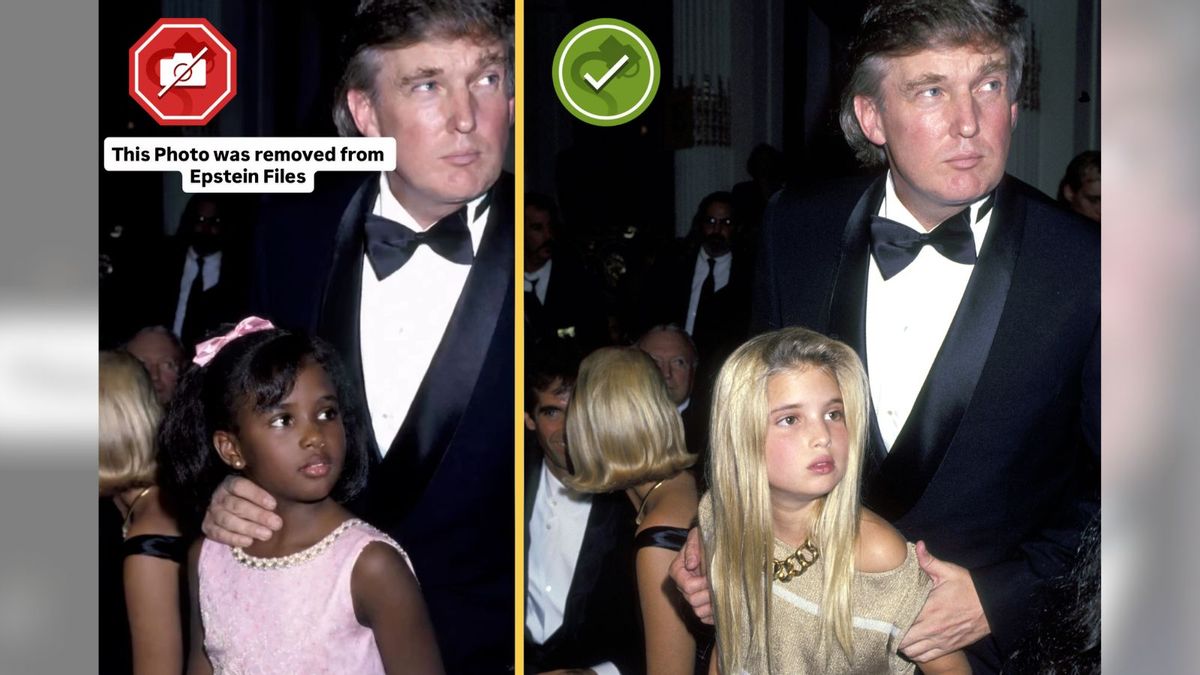
In a troubling case of digital manipulation, a fabricated image circulating on social media purportedly showing former U.S. President Donald Trump with his hand on a young Black girl’s neck has been debunked as fake. The altered image, which began circulating in December 2025, represents yet another example of how easily misinformation can spread in today’s digital landscape.
The manipulated photo was widely shared across multiple platforms including Instagram, Facebook, Bluesky, Threads, TikTok, and X (formerly Twitter). One Instagram user with the handle @rabbisgreat posted the doctored image with a caption falsely claiming, “FBI didn’t wanted us to see this photo.” This post and others suggested the image had been discovered in recently released FBI case files related to Jeffrey Epstein, the convicted sex offender who died in 2019.
Fact-checkers quickly determined the image had been digitally altered from an authentic photograph taken in 1991. The original image, available through Getty Images, shows Trump with his daughter Ivanka Trump at New York City’s Plaza Hotel. The manipulation appears to have involved replacing Ivanka with a generated image of a young Black girl, likely using artificial intelligence or sophisticated photo editing software.
The timing of this fabricated content coincided with the Justice Department’s release of files related to the Epstein sex trafficking investigation in December 2025, potentially explaining why some social media users found the false narrative believable. The actual release of Epstein-related documents garnered significant attention, creating fertile ground for misinformation.
This incident highlights the growing challenge of detecting digitally manipulated content, particularly as AI-powered tools for creating realistic fake images become more sophisticated and accessible. Such technology can now produce convincingly authentic-looking alterations that can be difficult for the average viewer to identify as fraudulent.
Media literacy experts have increasingly warned about the dangers of such manipulated content, especially when it involves public figures and is presented alongside legitimate news events. The rapid spread of this particular fake image across multiple platforms demonstrates how quickly misinformation can proliferate when it aligns with existing narratives or biases.
Social media companies continue to face pressure to improve their detection and labeling of manipulated media. While most platforms have policies against deliberately deceptive content, enforcement remains challenging due to the sheer volume of posts and the increasingly sophisticated nature of digital manipulation tools.
The circulation of this falsified image also occurs amid broader concerns about misinformation in the political sphere. In recent years, doctored videos and images of politicians have repeatedly gone viral, forcing news organizations and fact-checkers to allocate significant resources to debunking such content.
When approached by fact-checkers, the Instagram user who posted the manipulated image did not immediately respond to questions about the creation of the fake photo, including which AI tools might have been used in its production.
The incident serves as a reminder for social media users to approach sensational images with skepticism, especially those purporting to show previously unseen evidence related to high-profile figures or cases. Digital literacy advocates recommend verifying images through reverse image searches and consulting trusted news sources before sharing potentially manipulated content.
As AI technology continues to evolve, distinguishing between authentic and manipulated media will likely become increasingly difficult, making critical evaluation of digital content an essential skill for navigating today’s information landscape.
Fact Checker
Verify the accuracy of this article using The Disinformation Commission analysis and real-time sources.

8 Comments
Doctoring images to create false narratives is a dangerous practice. I’m glad the fact-checkers were able to quickly determine the origin of this manipulated photo and set the record straight. We should all be more critical consumers of online content.
This is a timely reminder of the importance of media literacy and critical thinking when it comes to evaluating online information. Spreading unverified claims, even with good intentions, can have serious consequences. We must all do our part to combat the spread of misinformation.
This is a concerning incident that highlights the importance of media literacy and critical thinking. We must be careful not to blindly accept or share online content, even if it aligns with our own biases or preconceptions. Fact-checking and verifying the sources of information are essential.
The proliferation of misinformation online is a serious issue that we must all be mindful of. While it may be tempting to share sensational or scandalous content, it’s crucial that we take the time to verify the accuracy of such claims before doing so. Fact-checking is key.
It’s concerning to see how easily misinformation can spread in the digital age. Fact-checking is crucial to combat the proliferation of these kinds of doctored images. We must be cautious about blindly believing or sharing unverified claims online.
The ability to easily manipulate digital images is a double-edged sword. While it can be a powerful tool, it also enables the creation of false narratives that can be incredibly damaging. Fact-checking and media literacy are essential in the modern information landscape.
Wow, this is a really egregious example of digital manipulation. I’m glad the fact-checkers were able to expose the truth behind this altered image. It’s a sobering reminder of the need for vigilance and critical thinking when consuming online content.
This is a troubling case of digital manipulation. Spreading misinformation like this is irresponsible and undermines public trust. We need to be vigilant about verifying the authenticity of online content, especially around sensitive political topics.