


Listen to the article
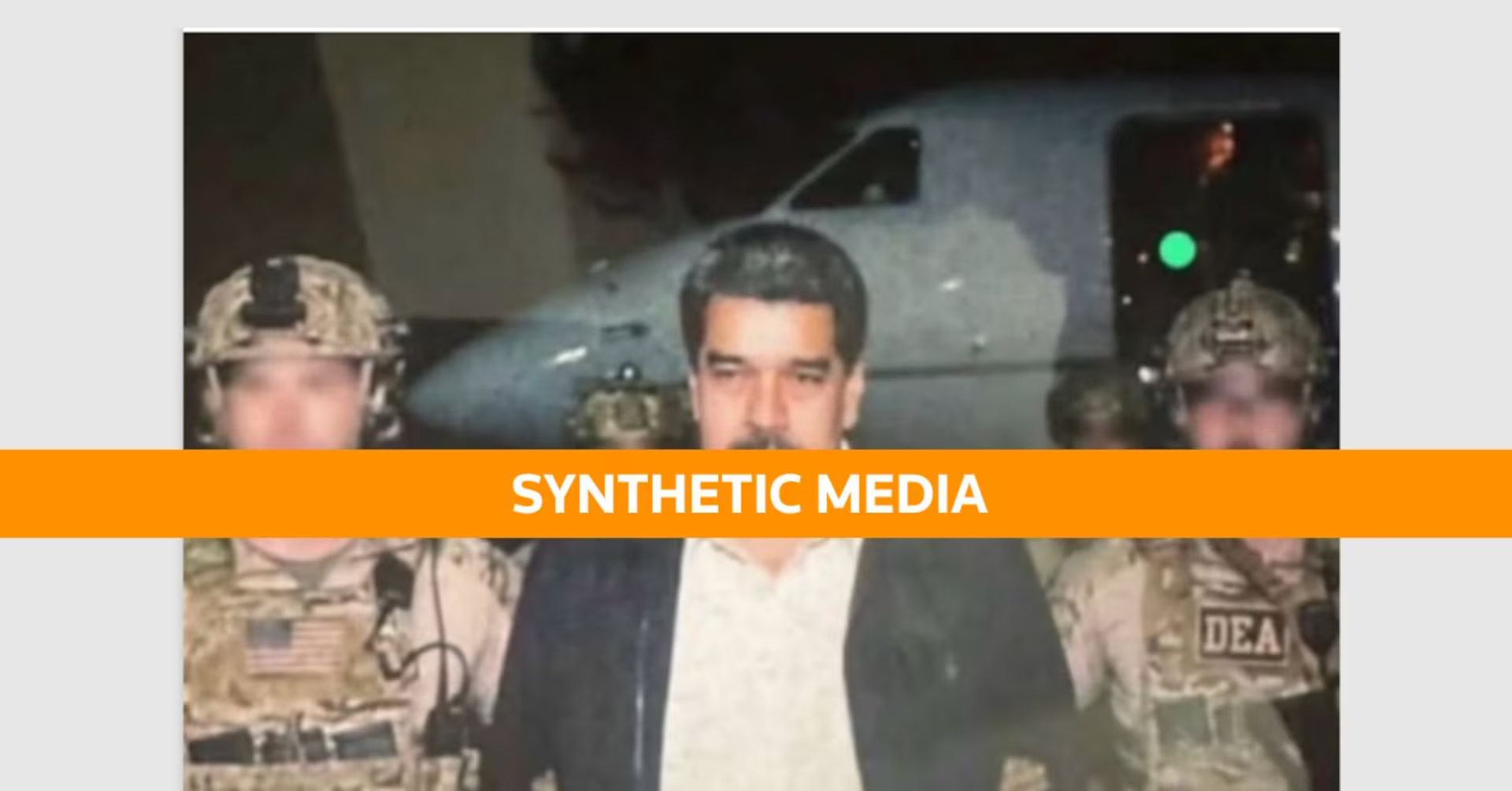
Social media users have been circulating an AI-generated image falsely depicting Venezuelan President Nicolas Maduro’s capture by U.S. authorities, fact-checkers have confirmed. The fabricated image shows Maduro wearing a white shirt and dark jacket being escorted from an aircraft by two U.S. law enforcement officers, one clearly identified as a Drug Enforcement Administration agent by his visible badge.
The misleading image gained traction following a dramatic January 3 operation in which U.S. aircraft conducted strikes in and around Caracas, with U.S. Special Forces apprehending the Venezuelan president and his wife. According to reports, the couple was initially transported to a U.S. Navy vessel offshore before being flown to New York to face drug trafficking charges.
Reuters fact-checkers utilized Google’s SynthID detection tool to analyze the image, concluding it was either generated or edited using artificial intelligence. The tool identifies imperceptible watermarks embedded in content created by Google’s AI models, providing definitive evidence that the widely-shared image is synthetic.
Verified footage of Maduro’s actual arrival in the United States tells a different story. Aerial video broadcast by ABC News shows the Venezuelan leader disembarking a plane at Stewart Air National Guard Base in Newburgh, New York, dressed in blue clothing and surrounded by U.S. law enforcement personnel – a stark contrast to the fabricated image circulating online.
Additional ground-level footage captured from the tarmac provides a clearer view of Maduro wearing a light blue hooded sweatshirt and handcuffs as he was taken into custody. Reuters photographer Mike Segar also documented the plane’s arrival in New York, confirming the authenticity of these legitimate images.
The circulation of this AI-generated content highlights growing concerns about misinformation surrounding high-profile international incidents. The ease with which convincing fake imagery can be created and spread through social networks poses significant challenges for news organizations and fact-checkers attempting to provide accurate information to the public.
This case represents a particularly concerning example of synthetic media being used to misrepresent major geopolitical events. The fabricated image’s realistic appearance – showing what appears to be U.S. law enforcement officials and including convincing details like agency identification – demonstrates how AI tools can create persuasive visual misinformation.
When contacted by Reuters regarding the incident, the Drug Enforcement Administration declined to comment on the circulation of the falsified image.
The spread of such synthetic content underscores the importance of media literacy and verification tools in an era where artificial intelligence makes image manipulation increasingly sophisticated and accessible. News consumers are advised to seek information from trusted sources and to approach dramatic visual claims with appropriate skepticism, especially during developing international situations.
This incident is part of a broader pattern of AI-generated misinformation challenging traditional assumptions about photographic evidence in journalism. As detection tools improve, fact-checking organizations continue working to separate authentic documentation from increasingly convincing fabrications.
Fact Checker
Verify the accuracy of this article using The Disinformation Commission analysis and real-time sources.

20 Comments
This news highlights the ongoing battle against the proliferation of AI-generated misinformation. Vigilance and robust fact-checking processes are essential to combat the spread of fake visuals.
Well said. As AI technology continues to advance, the need for reliable fact-checking tools and public awareness will only become more critical.
This story highlights the importance of critical thinking and fact-checking, even when confronted with seemingly credible visuals. It’s a good reminder to always scrutinize online content.
Agreed. With AI-generated imagery becoming more advanced, we must be vigilant in distinguishing truth from fiction, especially when it comes to high-profile political figures.
This story serves as a cautionary tale about the risks of AI-generated content and the need for vigilance in verifying the authenticity of online media. Fact-checking is essential.
Agreed. As AI technology advances, the ability to create convincing yet fabricated visuals will only become more sophisticated. Maintaining robust verification processes is crucial.
The use of AI to create this fabricated image of Maduro’s capture is quite alarming. It’s a troubling example of how technology can be misused to spread disinformation.
Absolutely. Fact-checkers’ efforts to identify and debunk these types of synthetic media are crucial for maintaining public trust and preventing the further erosion of truth.
The revelation that this image of Maduro’s capture is AI-generated is troubling. It highlights the growing threat of synthetic media and the importance of verification.
Absolutely. Fact-checkers’ use of tools like Google’s SynthID to detect these kinds of fabricated visuals is a critical step in maintaining trust and accuracy in the digital age.
The confirmation that this image of Maduro’s capture is AI-generated is a concerning development. It underscores the growing threat of synthetic media and the importance of critical thinking.
Absolutely. The use of tools like Google’s SynthID to detect these kinds of fabricated visuals is a vital step in combating the spread of misinformation in the digital age.
This story serves as a stark reminder of the potential for AI-generated content to be used for nefarious purposes, such as spreading disinformation. Rigorous fact-checking is essential.
You’re right. As AI capabilities continue to advance, the need for robust verification methods and public awareness will only become more pressing to combat the proliferation of fake visuals.
This news highlights the ongoing challenge of combating AI-generated misinformation. Fact-checkers’ efforts to identify and debunk synthetic media are crucial for preserving trust in information.
Well said. As the capabilities of AI continue to evolve, the need for reliable verification methods and public awareness will only become more pressing to maintain the integrity of online content.
Interesting how AI technology can now create such convincing yet fabricated images. Verifying the authenticity of media content is becoming increasingly crucial in our digital age.
Yes, the ability to generate fake visuals is quite concerning. Fact-checking tools like Google’s SynthID are important to combat the spread of misinformation.
The confirmation that this image of Maduro’s capture is AI-generated is concerning. It demonstrates the sophisticated level of manipulation possible with these technologies.
Definitely a worrying development. Fact-checkers’ ability to detect synthetic media using tools like Google’s SynthID is crucial in maintaining the integrity of information.