


Listen to the article
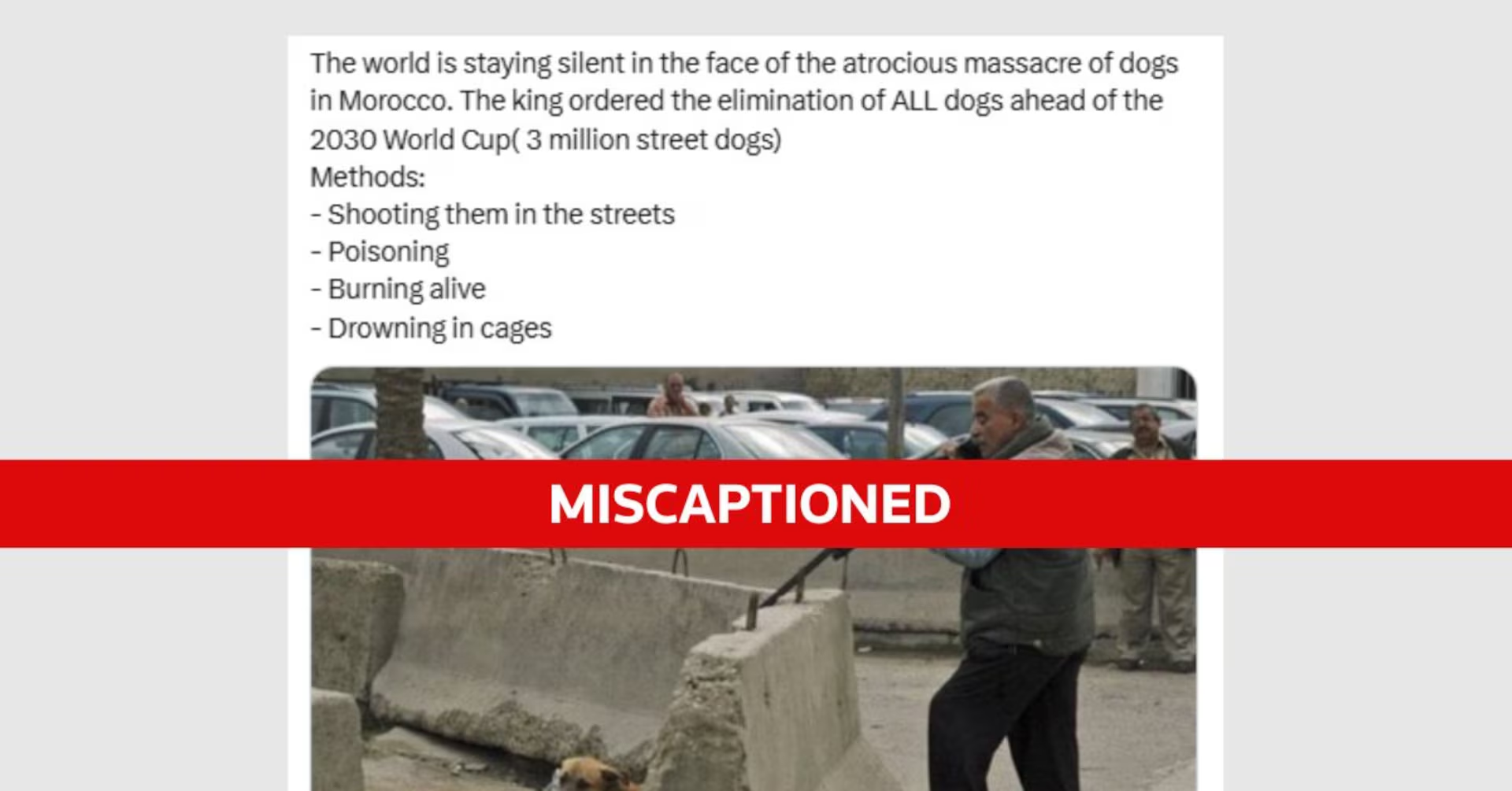
A viral image claiming to show Moroccan cruelty to stray dogs ahead of the 2030 FIFA World Cup has been revealed as a 16-year-old photograph taken in Iraq, fact-checkers confirmed this week.
The photograph, which depicts a police officer aiming a gun at a stray dog, was shared on social media platform X on November 18 and viewed 1.4 million times with a caption falsely stating: “The world is staying silent in the face of the atrocious massacre of dogs in Morocco. The king ordered the elimination of ALL dogs ahead of the 2030 World Cup (3 million street dogs).”
Reuters fact-checkers have determined that the image actually shows Iraqi police officer Qassim Ahmed targeting a stray dog in Baghdad’s Mansour neighborhood in November 2008. The original Associated Press photograph, credited to photographer Asaad Mouhsin, was taken during an Iraqi campaign to control dog populations following attacks on Baghdad residents.
The misleading post comes amid genuine concerns from animal welfare organizations about the treatment of stray dogs in Morocco, which is set to co-host the 2030 FIFA World Cup alongside Spain and Portugal. Select matches will also be played in three South American countries.
The International Animal Coalition, representing 79 organizations, has alleged that hundreds of thousands of street dogs are culled annually in Morocco, with killings reportedly increasing since the country was announced as a World Cup host in December 2024. The coalition claims approximately 3 million dogs are now under threat ahead of the tournament.
“We are clear and certain there is a massacre taking place in Morocco of the free roaming dogs, some of which are neutered, vaccinated and tagged,” a spokesperson for the International Animal Coalition told Reuters in November. “This massacre is increasing. We know this because we are receiving unprecedented reports from people in Morocco.”
Morocco’s government has consistently denied these allegations. In February, the country’s Interior Ministry informed Reuters that local authorities were implementing ethical and sustainable methods to manage stray populations in accordance with international animal welfare standards, rather than killing the animals.
An official from the ministry also described reports of a campaign to cull 3 million strays as “entirely baseless,” according to Morocco’s government-owned news agency.
The controversy highlights the ongoing tension between hosting international sporting events and addressing urban issues that might affect a country’s image. Major events like the World Cup often prompt host nations to undertake beautification and infrastructure projects, sometimes leading to controversial policies regarding homeless populations, informal settlements, or stray animals.
While Reuters has not independently verified the animal welfare coalition’s claims about dog culling in Morocco, the misattribution of the Iraqi photograph demonstrates how misinformation can complicate legitimate discussions about animal welfare concerns.
Neither Morocco’s Interior Ministry nor FIFA responded to Reuters’ requests for comment on the matter in November.
The misuse of the 2008 Iraq photograph underscores the importance of verifying images shared on social media, particularly when they purport to document controversial current events. The Iraqi officer’s uniform patch visible in the image provides clear evidence of the photograph’s true origin.
This fact-check was conducted by the Reuters Fact Check team as part of their ongoing efforts to combat misinformation across digital platforms.
Fact Checker
Verify the accuracy of this article using The Disinformation Commission analysis and real-time sources.

16 Comments
Misleading information can spread so quickly online. I’m glad fact-checkers were able to verify the true origin of this disturbing image. We need to be more vigilant about verifying claims, especially around sensitive issues like animal welfare.
Absolutely. Responsible reporting and fact-checking are crucial to prevent the spread of misinformation.
This is a sobering reminder of the need for rigorous fact-checking, especially on sensitive issues. While the treatment of stray animals is concerning, spreading unverified claims can also be harmful. I hope solutions are found that prioritize animal welfare.
Well said. Maintaining accuracy and context is so important, even on emotionally charged topics.
This is a cautionary tale about the power of misinformation and the importance of responsible reporting. I’m glad the fact-checkers were able to uncover the true origin of this disturbing image. Moving forward, we need to be more vigilant about verifying claims, especially around sensitive issues.
Well said. Fact-checking is crucial to maintaining trust and providing accurate information to the public.
While the treatment of stray animals is a valid concern, this case highlights the need for caution when sharing unverified claims online. Fact-checking is crucial to prevent the spread of misinformation, which can have unintended consequences. I hope this serves as a lesson for more responsible sharing of information.
Absolutely. Verifying facts before sharing is so important, especially on emotive topics like animal welfare.
It’s troubling to see how quickly this misleading image gained traction online. While the treatment of stray animals is a valid concern, we must be vigilant about verifying claims before sharing them. Responsible reporting and fact-checking are essential to prevent the spread of misinformation, which can have serious implications.
Well said. Maintaining accuracy and context is crucial, even on emotionally charged topics.
It’s unfortunate that this misleading image gained so much traction online. I appreciate the diligent work of fact-checkers to uncover the true origin and context. Responsible reporting is essential to avoid exacerbating tensions or spreading misinformation.
Agreed. Fact-checking is critical to maintaining trust and providing accurate information, especially around sensitive issues.
The rapid spread of this misleading image is concerning. While the treatment of stray animals is a valid issue, we must be careful not to exacerbate tensions or spread unverified claims. Fact-checking is essential to upholding journalistic integrity and preventing the proliferation of misinformation.
Agreed. Responsible reporting and verifying facts before sharing are critical, especially on sensitive topics.
This case underscores the importance of thorough fact-checking, even on emotive issues like animal welfare. While the original claim may have been well-intentioned, the spread of unverified information can have unintended consequences. I hope this serves as a lesson for more responsible sharing of information moving forward.
Absolutely. Fact-checking is crucial to maintaining trust and providing accurate, contextual information to the public.