


Listen to the article
Election Poll Clarification: No Credible Evidence Supporting Claims of BJP Victory in West Bengal
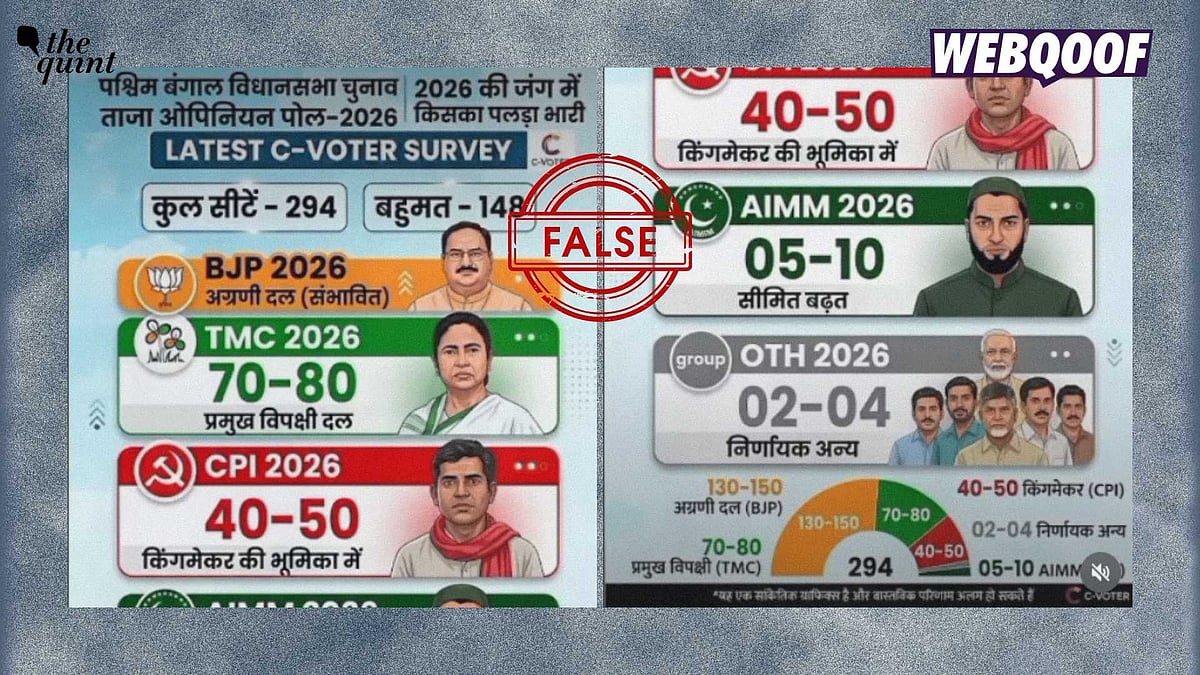
A widely circulated social media claim suggesting the Bharatiya Janata Party (BJP) is poised for victory in West Bengal according to a purported C-Voter survey has been found to lack credible supporting evidence.
After conducting a comprehensive reverse image search using Google Lens on images accompanying these claims, no reliable sources could be identified that corroborated the alleged poll results favoring the BJP. This absence of verification raises significant questions about the authenticity of the circulating claims.
In contrast, legitimate polling data published by The Times of India on April 7 presents a markedly different electoral landscape. According to this verified C-Voter opinion poll, West Bengal appears to be witnessing an extremely competitive electoral environment, with both the Trinamool Congress (TMC) and the BJP commanding an identical 40 percent voter support base.
This statistical dead heat indicates a closely contested battle in the politically significant eastern state, where Chief Minister Mamata Banerjee’s TMC faces a formidable challenge from Prime Minister Narendra Modi’s BJP. West Bengal, with its 42 parliamentary seats, represents a critical battleground in India’s general elections.
Political analysts note that West Bengal has been a focal point of intense campaigning by both parties. The BJP has been aggressively working to expand its footprint in the state, where it made significant inroads during the 2019 general elections by winning 18 seats, a substantial increase from its previous tallies. The TMC, meanwhile, has been working to consolidate its traditional support base while countering the BJP’s narrative.
The spreading of unverified poll predictions reflects the increasingly contentious nature of political discourse in India, particularly on social media platforms where electoral misinformation has become a growing concern. Election Commission officials have repeatedly warned voters to rely only on verified information from credible sources.
Opinion polls in India have historically shown varying degrees of accuracy, and political scientists caution that they should be interpreted as snapshots of voter sentiment at specific moments rather than definitive predictions. Factors such as last-minute campaign developments, voter turnout variations, and regional dynamics can significantly influence actual electoral outcomes.
C-Voter (Center for Voting Opinion & Trends in Election Research), the polling agency referenced in both the debunked claim and legitimate reporting, is one of India’s prominent survey organizations that regularly conducts pre-election opinion polls. Their methodologies typically involve structured sampling across diverse demographic groups to project potential electoral outcomes.
The equal standing of both major parties at 40 percent in the verified poll suggests that smaller parties and independent candidates could potentially play kingmaker roles in closely contested constituencies. This scenario adds another layer of complexity to the electoral dynamics in West Bengal.
Social media users are advised to verify political claims through multiple credible sources before accepting or sharing them. Electoral misinformation can potentially influence voter behavior and undermine the integrity of the democratic process.
As India’s multi-phase general elections continue, the battle for West Bengal remains one of the most closely watched contests, reflecting broader national political trends and regional aspirations. The actual electoral outcome will depend on numerous factors beyond what opinion polls can capture, including organizational strength, candidate selection, and effectiveness of get-out-the-vote efforts by the competing political parties.
In conclusion, while speculation about electoral outcomes remains rampant on social media, verified polling data indicates a much closer contest in West Bengal than what the debunked social media claims suggest.
Fact Checker
Verify the accuracy of this article using The Disinformation Commission analysis and real-time sources.

12 Comments
This highlights the importance of scrutinizing the sources and methods behind any purported election polls or survey data. Transparency and rigorous validation are crucial for maintaining the integrity of the electoral process.
Absolutely. Disseminating unverified information, whether intentionally or not, can have serious consequences for democracy. Fact-checking is an essential safeguard against the spread of misinformation.
It’s good to see diligent fact-checking being done on these claims. Voters deserve to make informed decisions based on credible information, not unsubstantiated rumors or biased reporting.
The absence of credible supporting evidence for the alleged C-Voter poll results is troubling. Voters deserve access to reliable, impartial information to make informed choices at the ballot box.
The discrepancy between the alleged C-Voter survey and the verified polling data from The Times of India is quite stark. This underscores the need for caution when encountering claims that seem to defy mainstream reporting.
The discrepancy between the alleged C-Voter survey and the verified polling data from The Times of India is quite concerning. Voters deserve access to reliable, impartial information to make informed choices.
Healthy political debate and competition are important, but they must be grounded in facts, not fabrications. This fact-check serves as a valuable reminder to scrutinize sources and be wary of unsubstantiated claims, no matter the source.
Well said. Maintaining the integrity of the electoral process requires vigilance against the spread of misinformation, regardless of its origin or intended purpose.
This is an important fact-check, as misinformation can easily spread online. It’s critical to verify the authenticity of election polls before sharing them, to ensure the public has accurate information about the political landscape.
Agreed. Reliable, verifiable data from reputable sources should be the basis for any claims about election outcomes. Anything less risks fueling further polarization and undermining public trust.
This fact-check highlights the importance of robust election monitoring and the need to rely on verified, authoritative sources when it comes to reporting on polling data and election outcomes.
Agreed. Maintaining public trust in the electoral process requires a commitment to transparency and accuracy from all stakeholders, including media outlets and fact-checkers.