


Listen to the article
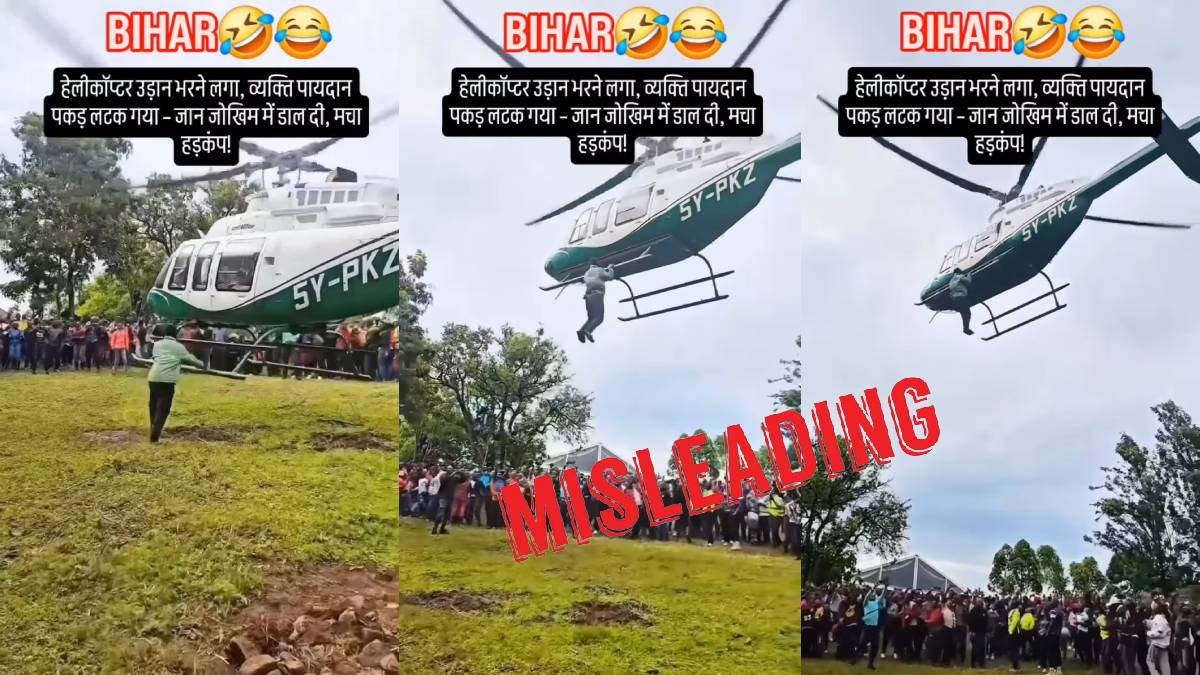
A viral video circulating on social media showing a man dangling from a helicopter is being falsely attributed to Bihar, India, according to an investigation by Lighthouse Journalism. The footage, which has gained significant traction online, actually originated in Kenya and dates back to April of this year.
The video has been shared extensively across Facebook and other platforms with captions suggesting it depicts a recent incident in Bihar. User Anuj Yadav was among those who shared the footage with misleading claims about its origin, prompting numerous shares and reactions from people believing it to be a current event in India.
Through careful reverse image search analysis, Lighthouse Journalism traced the video to its authentic source. The incident actually took place on April 13 in Rapogi village, Kenya, during a wedding ceremony. According to local police reports, the 28-year-old man, identified as Stephen Odhiambo Ouma, created panic among wedding guests when he suddenly clung to the landing gear of a helicopter as it was taking off.
The Telegraph, which covered the incident earlier this year, reported that Ouma had approached passengers of the helicopter requesting money and a ride before the aircraft departed. When his requests were denied, he made the dangerous decision to grab onto the helicopter’s landing gear as it lifted off.
Multiple news outlets covered this dramatic incident when it originally occurred six months ago. The story gained international attention due to the extraordinary and perilous nature of Ouma’s actions, with footage appearing on various news sites and YouTube channels, including “Spot On News,” which published a detailed video report of the event.
This case highlights an ongoing issue of misinformation on social media, where old content is frequently recycled and presented as current news, often relocated to different geographical contexts. The false attribution to Bihar is particularly noteworthy, as India has recently experienced severe flooding in several regions, which may have made the helicopter story seem plausible to unsuspecting viewers.
Social media platforms continue to struggle with controlling the spread of such misleading content. Without proper context or verification, users can easily be misled by posts that repurpose genuine footage with fabricated details. This phenomenon can contribute to confusion and the spread of false information during actual emergencies.
Digital literacy experts recommend that users verify information through multiple sources before sharing content, especially during crisis situations when accurate information becomes crucial. Simple verification techniques, such as reverse image searches or checking established news sources, can help prevent the proliferation of misleading content.
In this case, the conclusion is clear: the viral video showing a man hanging from a helicopter is from Kenya, documented months ago, and has no connection to recent events in Bihar, India, despite widespread claims to the contrary on social media.
Fact Checker
Verify the accuracy of this article using The Disinformation Commission analysis and real-time sources.

8 Comments
This is a cautionary tale about the dangers of unverified social media content. It’s easy for misinformation to spread rapidly, but responsible fact-checking is essential to prevent the propagation of false narratives. Kudos to the investigators for tracing the origins of this video.
Absolutely. Fact-checking is a critical safeguard against the spread of misinformation, which can have real consequences for public understanding and discourse. Kudos to the journalists for their diligent work on this case.
This is quite a bizarre incident. I wonder what prompted the man to cling to the helicopter during the wedding ceremony. Fortunately, no one was injured, but it must have caused quite a commotion among the guests.
You’re right, this seems like an extremely reckless and dangerous stunt. I’m glad the authorities were able to identify the correct source of the video and clear up the misinformation.
Interesting to learn that this incident actually took place in Kenya, not India as initially claimed. Reverse image searching seems to have been a key tool in tracing the origins of this viral video. It’s a good reminder of the importance of verifying sources, even for seemingly straightforward news stories.
It’s good to see that the news source took the time to properly investigate the origins of this viral video, rather than simply reposting the unverified claims. Responsible journalism is crucial in an age of widespread social media content and potential misinformation.
It’s good that this incident has been properly fact-checked and the true origin identified. Spreading misinformation, even unintentionally, can lead to unnecessary confusion and panic. Fact-checking is an important part of responsible reporting.
Agreed. With the prevalence of viral social media content, it’s crucial that news sources take the time to verify information before publishing. This helps maintain public trust and prevent the spread of false narratives.