


Listen to the article
Social media posts falsely claimed that Nigel Farage, leader of Britain’s populist Reform Party, had been named one of Time magazine’s 100 most influential people of 2025, Reuters fact-checkers have found.
The claims circulated widely on Facebook and X (formerly Twitter), with one post on January 1 stating in all caps: “FOR THE FIRST TIME IN HISTORY, NIGEL FARAGE HAS BEEN NAMED ONE OF TIME’S ‘TOP 100 MOST INFLUENTIAL PEOPLE OF 2025′.” This post included what appeared to be an image of Farage on the red carpet at a Time magazine awards ceremony and received significant attention, with the X post alone garnering over 30,000 views.
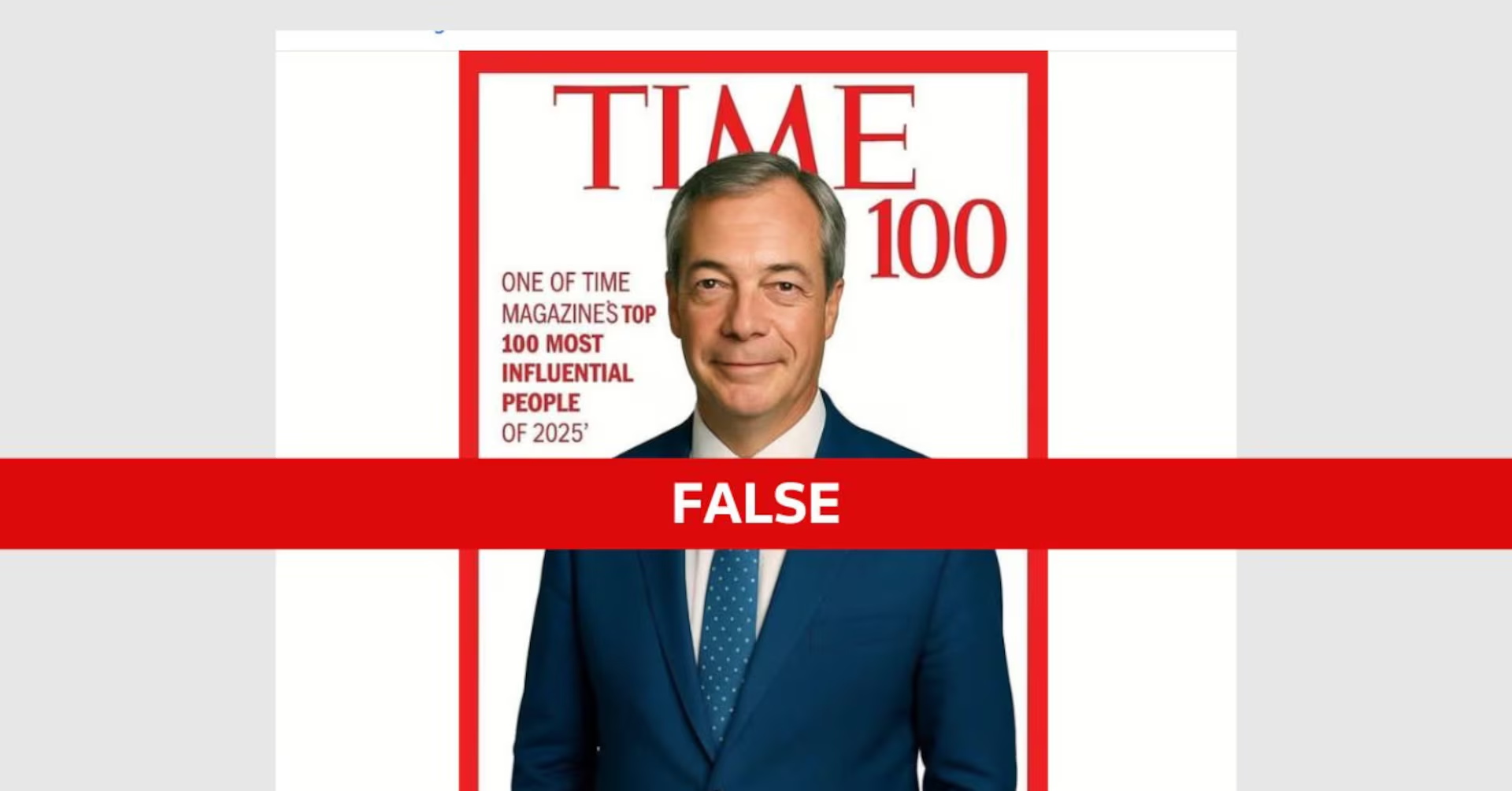
A separate Facebook post from December 12, 2025, shared what looked like a Time magazine cover featuring Farage with text declaring him one of the publication’s most influential people of 2025.
However, an official Time magazine spokesperson confirmed to Reuters that both images were fabrications. Farage does not appear anywhere on Time’s official list of the 100 most influential people of 2025, which is published on the magazine’s website.
Digital forensics experts who examined the images found strong evidence of artificial intelligence manipulation. Natalia Stanusch, a researcher at AI Forensics, told Reuters it was “highly likely” the red carpet image was AI-generated, pointing to several telltale inconsistencies including different pocket styles on Farage’s jacket and distorted hands of photographers and cameramen in the background.
Jay Rosenbaum, an AI researcher from the Royal Melbourne Institute of Technology, concurred with this assessment, noting that the most obvious indicator of AI generation was the inconsistency of signs visible in the background of the photograph.
The fake Time magazine cover also contained design elements that didn’t match Time’s actual 2025 covers. Time’s official announcement in April 2025 stated that only five magazine covers were produced for that year’s list, featuring Demi Moore, Snoop Dogg, Serena Williams, Ed Sheeran, and Demis Hassabis, the CEO of Google DeepMind. The branding, layout, and design of these authentic covers differed significantly from the fabricated Farage cover.
Photographs from Time’s gala event in New York celebrating the 2025 list further demonstrated discrepancies, as the backdrop branding at the actual event was completely different from what appeared in the manipulated image featuring Farage.
This incident highlights the growing challenge of distinguishing between authentic media and sophisticated AI-generated forgeries on social platforms. As AI technology becomes more accessible, the creation and dissemination of convincing fake images has become easier, making fact-checking increasingly important in the digital media landscape.
The spread of these fabricated images related to Farage comes at a time when the Reform Party leader has remained a polarizing figure in British politics. Despite efforts to reach him for comment on the false Time magazine claims, Farage did not respond to Reuters’ inquiries.
This case adds to the growing list of AI-generated false claims that have required debunking by fact-checking organizations, underscoring the ongoing struggle to maintain information integrity in an era of increasingly sophisticated digital manipulation tools.
Fact Checker
Verify the accuracy of this article using The Disinformation Commission analysis and real-time sources.

10 Comments
While Nigel Farage is certainly a prominent political figure, these claims about his inclusion on Time’s 2025 list appear to be completely fabricated. It’s disappointing to see such blatant attempts to deceive the public, but I’m glad the fact-checkers were able to expose the truth.
Agreed, these types of false claims can be quite damaging, especially when they involve high-profile individuals and respected media outlets. It’s a good reminder to always approach sensational stories with a critical eye and seek out authoritative sources.
Interesting to see these false claims about Nigel Farage being named to Time’s 2025 influential list. Seems like a case of digital manipulation and misinformation. I wonder what the motivations were behind spreading this kind of fake news?
Good catch by the fact-checkers in debunking these fabricated images. It’s important to stay vigilant against the spread of disinformation, especially around high-profile individuals and media lists.
While Nigel Farage is certainly a polarizing political figure, these claims about his inclusion on Time’s 2025 list appear to be completely unfounded. It’s troubling to see such blatant attempts to mislead the public with doctored images and false information.
Kudos to the Reuters fact-checkers for thoroughly investigating these claims and exposing them as fabrications. In the age of social media, it’s crucial that we rely on credible, verified sources of information.
While Farage may have ambitions of increasing his political influence, these claims about him being named to Time’s 2025 list seem to be nothing more than wishful thinking. It’s concerning to see how easily misinformation can spread online, even when the evidence clearly points to manipulation.
Agreed, these fake images and claims seem designed to boost Farage’s profile and sow confusion. It’s a good reminder to always fact-check sensational stories, especially those involving public figures and major media outlets.
Ah, another case of digital trickery and misinformation. The fact-checkers did a solid job in quickly debunking these false claims about Nigel Farage’s inclusion on Time’s 2025 list. It’s crucial that we remain vigilant against the spread of this kind of misleading content.
Absolutely. In a world where information can spread so rapidly online, it’s essential that we rely on authoritative and verified sources. Kudos to the fact-checkers for their diligence in setting the record straight.