


Listen to the article
Fact Check: Trump Post About Pope and Obama Proven to Be Fabricated
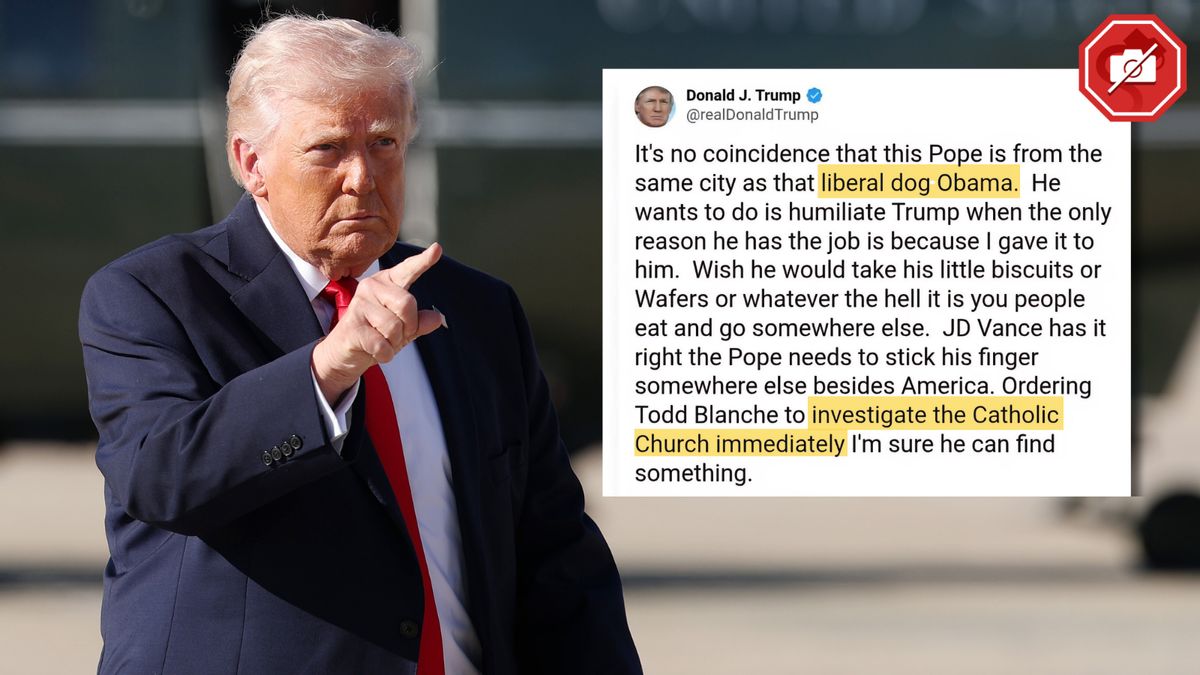
A viral image circulating across social media platforms in April 2026 purportedly showing former President Donald Trump calling former President Barack Obama a “liberal dog” and ordering an investigation into the Catholic Church has been confirmed as fabricated.
The alleged Truth Social post, dated April 15, 2026, gained traction following a genuine controversy between Trump and Pope Leo XIV regarding the ongoing U.S.-Israeli conflict with Iran. In the fabricated screenshot, Trump supposedly wrote: “It is no coincidence that this Pope is from the same city as that liberal dog Obama. He wants to do is humiliate Trump when the only reason he has the job is because I gave it to him.”
The fake post continued with inflammatory language about Catholic communion wafers and claimed Trump had directed acting Attorney General Todd Blanche to “investigate the Catholic Church immediately.”
Multiple fact-checking methods confirm the post never existed. A thorough review of Trump’s Truth Social account shows no record of such statements. Specialized archives that track presidential social media communications, including deleted posts, contain no evidence of the alleged message. Additionally, comprehensive searches across major search engines revealed no credible news coverage of such inflammatory remarks, which would certainly have generated significant media attention had they been authentic.
While the specific post in question is fake, tensions between Trump and Pope Leo XIV are real. Trump did publish an authentic Truth Social post criticizing the pontiff in April 2026, though with markedly different content than the fabricated version. In his actual post, Trump claimed credit for Leo’s appointment to the papacy, writing that Leo “was only put there by the Church because he was an American, and they thought that would be the best way to deal with President Donald J. Trump.”
Trump’s genuine criticism continued by characterizing the Pope as “Weak on Crime, Weak on Nuclear Weapons” and accusing him of meeting with “Obama Sympathizers like David Axelrod.” The authentic post concluded by urging Leo to “get his act together as Pope, use Common Sense, stop catering to the Radical Left, and focus on being a Great Pope, not a Politician.”
The fabricated content appears designed to escalate an already tense diplomatic situation between the U.S. administration and the Vatican. Pope Leo XIV had previously made public statements critical of the U.S.-Israeli war with Iran, prompting Trump’s initial rebuke.
This incident highlights the ongoing challenge of misinformation during politically charged moments. The fake post contains several red flags typical of fabricated content, including inflammatory language unlikely to appear in official communications and specific claims that would generate immediate international controversy.
The false narrative also attempted to exploit existing tensions between Trump and the Catholic Church, as well as his history with former President Obama. By suggesting Trump would order a federal investigation into the Catholic Church—an action that would raise significant constitutional concerns—the fabricated post seemed calculated to inflame both political and religious communities.
This is not the first instance of falsified communications surrounding the Trump-Pope diplomatic tensions. Previous fact-checks have debunked fabricated responses attributed to Iranian President Masoud Pezeshkian and former U.S. President Bill Clinton regarding the same controversy.
As diplomatic tensions continue between the White House and the Vatican over international conflicts, distinguishing between authentic statements and misinformation remains crucial for accurate public discourse on these sensitive geopolitical matters.
Fact Checker
Verify the accuracy of this article using The Disinformation Commission analysis and real-time sources.

14 Comments
I’m glad the fact-checkers were able to thoroughly debunk this story. It’s troubling how easily misinformation can spread, especially around political figures and religious institutions.
Agreed, it highlights the need for more media literacy and critical thinking when consuming online content. We have to be vigilant about verifying sources and claims.
Misinformation around political and religious topics can be particularly damaging. This case shows the importance of relying on credible sources and not blindly sharing unverified claims.
Absolutely. We all have a responsibility to be discerning consumers of online content and to avoid contributing to the spread of false narratives.
Fabricated political content is a serious issue that undermines public discourse. I’m glad this particular claim was swiftly debunked through rigorous fact-checking.
Definitely. Fact-checking is crucial to maintaining the integrity of our information landscape and preventing the spread of misinformation.
It’s disheartening to see how easily fabricated political content can spread these days. Fact-checking is crucial to maintaining the integrity of public discourse.
This is a good example of the need for increased media literacy and critical thinking when consuming online content. Verifying sources and claims is crucial to avoid amplifying misinformation.
The fabricated post seems designed to stir up controversy and division. It’s a good reminder to approach politically-charged information with skepticism and to rely on credible sources.
It’s concerning to see how easily false narratives can gain traction online, especially around high-profile political figures and religious institutions. Fact-checking is so important.
The fabricated post seems like a clear attempt to sow division and controversy. I’m glad the fact-checkers were able to quickly debunk it and restore some factual clarity.
This seems like another case of fabricated political content spreading online. It’s important to always verify claims before passing them on.
Absolutely, fact-checking is crucial these days to avoid amplifying misinformation. It’s concerning how easily false narratives can gain traction on social media.
This is a good reminder of the need for increased media literacy and critical thinking when engaging with online information, especially around sensitive political and religious topics.