


Listen to the article
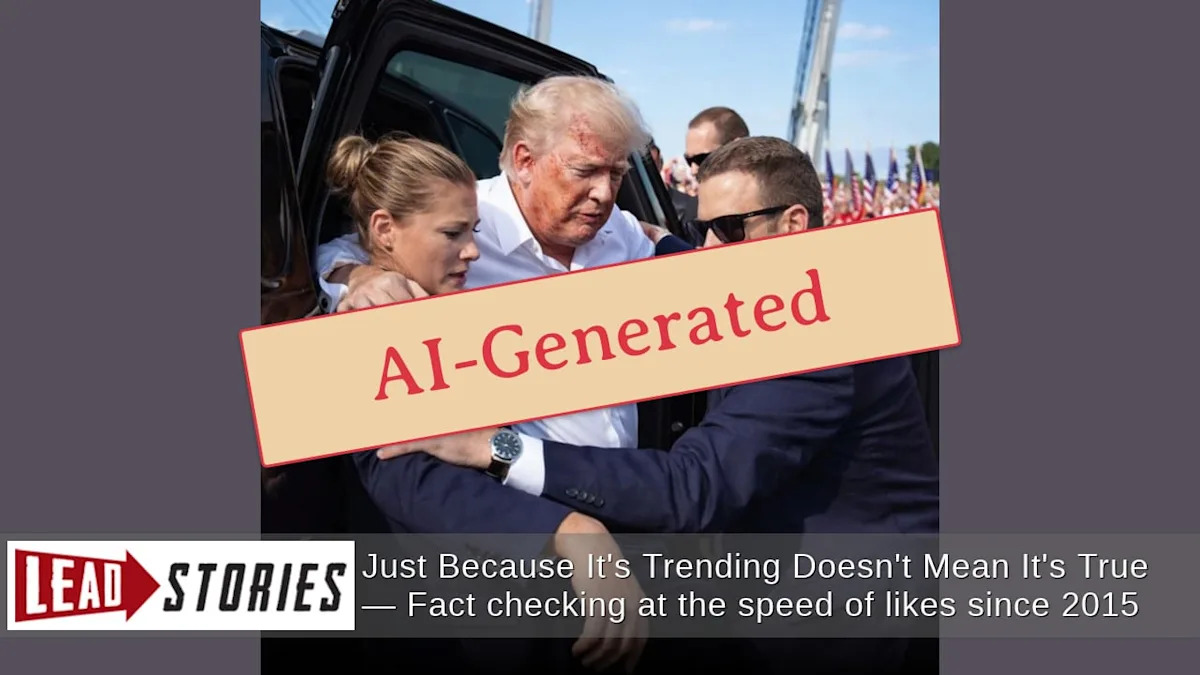
In a wave of misinformation surrounding the July 13, 2024, assassination attempt on former President Donald Trump, social media users have been circulating an AI-generated image falsely suggesting Trump suffered no injuries during the incident.
The fabricated photo, which shows Trump with a pristine, undamaged ear immediately after the Butler, Pennsylvania shooting, has been conclusively identified as artificial. When analyzed using the Hive Moderation AI-Generated Content Detection tool, the image was rated as 100% likely to be AI-generated.
The misleading image was shared on Facebook by an account called @T.bigpicture, which routinely posts AI-created content. The post carried a caption claiming, “WHITE HOUSE REJECTS CLAIM TRUMP AS@SSINATION ATTEMPT WAS FAKE CALLS IT IRRESPONSIBLE,” implying official government involvement in disputing conspiracy theories about the incident.
Closer inspection reveals several telltale signs of artificial generation, including physically impossible distortions in the background. Most notably, the car door behind Trump appears unnaturally bent in a way that defies structural possibility—a common flaw in AI-rendered images that attempt to recreate complex environments.
The fabricated nature of the image becomes even more apparent when conducting reverse image searches. Google Lens searches fail to locate the image in any legitimate news reports from the day of the assassination attempt. Instead, the image appears exclusively on social media platforms, further confirming its inauthenticity.
In stark contrast to this fabrication, Getty Images houses an extensive collection of verified photographs from the July 13 incident. These authenticated images clearly show Trump with blood visible on both his ear and face immediately following the shooting. These legitimate photographs have been published by reputable news organizations worldwide and provide documented evidence of the injuries Trump sustained.
The Butler assassination attempt was a significant national security incident that resulted in the death of one spectator and injuries to several others, including Trump himself. The former president was grazed in the ear by a bullet while speaking at a campaign rally. The shooter, positioned outside the event perimeter, was quickly neutralized by Secret Service agents.
This AI-generated image joins a growing trend of digital misinformation surrounding high-profile political events. Advanced AI image generation tools have made it increasingly difficult for average social media users to distinguish between authentic photographs and sophisticated fakes, particularly when they align with pre-existing beliefs or conspiracy theories.
Social media platforms have struggled to contain the spread of such misinformation, which can gain significant traction before fact-checking efforts catch up. The proliferation of accounts like @T.bigpicture, which mix genuine content with AI-generated imagery, further complicates the information landscape.
Media literacy experts recommend several strategies for identifying potentially fake images, including checking for physical impossibilities in the image, conducting reverse image searches, verifying sources, and using AI detection tools that are increasingly available to the public.
As the 2024 presidential election approaches, security analysts anticipate continued attempts to spread misinformation about the Butler assassination attempt and other significant political events, highlighting the need for vigilance when consuming and sharing content online.
Fact Checker
Verify the accuracy of this article using The Disinformation Commission analysis and real-time sources.

9 Comments
The creation and circulation of this AI-generated image is very troubling. Spreading false information about an assassination attempt undermines trust in our institutions and democratic processes. Robust fact-checking and media literacy are essential to combat the rise of disinformation.
This is a good example of why we need to be cautious about images and information shared online. AI-generated content is becoming increasingly realistic, making it harder to distinguish fact from fiction. I’m glad the authorities were able to identify this as an artificial image.
It’s concerning that AI-generated content can be so convincing that it fools people into believing it’s real. This highlights the importance of critical thinking and fact-checking, especially when it comes to information related to high-profile incidents. We must be vigilant against the spread of misinformation.
This is concerning. Spreading fake images and misinformation about a serious event like an assassination attempt is highly irresponsible. We need to rely on verified facts and official sources, not AI-generated content. Fact-checking is crucial to prevent the spread of disinformation.
Disturbing to see how easily misinformation can spread, especially around sensitive political events. AI-generated content like this fake photo is a real challenge. We need robust fact-checking and media literacy efforts to combat the rise of disinformation online.
This is a clear example of the dangers posed by AI-generated content. Fabricating visuals to spread misinformation is highly irresponsible and can have serious consequences. I’m glad the authorities were able to identify this as an artificial image and set the record straight.
I appreciate the effort to fact-check this misleading image. It’s alarming to see how advanced AI-generated content can be, to the point of creating fake visuals that appear convincing. We must be vigilant and always verify information, especially related to important political events.
Absolutely. Fact-checking and media literacy are so important in the digital age when misinformation can spread rapidly. It’s crucial we rely on reputable sources and not be fooled by AI-generated content.
Disturbing to see how advanced AI technology has become in creating such convincing yet false imagery. This highlights the critical need for vigilance and fact-checking, especially when it comes to sensitive political events. We must remain skeptical of unverified information, no matter how realistic it may appear.