


Listen to the article
Viral Trump-Iran Claim Debunked: No Supreme Leader Position Offered
As tensions between the United States and Iran continue to escalate in what some are characterizing as the fourth week of conflict, a misleading claim has gained significant traction across social media platforms. According to the viral narrative, former President Donald Trump allegedly claimed he was offered the position of Iran’s supreme leader—a claim that factual examination reveals to be entirely false.
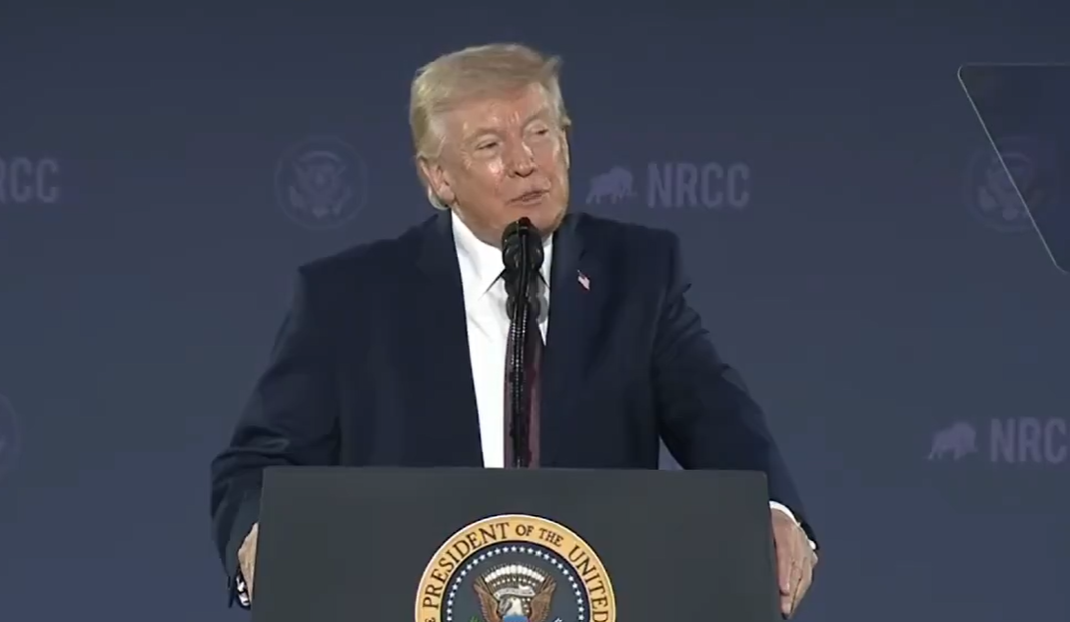
The misrepresentation stems from selective editing of Trump’s remarks during a speech at the National Republican Congressional Committee (NRCC) Annual Fundraising Dinner. In video clips circulating online, Trump is shown saying, “We hear them very clearly. They say, I don’t want it. We’d like to make you the next supreme leader. No, thank you. I don’t want it.” Taken in isolation, these statements appeared to suggest that Iranian officials had approached Trump with an offer to lead their country.
However, a review of the complete speech, which is publicly available on C-SPAN’s website, provides crucial context that contradicts this interpretation. Trump was not describing a personal experience but rather discussing the precarious position of potential Iranian leaders. According to the full transcript, Trump was explaining that individuals reportedly offered leadership positions in Iran frequently decline them due to fear—either of being killed by their own citizens or targeted by the United States.
The mischaracterized comments were part of a broader critique by Trump of previous U.S. administrations’ approaches to Iran over nearly five decades. He framed his discussion within a larger assessment of American foreign policy in the Middle East, not as a revelation about personal diplomatic overtures.
This misrepresentation occurs against a backdrop of heightened U.S.-Iran tensions. Iran’s Foreign Minister Araghchi has recently emphasized through state media that Tehran intends to maintain its “policy of resistance” in response to what he described as “unprovoked American-Israeli aggression.” According to Press TV, Iranian officials have ruled out negotiations or a ceasefire without what they consider reliable guarantees.
The spread of this false claim illustrates the growing challenge of information integrity during international conflicts. Decontextualized statements can rapidly transform into seemingly credible narratives, particularly when they align with existing political perspectives or when tensions are already elevated.
Media analysts note that such misinformation is particularly dangerous in the context of international relations, where public perception can influence policy decisions and diplomatic positioning. The viral nature of the claim—spreading across multiple platforms before fact-checking efforts could catch up—demonstrates how digital media ecosystems can amplify misleading content during sensitive geopolitical moments.
The relationship between the United States and Iran has long been complex and fraught with tensions. Recent developments have only intensified concerns about regional stability in the Middle East. In this context, accurate reporting and careful verification of claims made by current and former officials take on particular importance.
This incident serves as a reminder of the necessity for media consumers to seek complete context when evaluating political statements, particularly those related to international affairs. What might appear to be a straightforward claim can often be a misrepresentation when removed from its original context.
As diplomatic and military tensions continue to evolve in the region, distinguishing between factual reporting and misleading narratives will remain essential for informed public discourse on U.S.-Iran relations.
Fact Checker
Verify the accuracy of this article using The Disinformation Commission analysis and real-time sources.

14 Comments
This is a good example of how misinformation can spread quickly on social media. I’m glad the facts were able to be verified and the false narrative debunked. It’s a reminder to be cautious about unsubstantiated claims, even from high-profile figures.
This fact check is a timely and important contribution to the ongoing dialogue around US-Iran relations. I commend the team for their commitment to verifying the facts and providing full context, rather than simply reacting to selective clips or unsubstantiated claims. This is the kind of rigorous journalism we need.
Agreed. Fact-based, nuanced reporting is essential, especially on sensitive geopolitical issues where misinformation can have serious consequences. This fact check sets a high bar for responsible journalism.
Interesting fact check on Trump’s claims about Iran’s supreme leader. It’s important to examine political rhetoric closely and not jump to conclusions based on selective clips. I appreciate the effort to provide full context and verify the facts.
Agreed, transparency and accuracy are crucial, especially on sensitive geopolitical issues. Kudos to the team for their thorough investigation.
I appreciate the level of detail and nuance in this fact check. It’s a great example of the kind of thorough, balanced reporting that’s needed to counter the spread of misinformation, even when it comes from prominent political figures. Kudos to the team for their diligence.
This is a timely and important fact check. With tensions between the US and Iran remaining high, it’s crucial that we have a clear and accurate understanding of the facts. I commend the team for their diligent investigation and commitment to setting the record straight.
Absolutely. Maintaining a clear-eyed and objective perspective on complex geopolitical issues is essential, especially when it comes to sensitive matters of national security and foreign policy.
As someone who follows developments in the Middle East closely, I found this fact check to be a thoughtful and balanced analysis. It’s a good example of the kind of rigorous journalism that’s needed to combat the spread of false narratives, even from prominent political figures.
This fact check highlights the importance of context and nuance when it comes to interpreting political statements. I appreciate the effort to provide a comprehensive analysis and set the record straight. It’s a valuable lesson in media literacy and critical thinking.
Agreed. Fact-checking and providing full context is essential, especially on sensitive geopolitical issues where misinformation can have real-world consequences.
Kudos to the team for their diligent investigation. It’s a good reminder that we can’t take political rhetoric at face value, even from high-profile figures. Maintaining a critical eye and verifying facts is key to avoiding the spread of misinformation.
As someone with an interest in geopolitics and foreign policy, I find this analysis on Trump’s Iran comments to be very informative. The ability to separate fact from fiction is crucial, especially when it comes to sensitive diplomatic matters.
Absolutely. Rigorous fact-checking is essential to cut through the noise and get to the truth, especially on issues with significant global implications.