


Listen to the article
Unverified Nuclear Order Claims Go Viral Amid US-Iran Tensions
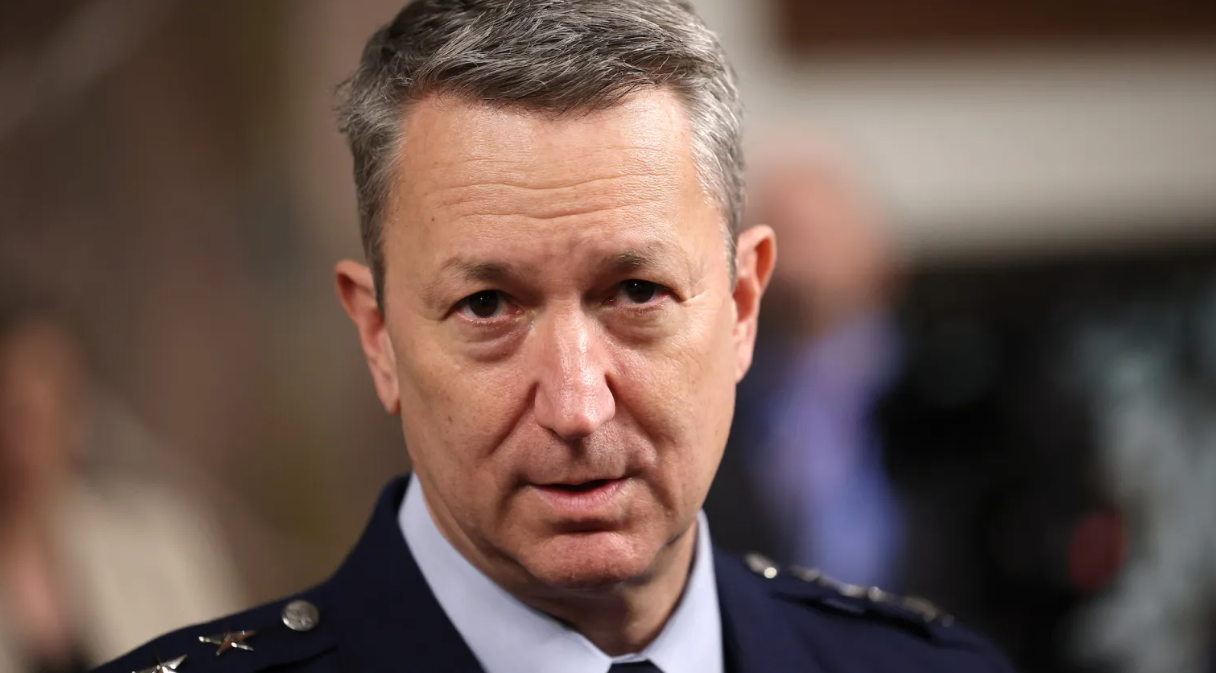
A claim that General Dan Caine physically blocked former President Donald Trump from launching a nuclear strike on Iran has exploded across social media, amassing nearly 2 million views within 24 hours despite fact-checkers finding no official record of the alleged confrontation.
The inflammatory allegation originated from Larry C. Johnson, a retired CIA analyst who appeared on the “Judging Freedom” podcast hosted by former judge Andrew Napolitano. Johnson claimed Trump attempted to “use the nuclear codes” during an emergency session at the White House, prompting Caine, Chairman of the Joint Chiefs of Staff, to intervene by invoking his military authority.
The story gained significant traction after political commentator Jimmy Dore shared the clip on social platform X on April 20, where it spread rapidly through shares and reposts.
Fact-checking organization Lead Stories investigated the claim and found no corroborating reports in mainstream media outlets. The investigation concluded that such a high-level confrontation, if verified, would have generated immediate and extensive coverage across major news organizations. As of this writing, the White House, Pentagon, and General Caine’s office have not issued statements addressing the alleged incident.
Johnson himself provided no specific source for the information, attributing it vaguely to “one report coming out of the White House.” A separate social media post from the account @JaokooMoses, which claimed Caine “stormed out” of the meeting, has been labeled false by platform moderators.
The unverified claim has found a receptive audience partly because it aligns with documented tensions between Trump and military leadership. A Washington Post report from February detailed Caine’s concerns about potential U.S. casualties and operational complexities regarding military action against Iran. Caine, who assumed his chairmanship in April 2025, is notably the first person appointed to the position without previously holding a four-star rank.
This friction between the commander-in-chief and his top military advisor has occasionally spilled into public view. In early April, Caine characterized a ceasefire as “a pause” rather than peace, language that contrasted sharply with Trump’s April 7 social media post warning that “a whole civilization will die tonight, never to be brought back again.” Amnesty International subsequently condemned Trump’s statement as a potential violation of international humanitarian law.
The geopolitical situation underlying these tensions has significant economic implications. After Iran closed the Strait of Hormuz in March, Brent crude prices surged beyond $120 per barrel, creating what the International Energy Agency described as the largest supply disruption in global oil market history. U.S. gasoline prices climbed to $4 per gallon by month’s end, while jet fuel costs more than doubled.
Following the collapse of peace talks between U.S. and Iranian officials in Islamabad, Trump ordered a naval blockade of the Strait. By mid-April, General Caine confirmed that 13 vessels had been redirected, with the operation expanding into the Pacific to intercept ships suspected of carrying Iranian cargo.
Johnson himself suggested that Trump’s public communications regarding the conflict have been designed to influence markets rather than convey accurate information, referencing reports that traders earned over $1 billion on suspiciously timed positions during the heightened tensions.
What remains unconfirmed is the core allegation that General Caine intervened to block a nuclear strike order. No documentary evidence, on-record sources, or legal filings substantiate this claim. What is established is the significant policy divergence between Trump’s aggressive rhetoric and the military’s more measured public stance—a gap wide enough to provide fertile ground for rumors.
Until official statements emerge from military or administration sources, Johnson’s explosive allegation remains in the realm of unverified claims rather than established fact.
Fact Checker
Verify the accuracy of this article using The Disinformation Commission analysis and real-time sources.

11 Comments
While the alleged incident between Trump and the military over nuclear codes is certainly newsworthy, the lack of corroborating evidence from reliable sources is concerning. Fact-checkers have not found any official record of such a high-level confrontation, which casts doubt on the veracity of this claim.
If true, this would be a concerning scenario with significant national security implications. However, the lack of corroborating reports from reputable sources suggests this may be an unsubstantiated rumor. Fact-checking is crucial when dealing with sensitive matters like this.
Agreed. Extraordinary claims require extraordinary evidence. Without that, it’s wise to withhold judgment and wait for more authoritative information to emerge before drawing conclusions.
The report of a clash between Trump and the military leadership over nuclear codes is certainly attention-grabbing, but the absence of mainstream media coverage and fact-checkers’ findings of no official record are worrying. Unverified claims of this magnitude require more thorough vetting before they can be considered credible.
Interesting claims about a potential nuclear confrontation between Trump and the military leadership. However, the lack of mainstream media coverage raises doubts about the veracity of this story. Without solid evidence, it’s prudent to approach such unverified reports with caution.
The story about Trump attempting to use nuclear codes and being blocked by the military is certainly dramatic, but the absence of mainstream media coverage and fact-checkers’ findings of no official record raise significant doubts about its accuracy. Extraordinary claims demand extraordinary evidence, which appears to be lacking in this case.
While the alleged confrontation between Trump and the military leadership over nuclear codes is eye-catching, the absence of mainstream media coverage raises red flags. Fact-checkers’ findings of no official record of such an event further undermine the credibility of this claim.
The story about Trump attempting to use nuclear codes and being blocked by the military is certainly dramatic, but the lack of verifiable evidence is concerning. Responsible journalism and rigorous fact-checking are essential when dealing with such high-stakes national security matters.
While the alleged clash between Trump and the military over nuclear codes is certainly newsworthy, the absence of corroborating reports from mainstream media outlets and fact-checkers’ findings of no official record are concerning. Prudence dictates withholding judgment until more reliable information emerges.
This claim about Trump and the nuclear codes seems quite sensational, but the lack of corroborating reports from reputable sources is troubling. Fact-checkers have found no official record of the alleged confrontation, so it’s prudent to approach this story with a healthy dose of skepticism.
The reported confrontation between Trump and the military leadership over nuclear codes is certainly a sensational claim, but the lack of verifiable evidence from reputable sources is troubling. Fact-checkers have not found any official record of such an event, which suggests this may be an unsubstantiated rumor.