


Listen to the article
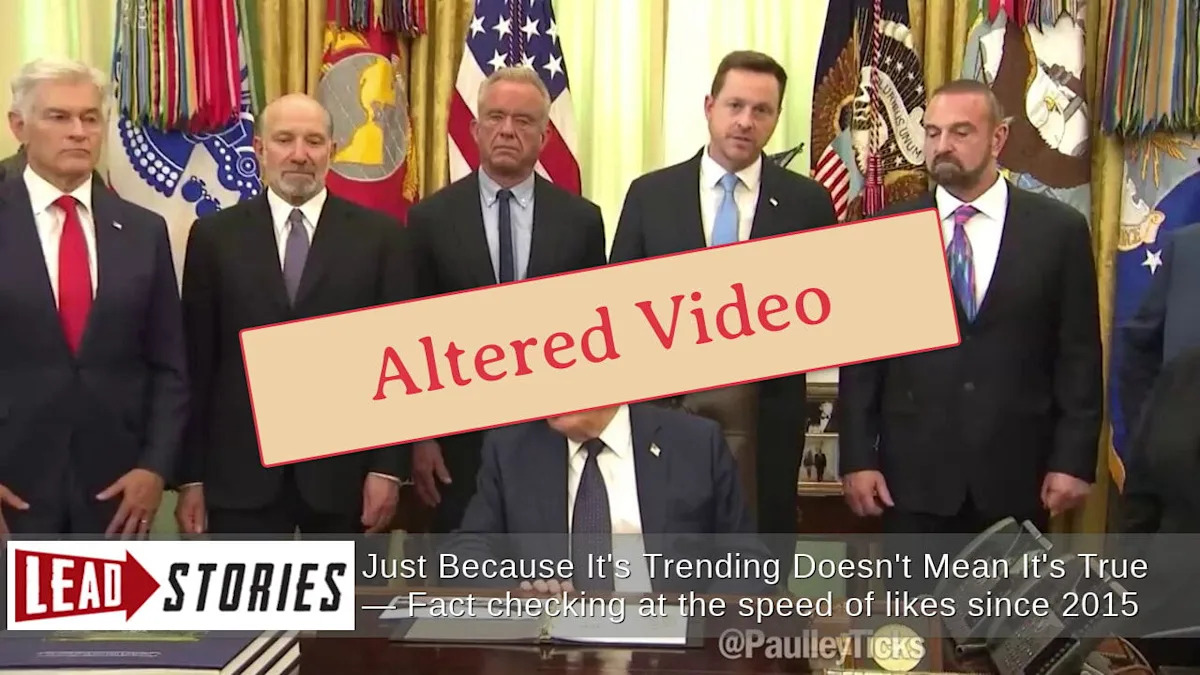
In a digital era where AI-manipulated content can spread like wildfire, a deceptive video claiming to show President Donald Trump falling asleep and hitting his head during an official White House event has been debunked as an artificial creation.
The fabricated clip, which began circulating on April 23, 2026, originated from a social media account called @PaulleyTicks on X (formerly Twitter). The post claimed: “BREAKING: President Trump doses [sic] off during live Healthcare Affordability Event – banging his head on the resolute desk with such force, that he knocks himself out cold.”
The video quickly gained traction across social media platforms, with many versions cropping out the original watermark that would have identified the clip’s source. Some users shared still images from the manipulated footage, further perpetuating the false narrative that Trump had fallen asleep during the official event.
Digital forensics analysis revealed multiple telltale signs of AI manipulation. In several frames, Trump’s hair unnaturally blends into his skin, and his left outer ear appears to be missing entirely. When analyzed with the InVID Verification plugin, a tool designed to detect AI-generated content, the video registered a 99 percent probability of being created through generative artificial intelligence.
The account responsible for the original post self-identifies as a meme creator with the bio: “Changing the world by any ‘memes’ necessary.” This same account has a documented history of publishing digitally altered videos, according to fact-checking organization Lead Stories.
Further evidence of manipulation came when the same account published an obviously edited still image showing an unrealistically long pen supposedly piercing through Trump’s head – clearly signaling the content creator’s intent to produce outlandish, fabricated material rather than authentic documentation.
The authentic video from the Healthcare Affordability Event, archived on the White House website, does show moments where President Trump briefly closes his eyes for periods of up to 10 seconds at various points between the 18:25 and 19:19 minute marks. However, the official recording contains no instance where Trump falls deeply asleep or hits his head on the Resolute Desk as portrayed in the manipulated clip.
This incident highlights the growing challenge of distinguishing between authentic and artificially manipulated media in political discourse. As generative AI tools become increasingly sophisticated and accessible, the ability to create convincing fake videos of public figures has emerged as a significant concern for maintaining factual integrity in news and social media.
Digital literacy experts emphasize the importance of scrutinizing viral content, particularly when it depicts unusual or dramatic behavior from public figures. Key warning signs include visual inconsistencies, such as unnatural blending of features, missing body parts, or unrealistic movements.
The rapid spread of this manipulated content also demonstrates how quickly misinformation can propagate when it aligns with existing political narratives or triggers emotional responses. Many users sharing the content appeared to accept its authenticity without verification, highlighting the challenges faced by fact-checkers and platform moderators in stemming the tide of digital misinformation.
As the 2026 political season continues, media literacy advocates stress the importance of verifying content through official sources and using available AI-detection tools before sharing potentially misleading material on social platforms.
Fact Checker
Verify the accuracy of this article using The Disinformation Commission analysis and real-time sources.

8 Comments
This is yet another example of how AI-generated content can be used to mislead the public. It’s crucial that we remain vigilant and fact-check claims, rather than blindly sharing unverified information.
Agreed. Deepfakes and other manipulated media pose a significant threat to truth and accountability. We must stay informed and rely on credible sources.
I appreciate the diligence of the fact-checkers in identifying the telltale signs of AI manipulation in this video. It’s a valuable reminder to be cautious and seek out reliable sources when consuming news and information online.
Well said. We must remain vigilant and not let ourselves be easily deceived by such fabricated content.
While it’s concerning to see such a blatant attempt to spread disinformation, I’m glad the video was quickly debunked through digital forensics analysis. We need to be increasingly cautious about the content we consume online.
Absolutely. The proliferation of AI-generated content is a growing challenge that requires vigilance and critical thinking from all of us.
This incident highlights the importance of verifying the authenticity of visual content, especially in the digital age where manipulation can be so convincing. Fact-checking is essential to combat the spread of misinformation.
The rapid spread of this manipulated video is concerning, but I’m glad the truth was eventually uncovered. It’s a sobering reminder of the potential for AI-generated content to be used to mislead the public.