


Listen to the article
In a digital landscape clouded by misinformation, a synthetic video claiming to show Venezuelan public reaction to an alleged U.S. military operation has been circulating widely on social media platforms with conflicting narratives.
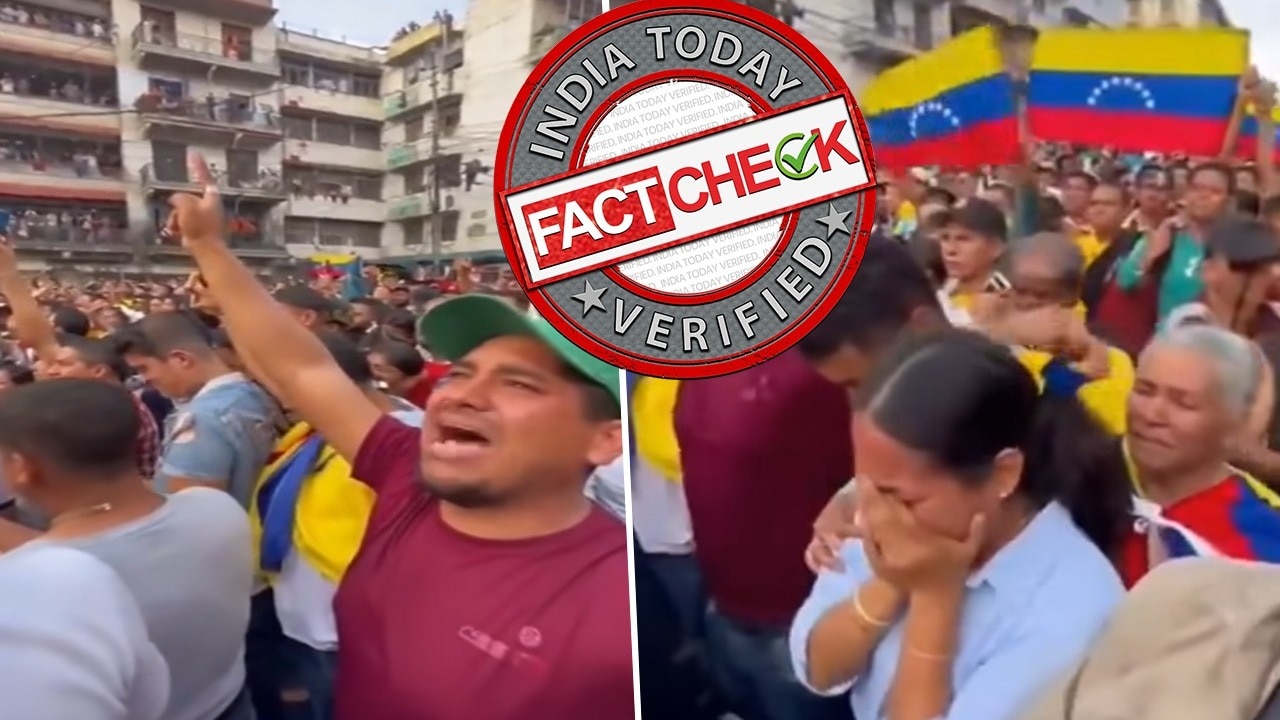
The 15-second clip, which depicts a large crowd of people holding Venezuelan flags and crying, has been shared across platforms with some users claiming it shows anti-U.S. demonstrations following an alleged abduction of President Nicolas Maduro, while others presented it as footage of Venezuelans celebrating American intervention.
One social media post accompanying the video claimed: “A sea of faces fills the streets of Venezuela, tears in their eyes, chants of libertad on their lips. Joy mixed with pain, hope born from years of silence as the man who ruled through fear is finally held accountable. Freedom for Venezuelan citizens was long overdue. Tonight, the people breathe again. Thank God for President Trump.”
Fact-checking efforts by India Today have confirmed the video is entirely AI-generated, lacking any connection to actual events in Venezuela. Close examination revealed several telltale signs of artificial creation, including distorted hands among the crowd members and inconsistencies with the Venezuelan flag, which displays an incorrect number of stars in some frames.
The video also carries a watermark from TikTok account “@ia_comediante,” which explicitly labels the content as AI-generated on its profile. The account, whose biography in Portuguese states “Here, laughter is guaranteed!” regularly posts artificially created videos. Additional verification using AI detection tool Hive Moderation further confirmed the synthetic nature of the footage.
The spread of this fabricated content comes amid genuine geopolitical tensions involving Venezuela. According to Reuters reporting, Venezuelan diaspora communities in various countries have indeed celebrated reports of operations against the Maduro government, though reactions within Venezuela itself have been markedly different.
CNN has reported that while some opposition to Maduro exists within Venezuela, expressions of support for any foreign intervention have been largely subdued, with some citizens allegedly “playing music from their balconies, apparently fearing reprisals if they took to the streets.”
The Venezuelan government has reportedly instituted emergency measures, with Reuters noting that authorities have issued orders “to immediately begin the national search and capture of everyone involved in the promotion or support for the armed attack by the United States.”
This incident highlights the growing challenge of distinguishing between authentic and artificially generated content in crisis situations. As AI technology becomes increasingly sophisticated, the potential for synthetic media to confuse public understanding of global events continues to expand.
The video’s widespread circulation with competing narratives demonstrates how easily manipulated content can be weaponized to support contradictory political positions, further complicating efforts to establish factual accounts of events in politically volatile regions.
Media literacy experts have consistently warned about the rise of such content, particularly during moments of political upheaval when public appetite for information is high and verification channels may be disrupted or overwhelmed.
For citizens seeking accurate information about international developments, reliance on established news organizations with rigorous fact-checking processes remains essential in navigating an increasingly complex information environment where compelling but entirely fictional content can rapidly gain traction.
Fact Checker
Verify the accuracy of this article using The Disinformation Commission analysis and real-time sources.

11 Comments
I appreciate the journalists who took the time to thoroughly investigate the origins of this video. Verifying the authenticity of visual media is so important in an age of deepfakes and other AI-manipulated content. Fact-checking is essential to prevent the spread of misinformation, even when the narratives align with our own biases.
Kudos to the fact-checkers for identifying this video as AI-generated. It’s a sobering example of how synthetic media can be used to spread misleading narratives. Remaining vigilant and verifying information from authoritative sources is the best defense against the rising tide of online misinformation.
This video seems to have sparked some strong reactions, both positive and negative. It’s important to rely on authoritative sources and fact-checking to separate truth from fiction, especially when it comes to events in Venezuela. This synthetic footage highlights the need for critical analysis of online content.
The contrasting narratives around this AI-generated video highlight the complexities of the situation in Venezuela and the challenges of navigating online information. While it’s concerning to see misinformation spreading, I’m glad the fact-checkers were able to identify the synthetic nature of the footage.
The conflicting narratives around this AI-generated video underscore the complexities of the situation in Venezuela. While it’s concerning to see misinformation spreading, I’m glad the fact-checking efforts were able to identify the clip as artificially created. Maintaining objectivity is crucial when discussing sensitive geopolitical issues.
The contrasting narratives surrounding this AI-generated video underscore the need for nuanced, evidence-based analysis of events in Venezuela. While the video may have evoked strong emotional reactions, it’s reassuring to see journalists taking the time to verify its origins and debunk the associated claims.
This case highlights the importance of digital media literacy. Even when content aligns with our preconceptions, we must still scrutinize its origins and authenticity. Fact-checking efforts like this help the public navigate the complex information landscape and make more informed decisions.
It’s troubling to see how easily misinformation can spread, even when the underlying content is entirely fabricated. This incident serves as a reminder of the importance of critical thinking and fact-checking, especially when it comes to sensitive geopolitical issues. Kudos to the journalists for their diligent work.
Agreed. In an era of rapid information dissemination, maintaining a healthy skepticism and verifying claims against reliable sources is crucial. Fact-checking efforts like this help safeguard the public discourse.
The contrasting interpretations of this synthetic video demonstrate how easily information can be distorted online. It’s a good reminder to approach all social media content with a critical eye and to cross-reference claims against reliable sources. Responsible reporting and digital literacy are key to navigating today’s information landscape.
Well said. Maintaining a skeptical yet open-minded approach is crucial when evaluating online content, especially around sensitive geopolitical issues.