


Listen to the article
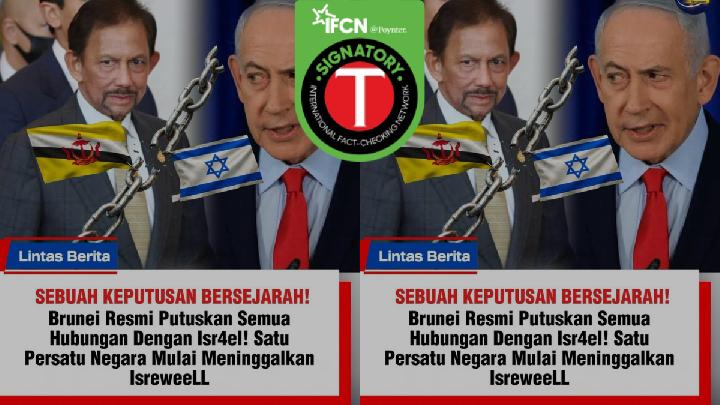
In a recent fact-checking investigation, TEMPO.CO has debunked claims circulating on social media regarding Brunei Darussalam’s diplomatic relations with Israel. The false information, which appeared on X (formerly Twitter) and Facebook, alleged that Brunei had officially cut diplomatic ties with Israel on April 13, 2026.
The misleading posts featured an image showing Brunei’s monarch alongside Israel’s prime minister, suggesting a dramatic diplomatic rupture between the two nations. According to the posts, Brunei had taken this decisive action amid escalating tensions in the Middle East, framing it as a demonstration of support for Palestinian rights.
However, TEMPO’s fact-checking team has confirmed that this claim is entirely false. Brunei Darussalam has never established diplomatic relations with Israel in the first place, making it impossible for the sultanate to “sever” ties that never existed.
This misinformation highlights a broader geopolitical reality in the Middle East and among Muslim-majority nations. As of 2023, thirty United Nations member states maintain no diplomatic relations with Israel. According to data from the Israeli Embassy cited by TEMPO, this group includes 19 members of the Arab League and 11 other countries with predominantly Muslim populations.
Among these nations are Indonesia, Pakistan, Bangladesh, Nigeria, Iran, Algeria, Sudan, Iraq, Afghanistan, Malaysia, and Brunei Darussalam. Many of these countries have adopted this stance in response to Israel’s ongoing occupation of Palestinian territories since 1967, including the West Bank, East Jerusalem, and Gaza—territories that the International Court of Justice has confirmed remain under military occupation.
Brunei Darussalam stands out as particularly stringent in its position regarding Israel. The oil-rich sultanate was the first Asian nation to implement a comprehensive ban on Israeli citizens entering its territory. Any Israeli nationals attempting to enter Brunei face monetary penalties and immediate deportation.
This stance aligns with Brunei’s strong support for Palestinian self-determination and reflects the sultanate’s position as a conservative Islamic monarchy. While many Southeast Asian nations maintain complicated relationships with Israel—often balancing diplomatic, economic, and security interests against solidarity with Palestine—Brunei has consistently maintained one of the region’s hardest-line positions.
The spread of such misinformation comes at a time of heightened tensions in the Middle East, with ongoing conflicts that have intensified debates about international relations with Israel. Social media has increasingly become a battlefield for competing narratives around the Israeli-Palestinian conflict, with false claims often gaining traction during periods of escalation.
TEMPO’s fact-check serves as a reminder of the importance of verifying information before sharing it, particularly on sensitive geopolitical issues. The publication has encouraged readers to submit claims for verification through their fact-checking service and welcomes feedback on their investigative findings.
As digital misinformation continues to proliferate across platforms, reliable fact-checking initiatives like TEMPO’s play a crucial role in helping the public navigate complex international relations and distinguish between factual reporting and misleading content.
Fact Checker
Verify the accuracy of this article using The Disinformation Commission analysis and real-time sources.

10 Comments
This is an important issue to get right, given the sensitivities around the Israel-Palestine conflict. It’s good to see the media fact-checking claims and providing the accurate information about Brunei’s diplomatic status with Israel.
I agree, fact-checking is crucial, especially on complex geopolitical topics where misinformation can spread easily online. This article sets the record straight in a balanced way.
This is a timely fact check, given the ongoing tensions in the Middle East. It’s important to separate fact from fiction, especially when it comes to sensitive diplomatic matters. Kudos to the reporters for their diligent work.
The article’s breakdown of the actual diplomatic relationships, or lack thereof, between Brunei and Israel is informative. It’s a good example of the importance of verifying claims, especially when they involve sensitive international issues.
As someone interested in global affairs, I appreciate the level of detail and nuance in this fact check. It’s a good reminder that we can’t always trust social media claims, especially on complex geopolitical topics. Fact-checking is crucial.
Absolutely. Social media can be a breeding ground for misinformation, so it’s essential that reputable news sources step in to provide accurate, well-researched information. This article is a great example of that.
Interesting to see this fact check on Brunei’s diplomatic ties with Israel. It’s a complex issue, with many Muslim-majority nations still not recognizing Israel. I appreciate the nuanced reporting here in separating fact from fiction.
Yes, the article does a good job of clarifying the actual geopolitical situation rather than amplifying misleading social media claims. Transparency around these types of diplomatic relations is important.
I’m curious to learn more about the broader context of which nations do and don’t have diplomatic ties with Israel. The article touches on this but it would be interesting to dive deeper into the nuances and driving factors behind those relationships.
That’s a great point. Understanding the broader geopolitical landscape and each country’s unique considerations would provide helpful context around this issue. A more in-depth exploration could be insightful.