


Listen to the article
West Bengal Education Minister Target of AI-Generated Video Hoax During Election Season
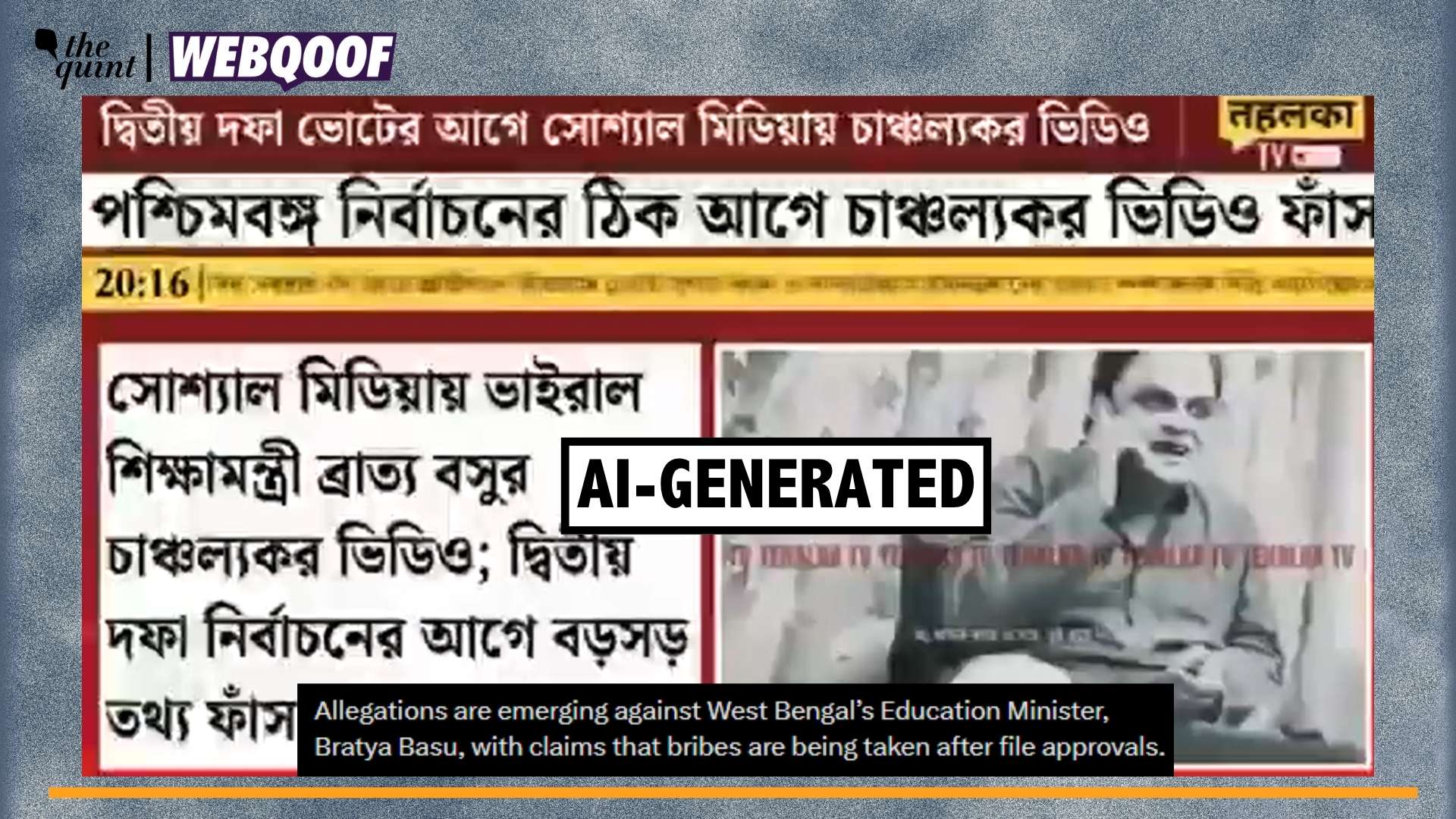
A doctored video of West Bengal Education Minister Bratya Basu allegedly accepting a bribe has been circulating widely on social media platforms, adding to the charged atmosphere of the ongoing state elections. The manipulated clip, which depicts Basu purportedly taking cash and signing documents, has been identified as an AI-generated fake.
The video gained significant traction after being shared by a Twitter (now X) account under the name ‘Agnimitra Paul BJP,’ which alleged, “Allegations are emerging against West Bengal’s Education Minister, Bratya Basu, with claims that bribes are being taken after file approvals. Such serious charges demand a transparent and impartial investigation.” The post quickly accumulated over 5,000 views and was subsequently reshared across multiple social media platforms.
Digital forensics experts have definitively labeled the claim as false after analyzing the content. Their investigation revealed multiple inconsistencies typical of AI-generated media, including unnatural movements, audio-visual synchronization issues, and digital artifacts that don’t appear in authentic video recordings.
This incident highlights the growing challenge of synthetic media in political contexts, particularly during sensitive election periods. West Bengal, a politically significant state with a history of contentious elections, has seen an uptick in misinformation campaigns as voting proceeds through multiple phases.
The emergence of such sophisticated fake content raises serious concerns about the potential impact on voter perception and democratic processes. AI-generated deepfakes represent a dangerous evolution in political misinformation, as they can be produced rapidly and appear increasingly convincing to casual observers.
Election Commission officials have previously warned about the proliferation of AI-generated content during the 2024 election cycle. This incident underscores those concerns, demonstrating how public figures can be targeted with fabricated evidence of wrongdoing that appears realistic enough to convince many viewers.
Digital rights activists point out that such falsified content targeting political figures could have serious implications for voter trust and democratic institutions. The speed at which such content spreads often outpaces fact-checking efforts, potentially leaving lasting impressions even after debunking.
The Ministry of Electronics and Information Technology has previously issued advisories regarding the responsible use of AI technologies, particularly concerning the creation and distribution of synthetic media. Current regulations require clear disclosure when AI-generated content is shared, though enforcement remains challenging.
Education Minister Basu’s office has not yet issued a formal statement addressing the fake video, though sources close to the minister have expressed concern about the potential damage to his reputation during the critical election period.
West Bengal’s multi-phase elections continue to be closely watched nationwide, with high stakes for both the ruling Trinamool Congress and opposition parties. The state has historically been a politically volatile region where campaign tactics come under intense scrutiny.
Digital literacy experts emphasize that viewers should approach political content with heightened skepticism during election periods, looking for verification from multiple sources before accepting potentially inflammatory claims. They recommend checking for unusual visual or audio elements that might indicate AI manipulation.
As technology continues to advance, the distinction between authentic and synthetic media will likely become increasingly difficult to discern without specialized tools. This incident serves as a sobering reminder of the evolving challenges facing electoral integrity in the digital age.
The case also highlights the need for more robust regulatory frameworks and technological solutions to address the growing sophistication of AI-generated misinformation in political contexts.
Fact Checker
Verify the accuracy of this article using The Disinformation Commission analysis and real-time sources.

11 Comments
It’s disheartening to see how easily misinformation can spread in the digital age. Robust fact-checking and media literacy efforts are crucial to combat the proliferation of AI-generated fakes, especially during elections. Maintaining an informed and engaged citizenry is vital for a healthy democracy.
Political smear campaigns relying on fabricated evidence are a serious threat to democracy. I’m glad the authorities were able to quickly identify this video as an AI-generated forgery. Voters should be vigilant and rely on trusted, fact-based sources of information.
Disturbing to see such blatant attempts to spread misinformation during elections. We need robust fact-checking mechanisms to quickly identify and debunk these AI-generated fakes. Voters deserve accurate information to make informed decisions.
The use of AI to create fake videos is deeply concerning. These technologies can be exploited to sway public opinion and erode faith in our institutions. A thorough investigation is warranted to uncover the source and motivations behind this particular hoax.
While I appreciate the desire for transparency, this video seems to be a clear case of digital manipulation. We should be wary of unsubstantiated claims, especially those amplified through social media during sensitive electoral periods.
Agreed. Spreading unverified allegations, even against public officials, can undermine trust in democratic processes. Fact-checking is crucial to maintain the integrity of elections.
Political smear campaigns relying on fabricated evidence are a serious threat to democracy. I’m glad the authorities were able to quickly identify this video as an AI-generated forgery. Voters should be vigilant and rely on trusted, fact-based sources of information.
The use of AI to create fake videos is deeply concerning. These technologies can be exploited to sway public opinion and erode faith in our institutions. A thorough investigation is warranted to uncover the source and motivations behind this particular hoax.
It’s disheartening to see how easily misinformation can spread in the digital age. Robust fact-checking and media literacy efforts are crucial to combat the proliferation of AI-generated fakes, especially during elections. Maintaining an informed and engaged citizenry is vital for a healthy democracy.
While I appreciate the desire for transparency in government, this video seems to be a clear case of digital manipulation. We should be wary of unsubstantiated claims, especially those amplified through social media during sensitive electoral periods.
Agreed. Spreading unverified allegations, even against public officials, can undermine trust in democratic processes. Fact-checking is crucial to maintain the integrity of elections.