


Listen to the article
Fact Check: Viral Video of Indian Media Coverage on Pakistan-Iran Diplomacy Revealed as AI-Generated
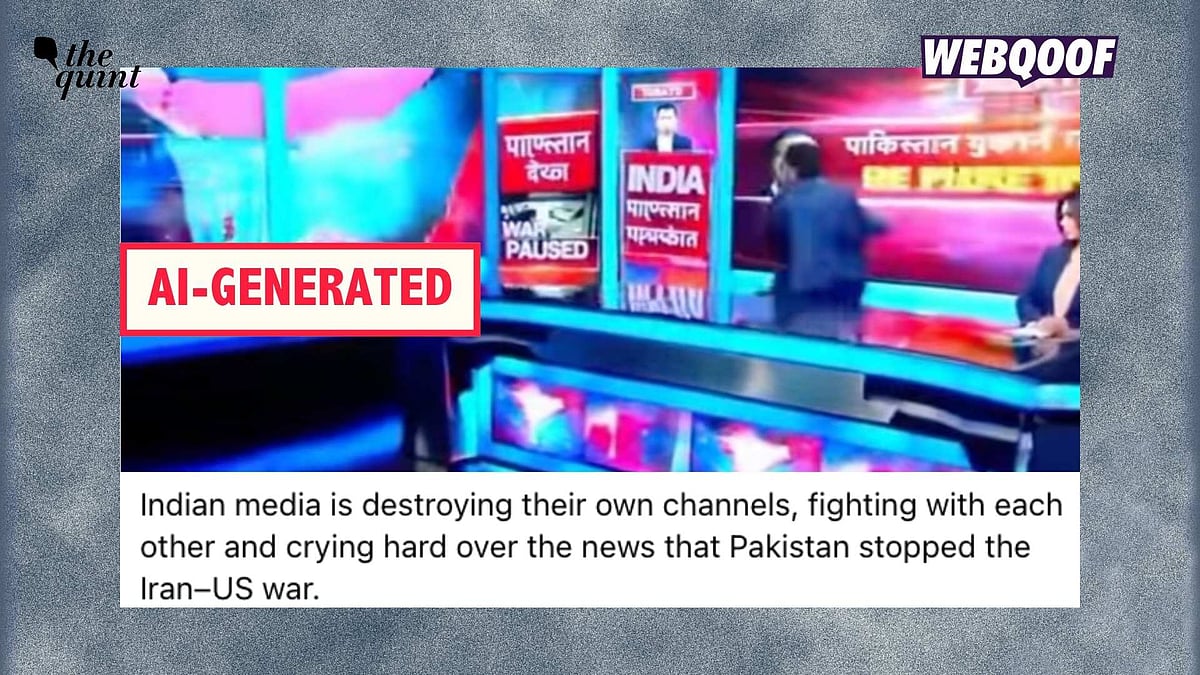
A video purportedly showing Indian media coverage of Pakistan’s mediation in US-Iran negotiations has been determined to be entirely fabricated using artificial intelligence technology, according to a detailed analysis conducted by fact-checkers.
The investigation revealed multiple telltale signs indicating the video’s artificial origin, despite its initially convincing appearance to casual viewers. Careful examination exposed several critical errors that would never appear in legitimate news broadcasts.
Among the most obvious indicators was the misspelled chyron reading “BREAKIN NEWS” instead of the standard “BREAKING NEWS” that would appear on any professional news broadcast. This type of elementary spelling error would be highly unlikely in professional media operations, where multiple staff members review on-screen graphics before broadcast.
Further analysis showed inconsistencies in the news channel’s branding elements. The logos displayed in the top right and bottom left corners of the screen failed to match each other—a clear production error that legitimate news organizations would not make in their broadcasts.
Perhaps most telling was the content itself. Investigators found that nearly all text displayed on screen throughout the video consisted of unintelligible gibberish rather than coherent information about the supposed diplomatic development. The nonsensical text appeared designed merely to fill space rather than convey actual news content.
The AI-generated news anchor’s movements presented another significant red flag. Rather than displaying the natural, fluid motions of a human presenter, the anchor moved in an unnatural, choppy manner characteristic of current limitations in AI-generated video technology.
This fabricated video emerges amid increasing tensions between Iran and the United States, where Pakistan has occasionally attempted to position itself as a potential diplomatic intermediary. The false narrative of Pakistan successfully mediating between these two powers appears designed to inflate Pakistan’s perceived diplomatic importance in the region.
The spread of such sophisticated AI-generated content highlights the growing challenge of misinformation in international politics and media. As AI technology becomes more accessible and increasingly sophisticated, distinguishing between authentic and fabricated media grows more difficult for the average viewer.
Media literacy experts warn that we’re entering a new phase of information warfare where seeing can no longer be equated with believing. The convincing nature of this fabrication demonstrates how AI tools can create content that, at first glance, mimics legitimate news broadcasts from established media organizations.
The incident also underscores the ongoing tensions in South Asian media landscapes, particularly between India and Pakistan, where narratives about international relations and diplomatic standing remain highly contested and sensitive topics.
Social media platforms have struggled to contain the spread of such sophisticated misinformation. While some platforms have implemented fact-checking mechanisms and warning labels, AI-generated content often circulates widely before being identified as fabricated.
Technology experts point out that this represents only the beginning of challenges associated with AI-generated media. As these tools improve, detecting fabricated content will require increasingly sophisticated methods and greater vigilance from both platforms and users.
Media organizations across South Asia have begun implementing additional verification protocols for sourcing content, particularly for stories involving sensitive geopolitical developments between regional powers.
This incident serves as a reminder for viewers to exercise critical thinking when consuming news, particularly content shared through social media channels. Experts recommend verifying information through multiple credible sources before accepting claims about significant diplomatic or geopolitical developments.
The fact-checking organization that identified the fabrication encourages the public to submit suspicious content for professional verification rather than sharing unverified information that may contribute to regional tensions or misunderstandings.
Fact Checker
Verify the accuracy of this article using The Disinformation Commission analysis and real-time sources.

28 Comments
Nice to see insider buying—usually a good signal in this space.
Good point. Watching costs and grades closely.
Good point. Watching costs and grades closely.
The cost guidance is better than expected. If they deliver, the stock could rerate.
Good point. Watching costs and grades closely.
If AISC keeps dropping, this becomes investable for me.
Good point. Watching costs and grades closely.
Good point. Watching costs and grades closely.
Uranium names keep pushing higher—supply still tight into 2026.
Good point. Watching costs and grades closely.
Good point. Watching costs and grades closely.
The cost guidance is better than expected. If they deliver, the stock could rerate.
Nice to see insider buying—usually a good signal in this space.
Good point. Watching costs and grades closely.
Nice to see insider buying—usually a good signal in this space.
Good point. Watching costs and grades closely.
Silver leverage is strong here; beta cuts both ways though.
Good point. Watching costs and grades closely.
Good point. Watching costs and grades closely.
Uranium names keep pushing higher—supply still tight into 2026.
Good point. Watching costs and grades closely.
Production mix shifting toward Fact Check might help margins if metals stay firm.
Silver leverage is strong here; beta cuts both ways though.
Good point. Watching costs and grades closely.
Interesting update on Fact-Check: AI-Generated Video Falsely Circulated as Authentic Indian Media Coverage of Pakistan. Curious how the grades will trend next quarter.
The cost guidance is better than expected. If they deliver, the stock could rerate.
Good point. Watching costs and grades closely.
Good point. Watching costs and grades closely.