


Listen to the article
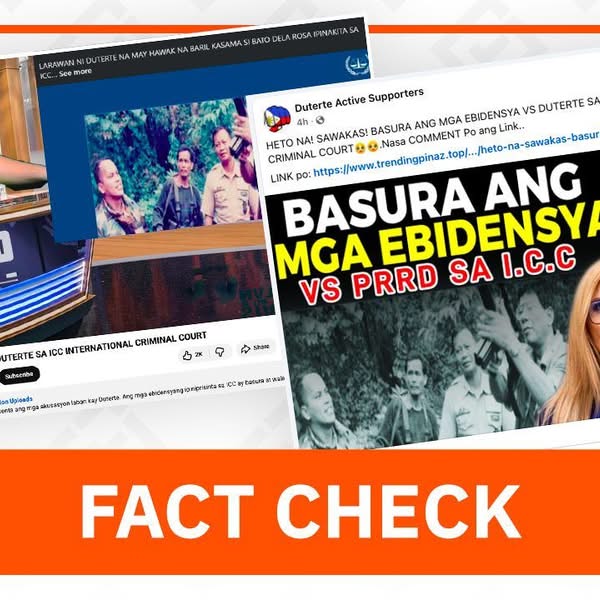
Prosecutors at the International Criminal Court (ICC) have submitted evidence that includes a 1997 photograph of former Philippine President Rodrigo Duterte, part of their case examining his controversial war on drugs campaign. The image, taken in Davao City where Duterte served as mayor for over two decades, was presented to illustrate what prosecutors describe as his “tough guy” persona that would later define his presidency.
The photograph has gained significant attention on social media platforms, where it has been circulating amid ongoing ICC investigations into allegations of crimes against humanity committed during Duterte’s presidential term from 2016 to 2022.
The ICC prosecution team incorporated the image as supporting material in their formal submission of merits, contextualizing Duterte’s public image long before he ascended to national power. Legal experts note that such historical documentation helps establish a pattern of behavior and public positioning that prosecutors believe is relevant to understanding policies implemented during his presidency.
Duterte’s time as mayor of Davao City has long been scrutinized by human rights organizations. During his 22-year tenure in the southern Philippine city, he gained both notoriety and popularity for his hardline stance on crime and alleged support for vigilante groups targeting drug suspects. These local policies would later form the blueprint for his national anti-drug campaign after his election as president in 2016.
The Philippines officially withdrew from the ICC in 2019, following the court’s preliminary examination into Duterte’s anti-drug campaign. However, the ICC maintains it retains jurisdiction over crimes allegedly committed while the Philippines was still a member state. This jurisdictional question remains hotly contested by Duterte’s supporters and the current Philippine government.
Human rights groups estimate that between 6,000 and 30,000 people were killed in anti-drug operations during Duterte’s presidency. The wide discrepancy in numbers reflects the challenges in documenting casualties in what critics have called extrajudicial killings, while government figures acknowledge only those killed in official police operations.
The current administration under President Ferdinand Marcos Jr. has maintained a complex position regarding the ICC investigation. While not actively cooperating with prosecutors, Marcos has not employed the confrontational rhetoric of his predecessor, who had threatened ICC investigators with arrest should they enter Philippine territory.
Legal scholars emphasize that the ICC process typically moves deliberately, with investigations and potential prosecutions often taking years to complete. The court focuses on establishing command responsibility in cases of alleged crimes against humanity, examining whether political leaders created environments where human rights abuses became systemic.
The use of the 1997 photograph demonstrates the prosecution’s effort to establish a historical narrative linking Duterte’s early political identity to later policies. Media analysts note this approach aims to show continuity between his local and national approaches to crime and drug enforcement.
Public reaction to the ICC proceedings remains deeply divided in the Philippines. Duterte maintains significant popular support, with many Filipinos crediting his administration with improving public safety, while critics and human rights advocates continue pushing for accountability for alleged abuses during his term.
The #FactsFirstPH initiative has been working to verify information related to the ICC case, countering misinformation that has proliferated on social media platforms regarding the investigation. Fact-checkers have confirmed the authenticity and context of the 1997 photograph, which has become a symbolic element in the broader legal and political narrative surrounding Duterte’s controversial legacy.
As the ICC proceedings continue, they represent an important test case for international justice mechanisms and their effectiveness in addressing alleged human rights violations by former heads of state, particularly in regions where domestic accountability may be limited by political factors.
Fact Checker
Verify the accuracy of this article using The Disinformation Commission analysis and real-time sources.

12 Comments
This 1997 photo of Duterte certainly seems to fit the narrative of his ‘tough guy’ persona that he cultivated over the years. It will be fascinating to see how the ICC prosecution uses this and other historical evidence to build their case against him. The court will need to carefully evaluate the significance of this photo.
Establishing a pattern of behavior is a common legal strategy, but the ICC will have to clearly explain the relevance of this particular photo to the specific allegations against Duterte during his presidency.
This photo from Duterte’s time as mayor of Davao City provides valuable insight into the origins of his ‘tough guy’ persona that he later brought to the presidency. It will be interesting to see how the ICC prosecution uses this and other evidence to build their case.
Establishing a clear pattern of behavior over time can be a powerful tool in criminal prosecutions. The ICC will need to demonstrate how this photo and other evidence relate to the specific allegations against Duterte.
It’s interesting that the ICC is leveraging this 1997 photo of Duterte as part of their prosecution. The image does seem to fit the narrative of him cultivating a ‘tough guy’ persona even before becoming president. Curious to see how the court evaluates the significance of this evidence.
Establishing a pattern of behavior can be an important component of criminal cases. The ICC will need to carefully explain how this photo relates to the specific allegations against Duterte during his presidency.
The use of this 1997 photo from Duterte’s time as Davao City mayor is an interesting move by the ICC prosecution. It provides historical context for the ‘tough guy’ image he later brought to the presidency. Will be important to see how the court assesses the relevance of this evidence.
Incorporating evidence from an individual’s past can be a strategic approach, but the ICC will need to demonstrate the direct connection to the alleged crimes committed during Duterte’s time as president.
Interesting to see this photo being used as part of the ICC prosecution against Duterte. It does seem to fit the narrative of him cultivating a ‘tough guy’ image even before becoming president. Curious to see how this and other evidence is evaluated in the case.
The use of historical documentation to establish a pattern of behavior is a common legal strategy. It will be important for the ICC to carefully assess the context and significance of this photo in their overall case.
The ICC’s use of this 1997 photo to illustrate Duterte’s long-standing ‘tough guy’ image is a savvy legal strategy. It provides historical context that could be relevant to understanding the policies and actions taken during his presidency. Looking forward to seeing how this plays out.
Carefully contextualizing evidence from an individual’s past is crucial in building a strong case. The ICC prosecution will need to demonstrate the direct relevance of this photo to the allegations against Duterte.