


Listen to the article
Biocon Chief’s Praise for Bengaluru Infrastructure Sparks Resident Backlash
Biocon Executive Chairperson Kiran Mazumdar-Shaw’s recent social media endorsement of Bengaluru’s infrastructure improvements has triggered a wave of contradictory responses from city residents, highlighting the uneven nature of urban development across India’s tech capital.
In her post on X (formerly Twitter), Shaw commended Deputy Chief Minister DK Shivakumar and Bruhat Bengaluru Mahanagara Palike (BBMP) officials for what she described as transformative efforts in revitalizing the city’s deteriorating infrastructure.
“We are finally seeing cleaner footpaths and asphalted roads,” Shaw wrote. “Your leadership has been key in preventing the city from collapsing under garbage debris and potholes.” The biotech leader also called for greater citizen participation in developing Bengaluru into a “world-class city.”
However, Shaw’s optimistic assessment quickly met with skepticism from numerous Bengaluru residents who contested her portrayal of widespread improvements, suggesting instead that any progress remains localized to specific neighborhoods—often those frequented by dignitaries or located in high-visibility areas.
A resident responding to Shaw’s post highlighted the stark contrast in infrastructure quality by inviting her to “take a tour of Varthur–Gunjur Road,” a notoriously problematic stretch in east Bengaluru that has long been the subject of citizen complaints. The area, which connects several tech parks and residential enclaves, has struggled with inadequate road maintenance despite housing thousands of IT professionals.
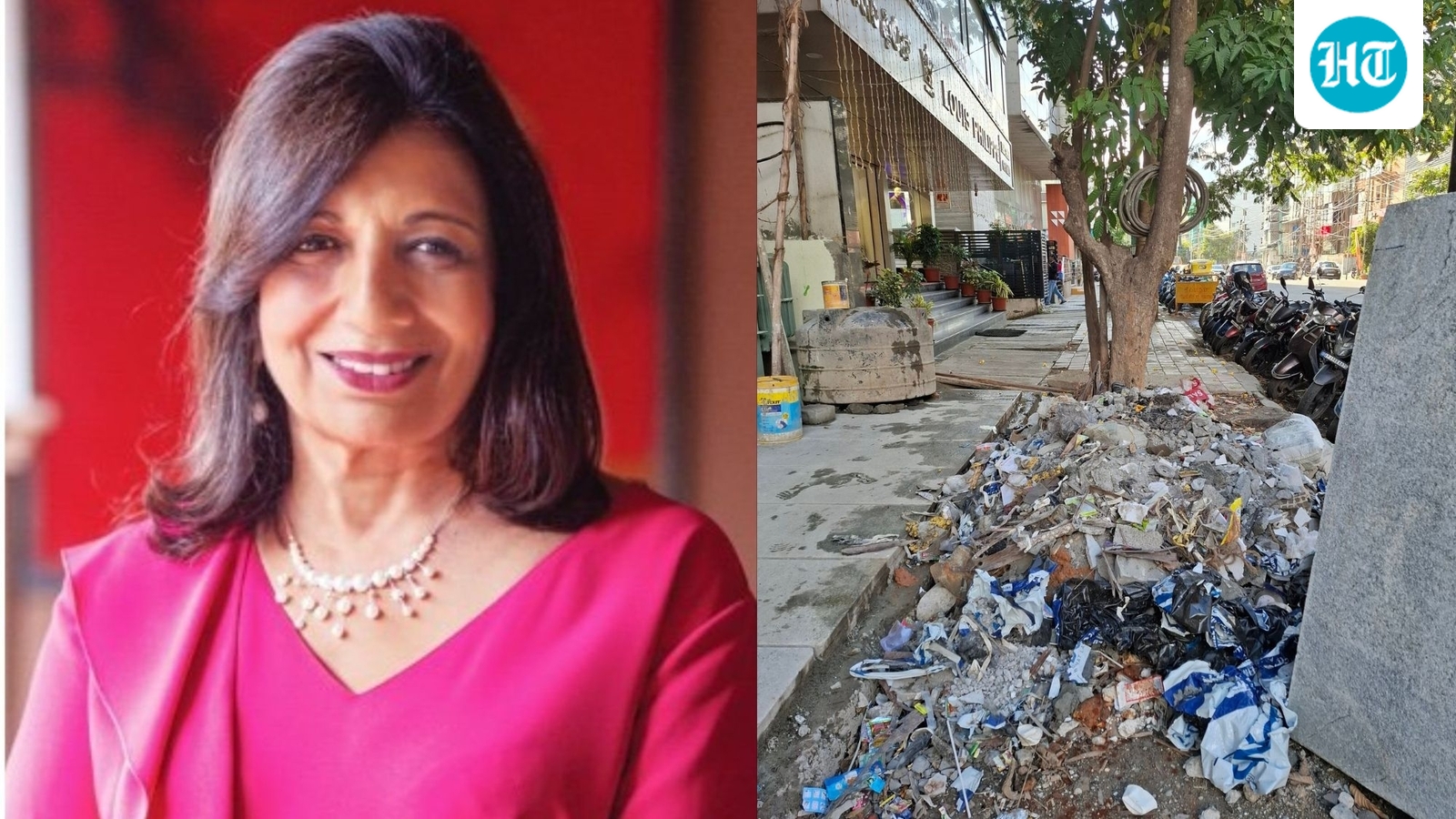
Another resident from HSR Layout, a prominent startup hub often touted as Bengaluru’s innovation district, shared visual evidence contradicting Shaw’s assessment. “Cleaner footpath? This is HSR, the cradle of startups. Not some inner lane but 17th Cross, where many unicorns operate. Yes, there’s a resemblance of a footpath here, but only just,” the resident noted, accompanying their comment with photos of broken walkways unsuitable for pedestrians.
The pushback against Shaw’s comments reflects a broader frustration among Bengalureans who have witnessed years of piecemeal infrastructure development failing to keep pace with the city’s explosive growth. As India’s technology capital, Bengaluru contributes significantly to the national economy but continues to struggle with basic urban amenities.
One particularly concerning issue raised in response to Shaw’s post involved waste management practices. A resident alleged that garbage collection vehicles were improperly disposing of waste in residential areas, creating health hazards. “When it rains, the roads get flooded with filthy, unhygienic water. It’s really pathetic,” they commented while tagging Bangalore Development Authority officials.
Urban infrastructure experts point out that Bengaluru’s challenges stem from decades of rapid expansion without corresponding investments in public infrastructure. The city’s population has more than doubled since 2000, reaching over 13 million residents, while its road network, drainage systems, and public utilities have failed to expand proportionally.
While some residents acknowledged positive changes in certain areas, most insisted that selective improvements do not constitute a comprehensive solution to the city’s infrastructure crisis. “Large parts of the city are still reeling. It’s too early to call this a success. It requires sustained effort, not selective beautification,” one resident emphasized.
The disconnect between Shaw’s assessment and resident experiences highlights the complex reality of urban development in rapidly growing Indian cities. As a prominent business leader and longtime Bengaluru resident, Shaw’s perspective carries weight in policy circles, but the critical responses to her post underscore the importance of inclusive development that addresses infrastructure needs across all neighborhoods.
For Bengaluru to truly achieve the “world-class” status envisioned by Shaw and civic authorities, residents argue that improvements must extend beyond high-profile areas to encompass the entire urban landscape—a challenge that will require sustained political will, significant financial investment, and greater accountability from civic authorities.
Fact Checker
Verify the accuracy of this article using The Disinformation Commission analysis and real-time sources.

9 Comments
The contrasting perspectives on Bengaluru’s infrastructure highlight the need for more inclusive and transparent urban planning processes that take into account the diverse needs and experiences of all residents, not just those in high-visibility areas.
Kiran Mazumdar-Shaw’s positive comments about Bengaluru’s infrastructure seem to be at odds with the on-the-ground experiences of many residents. It would be interesting to see a more nuanced, balanced perspective that takes into account the diverse realities across the city.
The contrasting views on Bengaluru’s infrastructure illustrate the importance of nuanced, data-driven discussions that move beyond simplistic narratives. A more holistic assessment that incorporates diverse stakeholder perspectives could lead to more effective and equitable solutions.
While it’s commendable that Kiran Mazumdar-Shaw is highlighting positive changes in Bengaluru’s infrastructure, the pushback from residents suggests that the reality on the ground may be more complex. A deeper understanding of the city’s uneven development is needed.
The debate over Bengaluru’s infrastructure highlights the complexities of urban development, where progress in some areas can coexist with ongoing challenges in others. A more nuanced, data-driven assessment would help inform discussions and guide future policy decisions.
This debate over Bengaluru’s infrastructure highlights the need for greater transparency and accountability in urban planning and development processes. Ensuring that the voices of all residents are heard and their concerns addressed should be a priority.
I’m curious to learn more about the specific areas of Bengaluru that have seen improvements in footpaths and roads, as opposed to the areas that continue to struggle with infrastructure challenges. A more granular understanding of the city’s development would be helpful.
It’s interesting to see how the comments from a prominent business leader like Kiran Mazumdar-Shaw have sparked a backlash from Bengaluru residents. This underscores the importance of grounding public discourse on urban issues in the realities faced by local communities.
While it’s great that Kiran Mazumdar-Shaw has noticed some infrastructure improvements in Bengaluru, many residents seem to disagree with her assessment. It’s clear that urban development in the city remains uneven, with some areas receiving more attention than others.