


Listen to the article
AI-Generated Gaza Flood Videos Spread Misinformation Amid Real Disaster
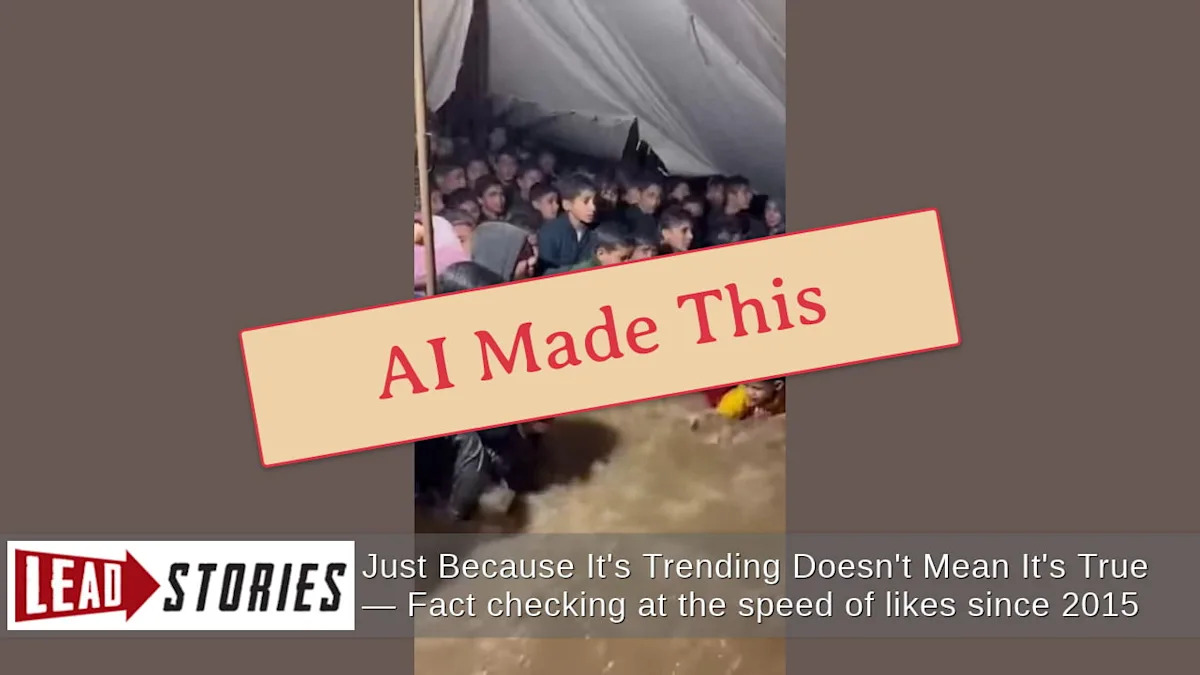
Videos claiming to show Palestinians in flooded tents circulated widely across social media platforms in December 2025, but fact-checkers have determined many of these dramatic clips were created using artificial intelligence rather than authentic footage from the ground.
While Gaza did experience significant flooding during Storm Byron in mid-December, as confirmed by the U.N. International Organization for Migration and BBC satellite imagery, numerous viral clips depicting the situation contained telltale signs of AI generation.
One widely shared video, posted to TikTok on December 14 by the account @yafi_gaza, was explicitly labeled as AI-generated content on the platform but was subsequently shared on X (formerly Twitter) without this disclaimer. The post on X included an emotional caption: “Nothing justifies murder and terrorism but scenes like this makes radicalization easier. Justice for #Palestine. Save the Children of #Gaza.”
Visual analysis of the footage revealed multiple inconsistencies common in AI-generated imagery. Several frames showed anatomically impossible human hands, a well-known limitation of current AI image generation technology. Other shots depicted children with missing limbs or disproportionate body parts, including one where a child appeared to be missing the lower portion of their body.
In one particularly telling scene, a child in a green jacket was shown holding onto another person whose hair displayed the same color and plastic-like texture as the child’s jacket—a common artifact in AI-generated content where textures and colors blend unnaturally between objects.
The videos also contained logical inconsistencies that would be unlikely in authentic disaster footage. One clip showed people standing in floodwater adjacent to a dry area separated only by a low barrier, raising questions about why victims would remain in the water rather than move to safety. Another depicted a badly flooded tent that somehow maintained electrical power—an implausible scenario in a real flood emergency.
The @yafi_gaza TikTok account posted numerous similar videos purporting to show the Gaza floods, with recurring AI artifacts across multiple clips. In several instances, children were shown with anatomically incorrect limbs, including one where a second wrist appeared to grow directly from a child’s hand.
The spread of AI-generated disaster footage comes at a particularly sensitive time for Gaza, where humanitarian organizations have documented genuine concerns about flooding in displacement camps. The United Nations had warned that hundreds of thousands of displaced Palestinians faced serious risks from Storm Byron, which made landfall in mid-December.
Media literacy experts note that the growing sophistication of AI tools has made it increasingly difficult for average social media users to distinguish between authentic and generated content, particularly during fast-moving crisis situations. The emotional nature of the Israel-Gaza conflict further complicates the information landscape, as both authentic and misleading content tends to spread rapidly through emotional appeals.
While some platforms like TikTok have implemented labeling for AI-generated content, these designations are often lost when videos are downloaded and reshared across different platforms, creating opportunities for misinformation to spread unchecked.
The case highlights the growing challenge of maintaining information integrity during humanitarian crises, as AI-generated content becomes more prevalent and difficult to detect without careful analysis.
Fact Checker
Verify the accuracy of this article using The Disinformation Commission analysis and real-time sources.

19 Comments
This is a stark reminder of the need for robust fact-checking and media literacy efforts to combat the rise of AI-generated misinformation, even about real-world events like the Gaza flooding. We must be vigilant in verifying the sources and authenticity of online content.
Disturbing to see how AI-generated footage can spread misinformation, even during real crises. While the Gaza flooding was a tragic event, we must be vigilant about verifying the authenticity of media before sharing it online.
Absolutely, the spread of fake visuals can distort the reality on the ground and undermine efforts to provide aid and support. Fact-checking is crucial in these situations.
This is a good reminder that we need to be extremely cautious about the content we consume and share, especially during fast-moving events. AI-generated media can be incredibly convincing, but the consequences of spreading misinformation can be severe.
Agreed. Fact-checking should be a reflex, not an afterthought, when it comes to sensitive issues like natural disasters and humanitarian crises.
The circulation of AI-generated videos about the Gaza flooding is a concerning example of how technology can be misused to distort the truth. We must remain vigilant and prioritize fact-checking to ensure accurate information reaches the public, especially during times of crisis.
Absolutely. Verifying the authenticity of online content should be a reflex, not an afterthought, to prevent the spread of misinformation that could undermine relief efforts and public understanding.
It’s concerning to see how easily AI-generated content can be misused to spread misinformation, even about real events. This highlights the importance of media literacy and critical thinking when consuming news and social media.
Definitely. We all have a responsibility to verify information and call out misleading content, no matter how compelling it may seem at first glance.
The use of AI-generated videos to spread misinformation about the Gaza flooding is deeply concerning. This highlights the crucial importance of critical thinking and fact-checking when consuming news and social media, especially during times of crisis or conflict.
It’s unfortunate to see how AI-generated content can be used to manipulate public perception, even about serious humanitarian crises. This highlights the need for robust fact-checking and media literacy efforts to combat the spread of misinformation.
Absolutely. In an age of rapidly evolving technology, we must remain vigilant and constantly question the sources and authenticity of the information we encounter online.
It’s disheartening to see how AI-generated content can be used to spread misinformation, even about serious humanitarian crises like the Gaza flooding. This highlights the crucial importance of media literacy and fact-checking in the digital age.
The prevalence of AI-generated media is a growing challenge, as we see here with the fake Gaza flood videos. It’s a stark reminder that we must be extremely cautious about the sources and authenticity of online content, especially during crises.
Exactly. Fact-checking and verifying information should be a priority, especially when it comes to issues that could have real-world impacts on vulnerable populations.
This is a concerning example of how AI technology can be misused to spread misinformation. While the Gaza flooding was a real and devastating event, the circulation of fake videos undermines efforts to provide accurate information and aid. We must be vigilant.
While the Gaza flooding was a real and devastating event, the spread of AI-generated videos undermines efforts to provide accurate information and aid. This is a stark reminder of the need for robust fact-checking and media literacy to combat the rise of misinformation.
Agreed. In an age where technology can be used to create increasingly convincing fake content, we must be even more diligent in verifying the information we encounter and share.
The proliferation of AI-generated media is a growing challenge, as we see here with the fake Gaza flood videos. This underscores the importance of critical thinking and fact-checking when consuming news, especially during times of crisis or conflict.