


Listen to the article
Turkey’s “Disinformation Law” Increasingly Used to Imprison Journalists, Press Groups Warn
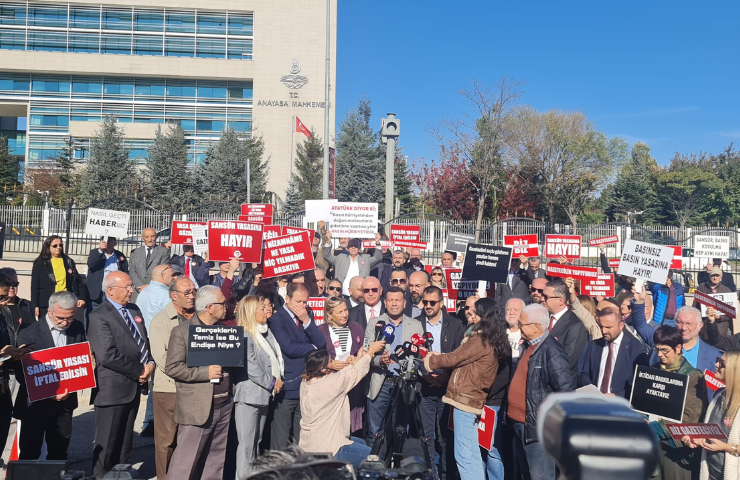
A coalition of international press freedom organizations has issued a strong condemnation against Turkey’s escalating use of Article 217/A of the Turkish Penal Code – commonly known as the “disinformation law” – to arrest, detain, and prosecute journalists across the country.
Since its implementation in October 2022, the controversial law has been wielded against at least 83 journalists in 114 separate charges, according to recent reports. The scale of the crackdown has intensified dramatically in recent months, with authorities accelerating arrests and sentencing journalists under the law’s vague prohibitions.
Among those most frequently targeted are BirGün’s İsmail Arı, who has faced charges six times, and Deutsche Welle Turkish correspondent Alican Uludağ, who has been charged four times. Both journalists are currently imprisoned, highlighting what critics describe as a “weaponization of legislation” to silence legitimate reporting.
The recent wave of arrests began on February 19 when Uludağ was taken into custody in Ankara on charges of “insulting the president” and spreading disinformation. While he was ultimately arrested on the former charge, he still faces the disinformation allegations and remains in prison awaiting trial.
In mid-March, journalist Bilal Özcan was detained after reporting that an influencer’s death might have been homicide rather than suicide. He was subsequently arrested in Istanbul on disinformation charges and remains in pretrial detention.
Just a week later, on March 22, İsmail Arı was detained while visiting family in Tokat and transported to Ankara to face disinformation charges stemming from a report about financial mismanagement of public foundations. Despite Arı’s insistence that his reporting contained information already in the public domain, he was imprisoned pending trial and is currently held at Sincan Prison in Ankara.
The crackdown intensified in April, when an Istanbul court sentenced journalists Murat Ağırel and Barış Pehlivan to one year and three months in prison each under Article 217/A for commentary on a television broadcast about trade between Turkey and Israel. Their verdicts are currently under appeal.
That same day, journalist Zafer Arapkirli received an even harsher sentence of two years and six months for a social media post condemning attacks by jihadist groups on Alawite settlements in Syria.
The prosecutions have continued unabated, with NEO TV journalist Turgay Kılıç detained on April 17 over a social media post sharing screenshots of threats against schools in İzmir. Though later released under judicial supervision, Kılıç still faces prosecution. The following day, Mehmet Yetim, editorial director of Kulis TV, was detained and ordered to pretrial detention for a social media post, with the court ruling that supervisory measures “would be insufficient.”
Press freedom advocates point out that Turkey’s approach makes it a “regional and even global outlier” in misusing disinformation legislation to stifle media freedom. The law has been criticized for its structural incompatibility with international press freedom standards, particularly its failure to clearly define what constitutes “untrue information” or specify what content poses threats to national security.
As one prosecuted journalist noted, any information not sourced from the government risks being deemed false under the current application of the law. Critics argue these deficiencies grant courts unchecked power to determine criminality, enabling the targeted prosecution of critical journalism.
The coalition of 25 international organizations, including the International Press Institute, Committee to Protect Journalists, and Reporters Without Borders, has called on Turkish authorities to immediately release all journalists arrested under Article 217/A, drop all pending charges, and repeal the law entirely.
“A free and independent press is itself the most durable safeguard against the spread of false information,” the organizations stated. “Criminalizing journalism is neither a lawful nor an effective response to it.”
The statement was produced as part of the Media Freedom Rapid Response, a Europe-wide mechanism tracking violations of press freedom in EU member states and candidate countries, funded by the European Commission.
Fact Checker
Verify the accuracy of this article using The Disinformation Commission analysis and real-time sources.

10 Comments
I’m curious to learn more about the specific cases of the journalists being targeted. What are the details behind these charges, and how are press freedom groups responding to defend them?
The sheer scale of this crackdown, with over 100 charges against 83 journalists, is really troubling. It seems the Turkish authorities are using this law as a blunt instrument to silence critical voices in the media.
The details in this report are deeply concerning. Turkey needs to respect press freedom and end the use of this ‘disinformation law’ to imprison journalists for doing their jobs.
It’s alarming that journalists like İsmail Arı and Alican Uludağ are being repeatedly targeted and imprisoned under these vague ‘disinformation’ charges. This looks like a clear abuse of power to suppress independent media.
I’m curious to know if there’s been any international pressure or sanctions on Turkey over this issue. Surely the global community needs to take a strong stance against these attacks on press freedom.
It’s disappointing to see Turkey backsliding on press freedoms in this way. Journalists should be able to report the news without fear of arbitrary arrest or prosecution. This law needs to be reformed or repealed.
It’s disheartening to see the ‘disinformation law’ being weaponized in this way. Journalism should never be criminalized, even in the name of combating misinformation.
This is a troubling development that warrants close scrutiny. Silencing critical media voices is a hallmark of authoritarian regimes, and Turkey must be pressured to uphold democratic principles.
I hope the international organizations condemning this crackdown can find effective ways to support the journalists being targeted and push for meaningful reform of this problematic law.
This crackdown on journalists in Turkey is deeply concerning. The ‘disinformation law’ seems to be a tool for silencing critical reporting – that’s a worrying trend for press freedom.