


Listen to the article
Syria and Turkey Forge Media Cooperation to Combat Disinformation
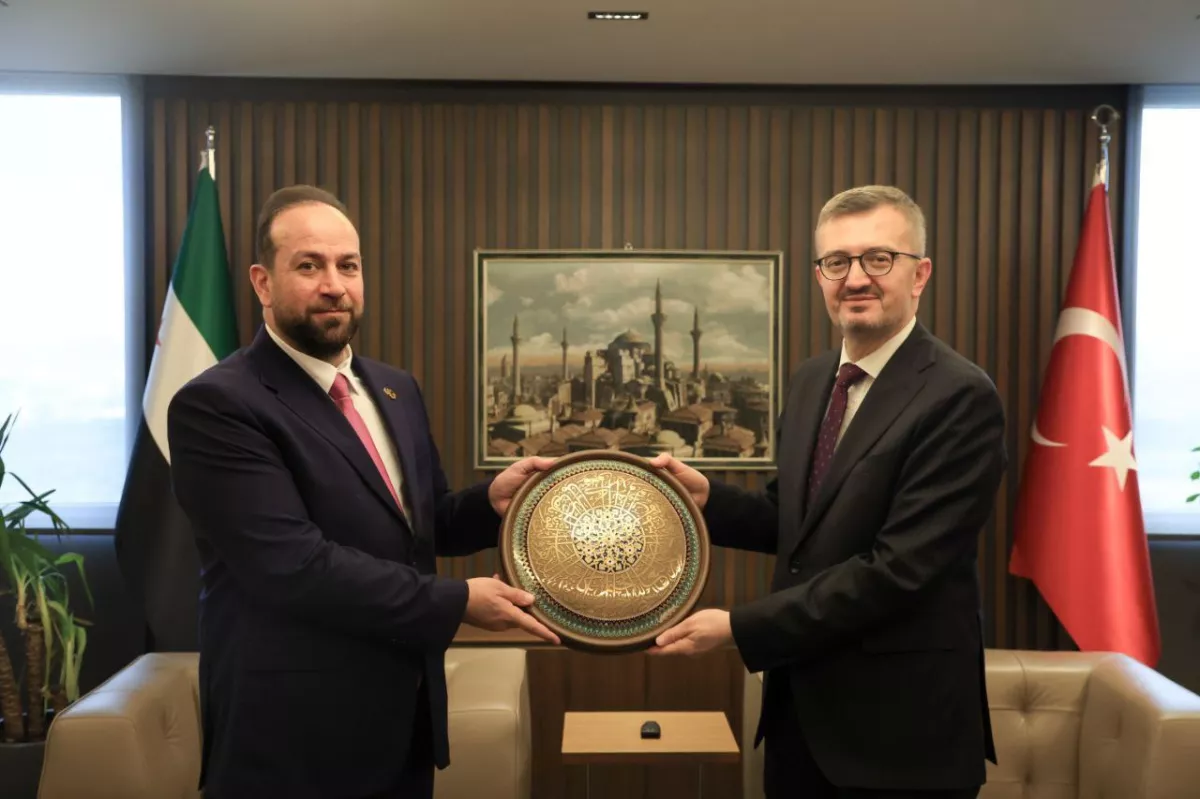
Syrian Information Minister Hamza al-Mustafa and Burhanettin Duran, head of the Turkish Presidential Communications Directorate, met on February 26 to establish joint strategies for countering disinformation in the regional media landscape.
According to the Syrian Ministry of Information’s Telegram channel, the high-level talks centered on strengthening cooperation between the media sectors of both nations, with coordinated efforts against misinformation taking center stage in the discussions.
Both officials emphasized that relations between Syria and Turkey transcend mere strategic interests, highlighting the deep historical and cultural connections between their peoples. This foundation, they noted, provides a solid basis for enhanced media cooperation.
“Maintaining effective communication channels is essential for supporting regional peace and stability,” said al-Mustafa during the talks. The meeting represents a significant step in normalizing relations between the two countries, which have experienced tensions in recent years due to the Syrian civil war and Turkey’s military operations in northern Syria.
Al-Mustafa’s visit to Ankara came at the direct invitation of the Turkish president’s communications leadership, signaling Turkey’s willingness to engage with Syrian officials despite previous diplomatic friction. Turkish officials confirmed that the primary objective of the visit is to strengthen bilateral cooperation and improve coordination in media policy and communication strategies.
This media cooperation initiative emerges against the backdrop of a complex regional information environment, where both countries have faced challenges related to misinformation campaigns. Syria has long contended with conflicting narratives about its internal conflict, while Turkey has dealt with information challenges related to its regional policies and domestic issues.
Media experts suggest this collaboration could lead to joint training programs for journalists, shared fact-checking initiatives, and possibly coordinated messaging on issues of mutual concern. However, some international observers remain cautious about how this partnership might impact independent journalism in both nations, where press freedom concerns have been documented by media watchdog organizations.
The timing of this media cooperation is particularly significant as it occurs amid shifting geopolitical dynamics in the Middle East. Turkey has recently shown interest in repairing relations with several regional actors, including Syria, after years of strained ties. The media cooperation framework could serve as a confidence-building measure preceding broader diplomatic normalization.
For Syria, improved relations with Turkey could potentially ease some of the economic and political isolation it has faced in recent years. Meanwhile, Turkey stands to gain increased influence in post-conflict Syrian affairs and potentially address its concerns about Kurdish groups operating near its border.
The meeting also reflects a growing recognition among regional powers about the importance of media narratives in shaping public opinion and international perception. By coordinating their approach to information dissemination, both countries appear to be seeking greater control over how regional developments are portrayed both domestically and internationally.
Economic considerations may also factor into this media cooperation, as improved bilateral relations could eventually pave the way for increased trade and investment between the neighboring countries, which shared robust economic ties before the Syrian conflict.
As this media partnership develops, regional analysts will be watching closely to see if it translates into broader diplomatic and security cooperation between Ankara and Damascus, potentially signaling a significant realignment in Middle Eastern politics.
The discussions in Ankara mark what could be the beginning of a new chapter in Syria-Turkey relations, with information and media strategy serving as the initial bridge between the previously estranged neighbors.
Fact Checker
Verify the accuracy of this article using The Disinformation Commission analysis and real-time sources.

14 Comments
The historical and cultural connections between Turkey and Syria provide a solid foundation for enhanced media coordination. I hope their efforts to counter disinformation are effective and lead to greater stability.
It’s encouraging to see Turkey and Syria taking a collaborative approach to combating disinformation. Strengthening media coordination is a smart move that could have positive implications for regional peace and stability.
The deep historical and cultural connections between Turkey and Syria provide a solid foundation for enhanced media cooperation, as the officials noted. This could be a significant step towards regional reconciliation.
Absolutely. Leveraging their shared heritage and values to counter disinformation could help build trust and foster closer ties between the two countries.
While tensions have existed in the past, it’s encouraging to see Turkey and Syria prioritizing joint efforts to combat disinformation. This could be an opportunity to rebuild trust and strengthen ties between the two nations.
You make a good point. Tackling the spread of false narratives together could help pave the way for improved diplomatic relations and cooperation on other regional issues.
Interesting to see Turkey and Syria collaborating to combat disinformation. Regional cooperation is key to tackling this complex issue. I’m curious to learn more about the specific strategies they plan to implement.
You’re right, this is an important step towards regional stability. Coordinating media efforts could help counter the spread of misinformation that can fuel tensions.
Strengthening media cooperation between Turkey and Syria is a positive development. Disinformation poses a serious threat to peace and security, so I’m glad to see these countries taking joint action.
Agreed. Combating the spread of false narratives requires a collaborative approach. This could set a precedent for further regional cooperation on critical issues.
Maintaining open communication channels is crucial for supporting regional peace, as the officials noted. I’m curious to see how Turkey and Syria plan to align their media strategies to achieve this goal.
A coordinated approach to tackling disinformation is a wise move. Aligning their media sectors could help ensure a more accurate and balanced flow of information in the region.
This meeting represents an important step in normalizing relations between Turkey and Syria. Cooperation on media and information sharing is a positive sign and could have broader implications for regional stability.
Coordinated strategies against misinformation are essential for supporting peace and stability in the region. I’m hopeful that Turkey and Syria’s collaboration on this front will produce tangible results.