


Listen to the article
Canadian Intelligence Chief Warns of Foreign Interference Risks in Alberta Secession Vote
The head of Canada’s intelligence agency has raised concerns that Alberta’s potential secession referendum could become a target for disinformation campaigns and foreign interference, particularly from Russia.
In an interview with CBC’s “The House,” Canadian Security Intelligence Service (CSIS) Director Dan Rogers emphasized that his agency’s role includes investigating foreign interference threats. “A referendum like the one in Alberta, that may have a divisive effect on society, is rife for amplification or for the sort of disinformation or foreign interference that we’ve seen from players like Russia in the past,” Rogers told host Catherine Cullen.
Rogers’ warning comes on the heels of a comprehensive report released by DisinfoWatch, the Canadian Digital Media Research Network, and CASiLabs. The report identified a range of threats targeting Alberta’s separatist movement, including covert influence campaigns from countries such as Russia and China, as well as public remarks from the Trump administration that appear to encourage Alberta separatists.
While Rogers avoided commenting on specific ongoing investigations, he acknowledged awareness of “the Russian information and disinformation ecosystem.” He noted that the findings from academic and public institutions align with Russia’s historical patterns of interference.
The report predicts an intensified disinformation campaign if the independence referendum moves forward to the October 19 vote date proposed by Premier Smith. Rogers cautioned that Russia “has regularly across the world sought to amplify divisive narratives, to sow distrust in institutions, and has shown proclivity to looking at democratic processes.”
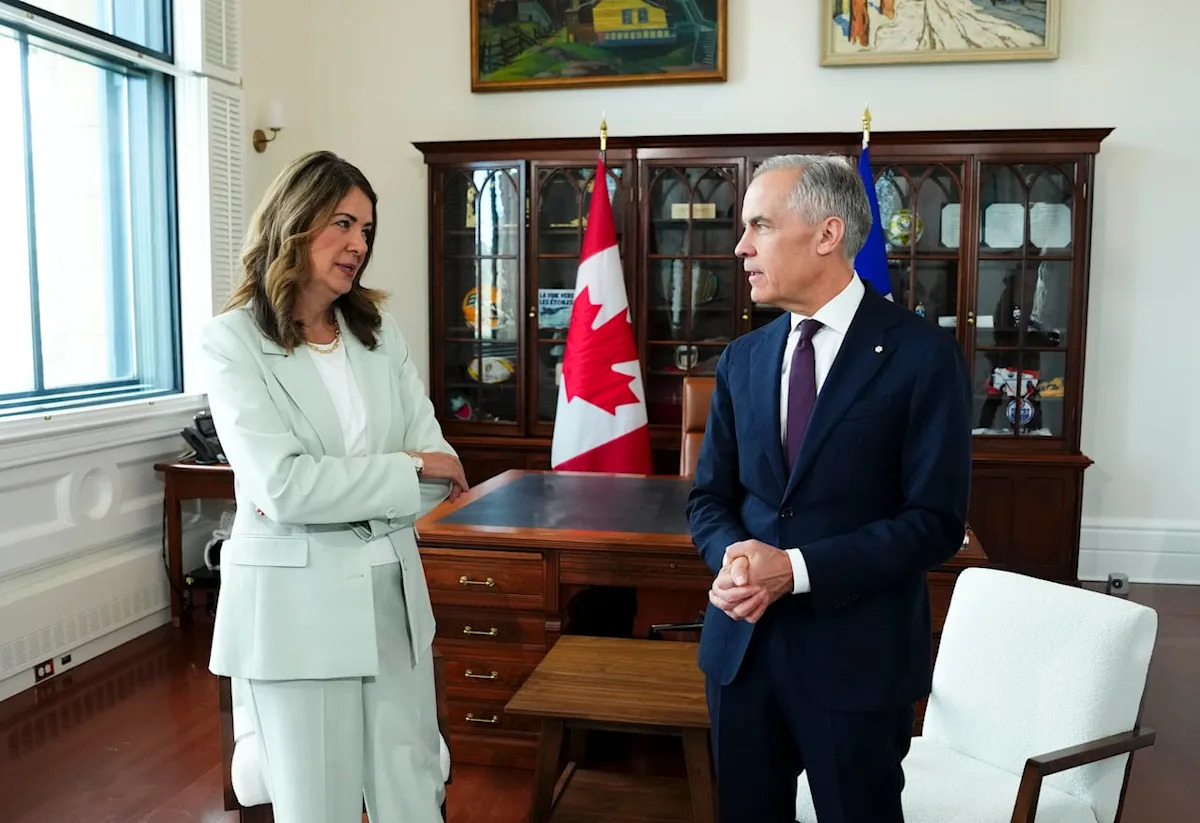
Alberta Premier Danielle Smith, however, has pushed back against these concerns. On Friday, she stated that the RCMP has informed her government that “there’s no credible evidence that we’re seeing any state actors who are interfering in our politics.” Smith added that she is pursuing top-secret security clearance to “be assured that remains the case” and expressed confidence in Albertans’ ability to evaluate different viewpoints critically.
The civil society report also highlighted that statements by U.S. President Donald Trump about Canada have provided momentum to Alberta’s separatist movement. Rogers clarified that for CSIS, foreign interference has a specific legal definition requiring clandestine or deceptive actions, or threats to individuals. “The sort of overt commentary that many people will see from influencers or from officials from any country doesn’t constitute foreign interference, in that definition,” he explained.
CSIS’s annual report, submitted to Parliament last week, revealed that the agency used threat reduction powers 16 times last year—once with a warrant and 15 times without. These operational measures are designed to stop or weaken threats to Canada’s security. While the report mentions CSIS’s efforts to counter Russia’s sophisticated disinformation methods, Rogers declined to specify whether any of these measures involved the Alberta referendum.
In addition to referendum concerns, CSIS has been actively supporting the government’s economic agenda by briefing the Major Projects Office about potential security risks. This office is responsible for accelerating projects of national importance, including ports, railways, energy corridors, and critical mineral developments, as prioritized by Prime Minister Mark Carney.
The CSIS annual report warns that “states who seek to advance their interests at the expense of Canada may target public and private sectors working on these projects.” Rogers elaborated that these concerns include foreign control of critical infrastructure that could be manipulated or disrupted, and the installation of infrastructure that might be used for espionage purposes.
Under the Building Canada Act, the responsible minister must conduct a national security review for all state-owned or foreign investments from hostile countries in any project designated as being in the national interest, providing an additional layer of protection against potential foreign interference.
Fact Checker
Verify the accuracy of this article using The Disinformation Commission analysis and real-time sources.

16 Comments
This is concerning news. Foreign interference in democratic processes is a serious threat that must be vigilantly guarded against. Robust safeguards and public awareness are crucial to maintain the integrity of any referendum.
I agree. Transparent and impartial monitoring of the process will be key to ensuring a fair and legitimate outcome.
The CSIS warning highlights the complex geopolitical implications of the Alberta referendum. Disinformation and foreign meddling could have far-reaching consequences for Canada’s unity and stability.
You’re right. It’s essential that the public has access to accurate, unbiased information to make an informed decision. Transparency and impartiality must be the guiding principles.
While the prospect of Alberta separating is controversial, the integrity of the democratic process must be protected. Foreign interference is a serious threat that requires a robust, coordinated response.
I agree. Ensuring the independence and credibility of the referendum process should be the top priority, regardless of one’s views on the ultimate outcome.
The CSIS director’s warning highlights the need for robust cybersecurity measures and rigorous monitoring of information sources. Disinformation campaigns can have a corrosive effect on democratic institutions.
Absolutely. Safeguarding the referendum process from foreign interference is essential for upholding the principles of democratic self-determination.
The CSIS director is right to raise these concerns. Separatist movements can be vulnerable to outside manipulation, as we’ve seen in other countries. Careful scrutiny of information sources and funding will be essential.
Absolutely. Disinformation campaigns can sow division and undermine public trust. Maintaining vigilance and public education will be crucial in this case.
The CSIS director’s warning underscores the need for a comprehensive, multi-stakeholder approach to addressing foreign interference threats. Coordinated efforts between government, civil society, and the private sector will be crucial.
Absolutely. Protecting the referendum process from outside manipulation is essential for preserving the legitimacy and credibility of the democratic process.
This is a complex issue with significant geopolitical implications. The potential for foreign interference is a serious concern that must be addressed head-on to ensure a fair and transparent referendum process.
I agree. Maintaining the integrity of the democratic process should be the top priority, regardless of one’s views on the ultimate outcome of the referendum.
This is a delicate situation that requires careful handling. The potential for foreign interference is concerning, and strict safeguards must be in place to protect the integrity of the democratic process.
Agreed. Maintaining public trust in the referendum’s legitimacy will be crucial, regardless of the outcome. Vigilance and transparency should be the top priorities.