


Listen to the article
CSIS Chief Warns Alberta Secession Vote Vulnerable to Foreign Interference
The director of Canada’s intelligence agency has issued a stark warning about the vulnerability of Alberta’s potential secession referendum to foreign disinformation campaigns, particularly from Russia.
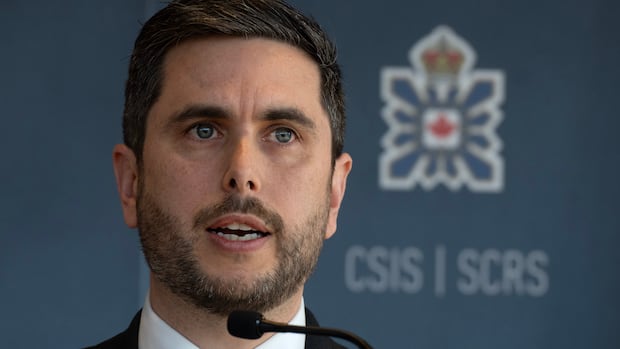
In an interview with CBC’s “The House,” Canadian Security Intelligence Service (CSIS) Director Dan Rogers emphasized the agency’s responsibility to monitor and investigate foreign interference in Canadian political processes.
“A referendum like the one in Alberta, that may have a divisive effect on society, is rife for amplification or for the sort of disinformation or foreign interference that we’ve seen from players like Russia in the past,” Rogers told host Catherine Cullen.
His comments follow a troubling report released this week by a team of researchers from DisinfoWatch, the Canadian Digital Media Research Network and CASiLabs. The report identifies active disinformation campaigns about Alberta separatism being amplified by Russian and pro-Trump U.S. actors, with the apparent goal of undermining institutional trust and national unity.
The researchers documented a range of threats, including covert influence operations from nations like Russia and China, alongside public statements from the Trump administration that appear to encourage Alberta separatist sentiment.
While Rogers avoided confirming specific ongoing investigations, he acknowledged awareness of Russia’s sophisticated information warfare capabilities. “I’m obviously aware of the Russian information and disinformation ecosystem that exists out there,” he said. “And I’ve seen the reports from academic and other public institutions that have called that out, and they’re very consistent with what we’ve seen from Russia in the past.”
Alberta Premier Danielle Smith pushed back against these concerns on Friday, stating that the RCMP has informed her government that “there’s no credible evidence that we’re seeing any state actors who are interfering in our politics.” Smith noted she has sought top-secret security clearance to “be assured that remains the case.”
“We think that Albertans are smart enough to be able to look at a number of different viewpoints and figure things out,” Smith added.
The researchers’ report also highlights how statements from U.S. President Donald Trump regarding Canada have fueled momentum for the separatist movement. Rogers clarified that from CSIS’s perspective, foreign interference is legally defined as activities that are “clandestine, deceptive or involving a threat to any person.”
“The sort of overt commentary that many people will see from influencers or from officials from any country doesn’t constitute foreign interference, in that definition,” Rogers explained.
Looking ahead, the civil society report anticipates an intensified disinformation campaign should the independence referendum proceed to an October 19 vote – the date Premier Smith has designated for referendums. Rogers acknowledged the difficulty in predicting the exact landscape but noted Russia’s established pattern of behavior.
“Russia is an actor that has regularly across the world sought to amplify divisive narratives, to sow distrust in institutions, and has shown proclivity to looking at democratic processes,” he said. “I think it’s wise to be mindful of that and for Canadians to be mindful of that, Albertans in particular, as they exercise their political rights in the referendum.”
CSIS’s recently released annual report revealed that the agency employed threat reduction powers 16 times last year – once with a warrant and 15 times without – to mitigate security threats to Canada. While the report mentions CSIS’s work to counter Russian disinformation, Rogers declined to specify whether any of these measures involved the Alberta referendum.
Beyond the referendum concerns, CSIS has been providing intelligence briefings to the government’s Major Projects Office, which oversees nationally significant infrastructure developments. This support reflects a strategic pivot by the agency to align with Prime Minister Mark Carney’s economic agenda, particularly the acceleration of projects related to ports, railways, energy corridors and critical mineral developments.
Rogers emphasized that this intelligence work helps identify potential security vulnerabilities in proposed infrastructure projects, including risks related to foreign control of critical assets and supply chain integrity. Under the Building Canada Act, the responsible minister must conduct a national security review for all state-owned or foreign investments from hostile nations in any project deemed to be in the national interest.
Fact Checker
Verify the accuracy of this article using The Disinformation Commission analysis and real-time sources.

10 Comments
This is a concerning development. Protecting the integrity of elections and referendums is critical for maintaining trust in democratic institutions. I hope the Canadian government takes robust measures to monitor and counter foreign interference efforts.
Agreed. Disinformation campaigns can have a corrosive effect on public discourse and undermine the legitimacy of electoral processes. Vigilance and proactive mitigation strategies are essential.
The CSIS director’s warning underscores the real and present dangers of foreign interference in domestic political processes. Vigilance, robust safeguards, and a whole-of-society approach will be essential to ensuring a free and fair referendum in Alberta.
Agreed. Maintaining public trust in the democratic process should be the top priority. Balancing security measures with transparency and inclusivity will be a delicate but critical challenge.
The CSIS director is right to raise this alarm. Foreign adversaries will likely try to exploit divisions and stoke social tensions around the Alberta referendum. Rigorous safeguards must be in place to ensure a fair and transparent process.
Absolutely. Securing the integrity of the vote and preventing the spread of disinformation should be top priorities for the Canadian government. The stakes are high for national unity and democratic stability.
This highlights the ongoing challenge of securing elections and referendums in the digital age. While protecting national sovereignty is vital, I hope the Canadian government can find ways to uphold democratic principles and civil liberties as they address these threats.
I’m curious to learn more about the specific disinformation tactics and actors that have been identified so far. Understanding the nature of the threats will be crucial for developing effective countermeasures. Robust public education campaigns may also help inoculate citizens against manipulation.
Good point. Raising public awareness about the risks of disinformation and foreign interference is an important part of the solution. Empowering citizens to think critically and verify information sources can strengthen the resilience of the democratic process.
This is a complex and sensitive issue. While I understand the director’s concerns, I hope the government can find a balanced approach that protects democratic freedoms while also guarding against foreign interference. Transparent and inclusive processes will be key.