


Listen to the article
Turkiye Denies Involvement in Red Fort Attack, Calls Accusations “Disinformation”
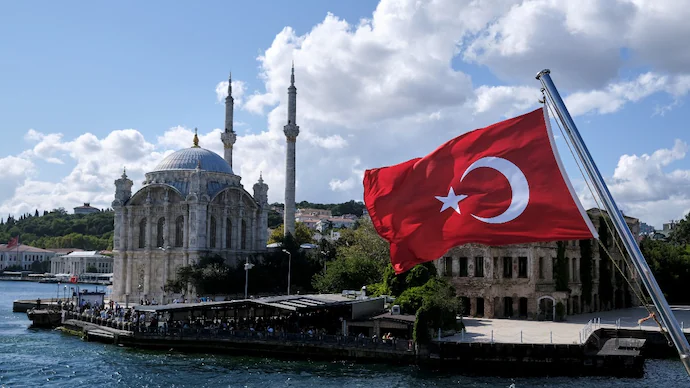
Turkish authorities have issued a strong denial regarding allegations from Indian media outlets that Turkey played a role in the recent deadly explosion near New Delhi’s Red Fort. The Turkish government’s Center for Combating Disinformation (DMM) dismissed the claims as a “malicious disinformation campaign” aimed at damaging relations between the two nations.
The car explosion, which occurred Monday near the historic Red Fort in New Delhi, initially killed eight people and injured approximately 20 others. The death toll has since risen to 12 as some of the injured succumbed to their wounds. The attack has heightened security concerns in India’s capital and prompted an investigation under the country’s anti-terror laws.
According to several Indian media outlets, investigators believe suspects involved in the attack communicated with a Turkish handler identified as “Ukasa,” who allegedly arranged assistance from Ankara. These reports suggest possible foreign involvement in what is being treated as a terrorist incident on Indian soil.
Responding swiftly to these allegations, Turkey categorically rejected any connection to the attack. In its official statement, the DMM emphasized that the accusations have “no factual basis” and urged the public not to trust such assertions. Turkish authorities further highlighted the country’s commitment to counter-terrorism efforts globally, pointing to their active participation in the UN Global Counter-Terrorism Strategy and collaboration through NATO.
The accusations come at a particularly sensitive time in Turkish-Indian relations, which have been strained for several years. The diplomatic tension between the two nations has multiple sources, but Turkey’s vocal support for Pakistan on various issues, including the Kashmir dispute, has been a significant factor in deteriorating bilateral ties.
Relations between Ankara and New Delhi have faced additional challenges in recent years. Following Turkey’s public backing of Pakistan during previous military conflicts between the two South Asian neighbors, parts of Indian media have taken increasingly critical stances toward Turkey. This atmosphere has fostered calls for boycotts of Turkish products and led to restrictions on Turkish aviation and port companies operating in India.
In what many analysts interpreted as a diplomatic countermove, Indian officials have made high-profile visits to Cyprus – a particularly sensitive issue for Turkey given its longstanding dispute over the divided Mediterranean island.
India continues to grapple with various internal separatist movements and security challenges, from the protracted conflict in Kashmir to insurgencies in northeastern states like Nagaland. The Red Fort attack is the latest in a series of security incidents that have kept Indian authorities on high alert.
By forcefully rejecting the accusations, Ankara appears to be pursuing a dual strategy: preserving its international reputation while attempting to maintain workable diplomatic channels with India. Turkey has consistently positioned itself as a reliable partner in international security matters and seems eager to prevent these allegations from further damaging its foreign policy objectives.
The incident highlights the complex geopolitical landscape of South Asia and the Middle East, where historical rivalries, terrorism concerns, and diplomatic maneuvering create a volatile mix. As investigations into the Red Fort explosion continue, the diplomatic fallout between Turkey and India will likely depend on whether concrete evidence emerges to support or refute the allegations of Turkish involvement.
For now, both countries face the challenge of navigating these tensions while addressing legitimate security concerns in a region where terrorism remains a persistent threat to stability and development.
Fact Checker
Verify the accuracy of this article using The Disinformation Commission analysis and real-time sources.

8 Comments
The explosion at the Red Fort is certainly concerning, but it’s important not to rush to judgment on the perpetrators. Thorough, impartial investigation is needed to uncover the truth and avoid further escalation.
While the details around this incident remain murky, making unsubstantiated claims of foreign involvement is unwise. Turkey is right to firmly deny any role and call for a fair, fact-based inquiry to determine what really happened.
Absolutely. Maintaining open communication and avoiding inflammatory rhetoric is crucial when dealing with sensitive security matters between nations.
This is a complex geopolitical situation that requires a measured, evidence-based approach. Turkey’s rejection of the claims against it seems prudent, and all parties would be wise to refrain from speculation until the facts are clear.
Agreed. Maintaining open lines of communication and avoiding inflammatory rhetoric is crucial when dealing with sensitive security matters between nations.
It’s concerning to see reports of this attack in India, but Turkey’s dismissal of the alleged role is understandable. Determining the true perpetrators requires an impartial investigation, not unverified accusations.
This seems like a complex geopolitical issue. It’s wise for Turkey to refute claims of involvement and call for an objective investigation to determine the facts. Disinformation and finger-pointing rarely help resolve sensitive matters between nations.
Agreed, de-escalation and constructive dialogue are critical when tensions arise between countries. Jumping to conclusions without clear evidence can inflame the situation further.