


Listen to the article
Disinformation Tactics Evolve as Election Denial Goes Global
There’s a particular satisfaction—and unease—that comes with tracking a pattern for years, only to see it suddenly manifest in your own neighborhood. This is precisely what journalists at Coda Story experienced when disinformation tactics they had documented globally since 2022 appeared in full force following New York City’s recent mayoral election.
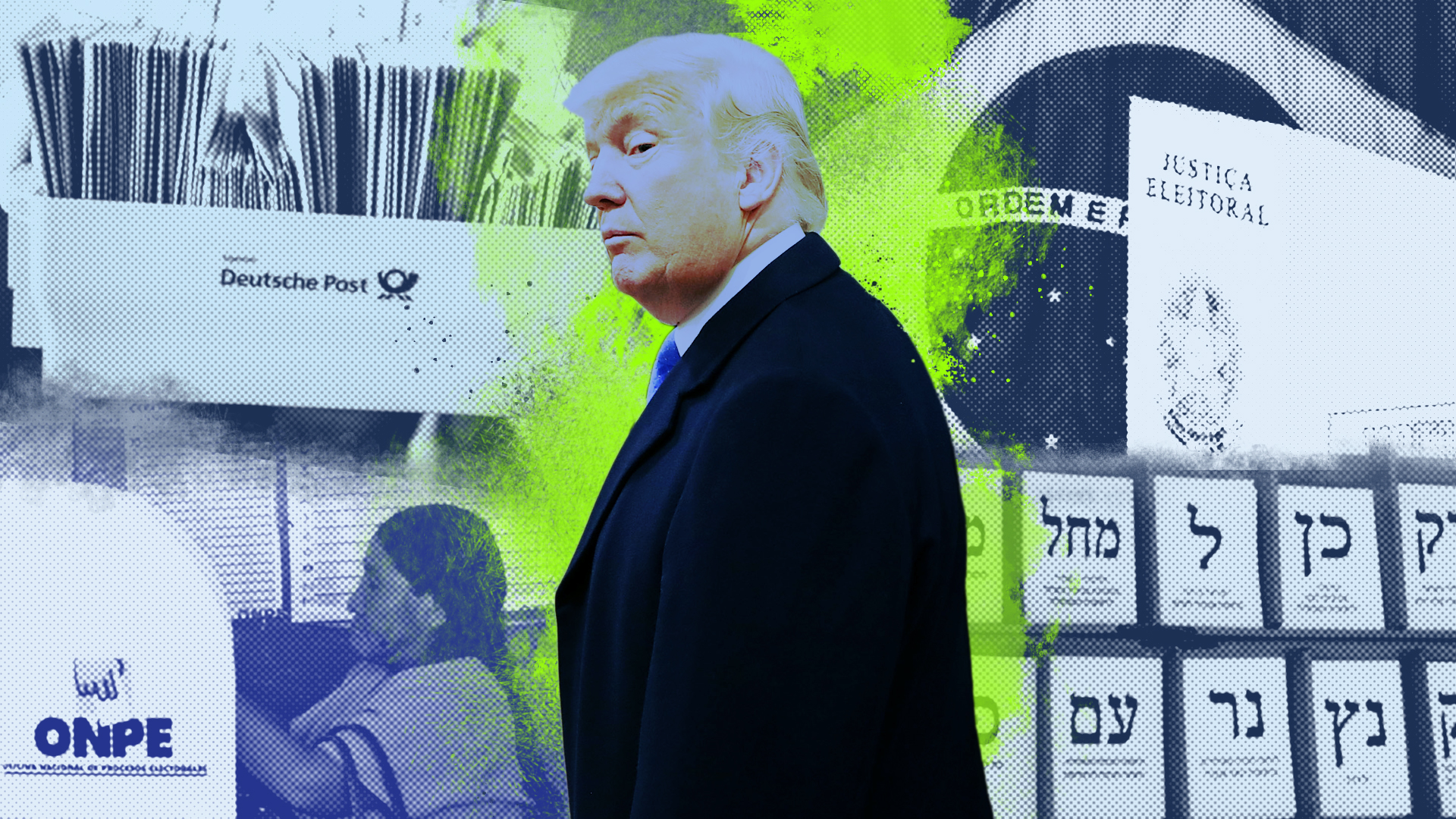
In January 2022, Coda published “The Year the Big Lie Went Global,” documenting how election fraud rhetoric had transformed into a transnational phenomenon. From Donald Trump to Brazil’s Bolsonaro, Israel’s Netanyahu, and Peru’s Fujimori, the pattern was clear: politicians losing elections and refusing to accept results while citing voter fraud without evidence.
What was then an emerging trend has now evolved into a sophisticated, operational system. The infrastructure documented in 2022 is now functioning in real-time, with increasing sophistication and coordination.
When Zohran Mamdani was elected mayor of New York City, the machinery of disinformation immediately shifted into high gear. According to research from Equality Labs, over 1.15 million Islamophobic social media posts about Mamdani had already circulated since January 2025, reaching an estimated 150 billion impressions. An additional 1.43 million posts labeled him a “communist,” with amplification coming from 45 Republican officials across 18 states and 26 international politicians from 14 countries.
Within hours of Mamdani’s victory, false narratives proliferated. A claim spread that pro-Trump “hackers” had infiltrated his election night party, when the reality was simply a television screen showing election coverage. Texas Republican Alexander Duncan, a 2026 Senate candidate, falsely claimed a noncitizen had traveled to New York to illegally vote for Mamdani—misinterpreting what was clearly a joke post on social media.
The disinformation campaign quickly escalated when accounts began circulating a fabricated statement supposedly from ISIS. Laura Loomer, a self-described “Islamophobe” and Trump confidante, amplified it to her substantial following: “The Muslims can’t think of a better way for the Muslims to celebrate the victory of a Muslim mayoral candidate today than by committing an ISIS attack in NYC.” Her post gathered 203,000 views and gained further traction when former CIA agent Sarah Adams lent it credibility before Duncan claimed it proved “ISIS is openly supporting [Mamdani],” generating 1.3 million views in a single day.
By the next morning, Steve Bannon, Trump’s former chief strategist, was calling for federal investigation into Mamdani’s citizenship. “If the guy lied on his naturalization papers, he ought to be deported out of the country immediately and put on a plane to Uganda,” Bannon told POLITICO—despite the fact that Mamdani was born in Uganda, moved to the U.S. at age seven, and is an American citizen.
What makes Bannon’s response particularly concerning is that he recognized exactly how Mamdani won—through ground game and turnout operations—yet still questioned his legitimacy to govern. This represents a dangerous evolution in the strategy: you no longer need to deny victory to undermine it. Instead, question whether the democratically elected victor deserves to govern at all, creating a state of permanent contestability where democratic outcomes are never final.
In 2022, the election fraud rhetoric was largely reactive—politicians refusing to concede after losing. Now it’s pre-emptive: attacks beginning before winners even take office. The speed, coordination, and pre-emptive nature of these tactics was becoming operational by 2022; today it’s highly refined.
The infrastructure operates identically from Lima to Harlem: delegitimize officials before they begin governing, and you can frame every subsequent decision as illegitimate. When Mamdani announces his first appointment, proposes his first policy, or makes his first budget decision, the machinery is already positioned to question not just his decisions, but his fundamental right to make them.
This strategy creates a landscape where democratic outcomes feel perpetually contestable, shifting power away from those who win votes and toward those who control the machinery of doubt.
The evolution from 2022 to today is stark. Three years ago, Keiko Fujimori’s supporters in Peru donned bulletproof vests and called for military intervention rather than accept election results. Today, coordinated attempts to delegitimize a U.S. mayor-elect begin immediately after his victory, with calls to investigate his citizenship and threats of federal action.
What once appeared as disconnected controversies across different countries now reveals itself as deliberate infrastructure serving a specific purpose—making democratic outcomes permanently subject to question, regardless of electoral reality.
Fact Checker
Verify the accuracy of this article using The Disinformation Commission analysis and real-time sources.

6 Comments
This is a complex issue with no easy solutions. Balancing free speech with the need to counter disinformation is a delicate challenge. I hope policymakers and tech platforms can find effective ways to address this growing problem.
This is a concerning trend of politicians delegitimizing election results without evidence. Disinformation tactics seem to be spreading globally, undermining democratic processes. I wonder how we can counter this effectively while upholding free speech.
The global spread of election denial rhetoric is deeply concerning. Journalists and researchers play a vital role in exposing these patterns and tactics. Strengthening democratic institutions will be key to pushing back against this trend.
Tracking the evolution of disinformation tactics across countries is important work. It’s troubling to see these patterns emerge in local elections as well. We need robust safeguards to protect the integrity of our elections.
Disinformation tactics are clearly becoming more organized and widespread. Tracking their evolution across different countries provides valuable insights. Maintaining public trust in electoral processes will be critical going forward.
The rise of election denial rhetoric is alarming. Coordinating a global response to combat these sophisticated disinformation campaigns will be crucial. Preserving democratic norms and institutions should be a top priority.