


Listen to the article
Misinformation Poses Grave Threat to Ghana’s Democracy, Warns Government Spokesperson
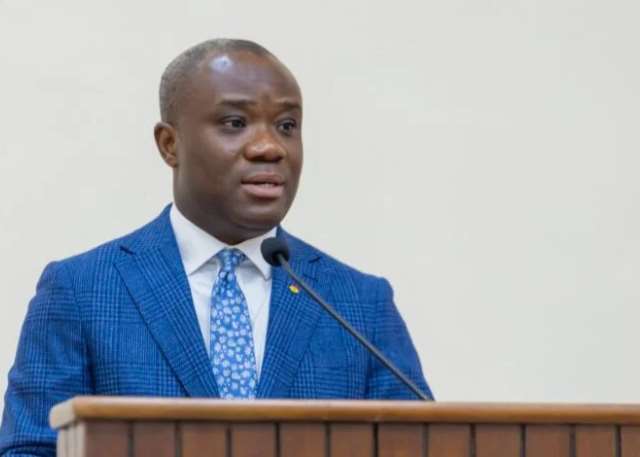
Government spokesperson Felix Kwakye Ofosu has issued a stark warning about the escalating threat of disinformation to Ghana’s democratic institutions, national security, and public health systems.
Speaking at an event hosted by the British High Commissioner to commemorate World Press Freedom Day on Wednesday, Kwakye Ofosu described Ghana as facing an “information integrity” crisis, fueled by fake news, manipulated content, and politically motivated misinformation campaigns.
“We now live in an age where a single falsehood can travel around the world in seconds while the truth is still putting on its shoes,” Kwakye Ofosu told attendees, highlighting the unprecedented speed at which false information now spreads across digital platforms.
The spokesperson specifically identified coordinated disinformation campaigns, deepfake technology, and clickbait misinformation as dangerous tools with the potential to inflame Ghana’s political and ethnic tensions. The West African nation, widely regarded as one of the continent’s most stable democracies, has experienced increasing political polarization in recent years.
“This is not just a media problem. It is a national security problem. It is a public health problem, and it is a democratic problem,” he emphasized, framing disinformation as a multifaceted threat requiring comprehensive solutions.
According to Kwakye Ofosu, who also serves as the Member of Parliament for Abura Asebu Kwamankese, the erosion of public trust caused by false information directly weakens state institutions and threatens democratic stability. “When citizens cannot tell what is true and what is false, trust erodes,” he explained. “And when institutions become weak, democracy becomes fragile.”
Ghana’s concerns mirror global trends, as many democracies worldwide grapple with similar challenges. The proliferation of social media platforms and messaging apps has created unprecedented vectors for the rapid spread of false information, particularly during election periods.
Despite the severity of the threat, Kwakye Ofosu emphasized that censorship should not be the solution. “Censorship breeds suspicion and drives information underground,” he cautioned, instead advocating for “better information and faster” responses from authorities. He drew a clear distinction between censorship and legitimate legal action against criminal misuse of digital platforms.
The government spokesperson outlined how his office has implemented proactive measures to combat misinformation, including regular briefings and timely information dissemination through official communication channels. “As a government, we remain acutely aware of the need to act swiftly to stem the tide of misinformation,” he stated.
Kwakye Ofosu also took the opportunity to reaffirm the government’s commitment to press freedom and media rights, characterizing quality journalism as an ally rather than adversary to good governance. “When a reporter investigates a contract gone wrong, they are not attacking the state. They are protecting the taxpayer,” he noted, pledging that no journalist would be “harassed, detained or threatened for doing lawful work.”
The spokesperson defended Ghana’s Right to Information Act, which was passed in 2019 after nearly two decades of advocacy but has faced criticism for implementation challenges. “Transparency is not a favor, it is a right,” he insisted.
However, Kwakye Ofosu also challenged media practitioners to uphold ethical standards and accurate reporting. “Publishing unverified allegations, amplifying disinformation for engagement, that is not dramatic, that is harm,” he warned, calling on the Ghana Journalists Association and the National Media Commission to strengthen self-regulation mechanisms and enforce professional standards.
He urged media organizations to prioritize public trust over sensationalism, stating, “Public trust is your greatest capital. Do not spend it for a headline.” Similarly, he called on government institutions to avoid unnecessary secrecy and selective disclosure of information.
The event, which brought together journalists, civil society representatives, and diplomatic officials, concluded with Kwakye Ofosu’s reflection on the vital role journalism plays in sustaining democracy. “Democracy is not a gift that lasts forever. It is a practice that must be renewed every day, and journalism is one of the daily practices that keeps it alive.”
Fact Checker
Verify the accuracy of this article using The Disinformation Commission analysis and real-time sources.

5 Comments
This is worrying news indeed. Disinformation and fake news pose serious threats to the integrity of democratic processes and national security. Ghana must remain vigilant and take strong measures to combat these malicious tactics.
Politically motivated misinformation that exploits ethnic tensions is a serious concern. The government must address the root causes of polarization and promote national unity, while also cracking down on those responsible for such divisive tactics.
Deepfake technology and coordinated disinformation campaigns are troubling developments that can have far-reaching consequences. Ghana must invest in robust digital security measures and media literacy programs to protect its citizens.
The speed at which false information can spread online is alarming. Ghana will need to work closely with tech companies and international partners to develop effective strategies for identifying and countering disinformation.
It’s good to see the government taking this issue seriously. Controlling the spread of misinformation and maintaining public trust in institutions is crucial for Ghana’s continued democratic stability. Fact-checking and public education will be key.