


Listen to the article
Russian Disinformation Campaign on TikTok Targets Holiday Season, Ukrainian Officials Warn
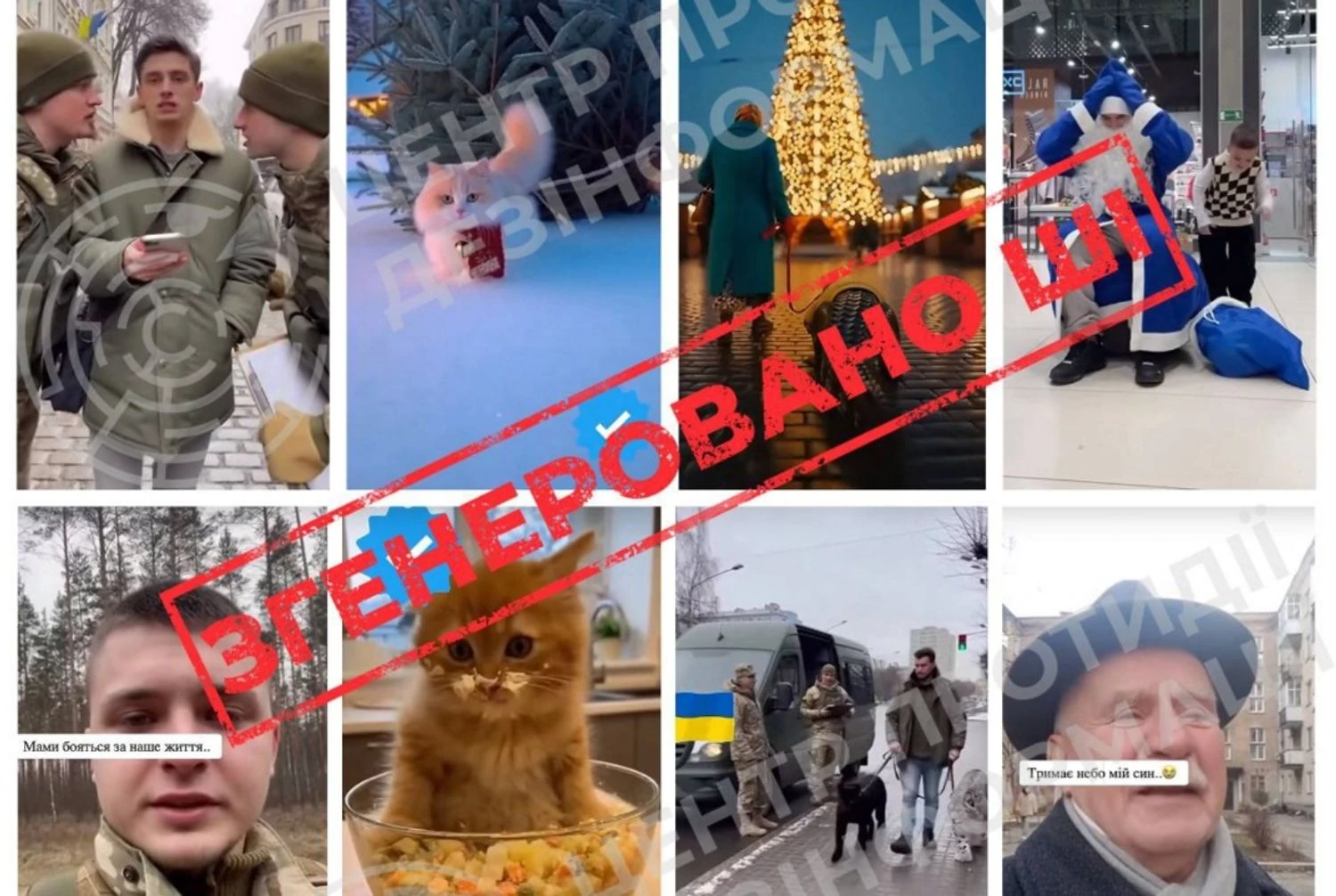
A sophisticated Russian disinformation operation has emerged on TikTok, using artificial intelligence to create emotionally appealing holiday content as a Trojan horse for anti-Ukrainian propaganda, according to Ukraine’s Center for Countering Disinformation (CCD).
Ukrainian officials have identified a pattern of mass account creation ahead of Christmas and New Year celebrations. These accounts initially share AI-generated videos depicting heartwarming holiday scenes—families gathering around festive tables, traditional cooking, and sentimental moments with children and pets.
“The initial content is deliberately designed to evoke feelings of warmth and nostalgia,” a CCD spokesperson explained. “By appealing to universal emotions surrounding holiday traditions, these accounts quickly build credibility and gather followers who see them as authentic voices.”
The operation represents an evolution in Russian information warfare tactics. Once these accounts accumulate substantial followings, they gradually pivot to spreading narratives aimed at undermining Ukrainian morale and social cohesion.
Intelligence officials note three primary propaganda themes emerging after the audience-building phase: undermining Ukraine’s military mobilization efforts, discrediting fallen Ukrainian soldiers, and fostering a general sense of hopelessness among the Ukrainian population.
“This is clearly a planned information operation by the Russian Federation,” the CCD stated in its report. “It’s designed for long-term trust building with fake sources that later promote hostile narratives.”
Social media platforms like TikTok have become critical battlegrounds in the information war running parallel to the physical conflict in Ukraine. With its algorithm-driven content delivery and rapid growth among younger demographics, TikTok provides fertile ground for influence operations that blend entertainment with subtle propaganda.
Digital security experts point out that emotional content performs exceptionally well on social platforms, making holiday themes an effective vehicle for building audience trust before delivering more politically charged messages.
“The use of AI to generate convincing ‘slice of life’ videos marks a concerning advancement,” explained Dmytro Zolotukhin, a Ukrainian information security analyst not affiliated with the CCD. “Previously, identifying fake accounts was easier because the content often looked artificial. Now, AI tools can create videos that appear authentic even to discerning viewers.”
This tactic aligns with broader Russian efforts to destabilize the Ukrainian information environment. The CCD has previously documented similar approaches using AI-generated “pseudo-everyday” content designed to encourage negative sentiments toward Ukrainian military personnel.
The warning comes as digital platforms struggle to identify and counter sophisticated influence operations that evolve faster than platform policies and detection systems. Unlike obvious propaganda, these operations leverage subtle emotional manipulation before introducing divisive content.
Ukrainian officials advise citizens to exercise heightened vigilance when engaging with new social media accounts featuring holiday content, particularly those that seem to have appeared suddenly with polished, emotionally resonant videos.
The CCD also noted in a separate report that the Kremlin is preparing for a potential complete blocking of YouTube within Russia, representing another step in Russia’s ongoing efforts to control its domestic information space and isolate Russian citizens from international digital platforms.
As the holiday season continues, Ukrainian authorities emphasize the importance of media literacy and critical thinking when consuming content online, particularly content that makes strong emotional appeals before shifting to political messaging.
Fact Checker
Verify the accuracy of this article using The Disinformation Commission analysis and real-time sources.

10 Comments
It’s disturbing to see how the Russian government is leveraging technology like AI to create deceptive holiday content as a Trojan horse for their anti-Ukrainian propaganda. This highlights the need for greater regulation and transparency around social media platforms to limit the spread of disinformation.
This is a worrying development, but not entirely surprising given Russia’s history of information warfare. Using AI-generated content to build credibility before shifting to damaging narratives is a particularly insidious tactic. We need to strengthen media literacy and fact-checking efforts to combat this.
This is a disturbing example of how Russia’s disinformation campaigns are evolving to exploit new technologies like AI. Using emotionally resonant holiday content as a Trojan horse to undermine Ukrainian morale is a manipulative and concerning tactic. We must remain vigilant and proactive in our response.
This is a concerning development, as it shows how sophisticated Russian disinformation campaigns have become. Appealing to universal emotions like family and tradition to gain a following, then shifting to harmful narratives – it’s a sneaky and manipulative strategy. Fact-checking and media literacy will be key to combat this.
Agreed. It’s disturbing how they leverage AI to create seemingly authentic content and then pivot to their true agenda. Disinformation is a serious threat that requires constant vigilance and robust countermeasures.
The Russian government’s continued use of disinformation tactics is deeply troubling. Exploiting holiday themes and emotions to spread anti-Ukrainian propaganda is a new low. We must remain vigilant and call out these manipulative practices whenever they emerge.
Interesting to see Russia’s continued disinformation efforts on social media. Using AI-generated holiday content as a Trojan horse is a clever tactic to build credibility before pushing their anti-Ukrainian propaganda. We need to stay vigilant against these kinds of evolving information warfare tactics.
The Russian government’s use of AI-generated holiday content to spread anti-Ukrainian propaganda is a worrying development. It demonstrates the sophistication and adaptability of their disinformation efforts. Strengthening media literacy and fact-checking will be crucial to counter these tactics.
Absolutely. This tactic of building trust through seemingly benign content before pivoting to damaging narratives is deeply concerning. Continued vigilance and robust countermeasures are essential to combat the spread of this kind of disinformation.
This is a concerning example of the evolving tactics used by Russian disinformation campaigns. Leveraging AI-generated content to build credibility and then shifting to harmful narratives is a particularly manipulative strategy. We must remain vigilant and continue to expose these practices.