


Listen to the article
Russia Exploits Global Events to Spread Disinformation, ATAFIMI Report Finds
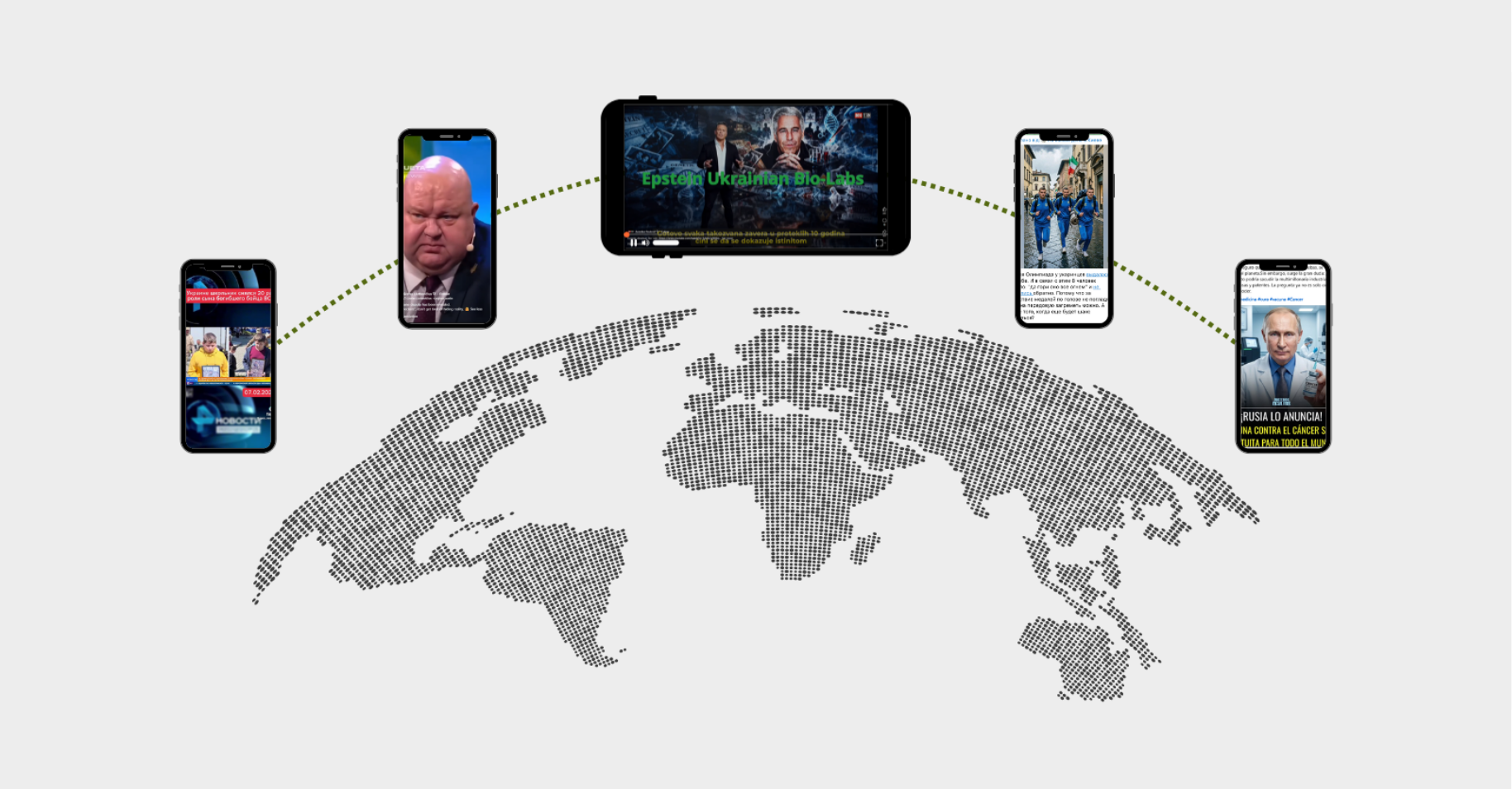
Russian-backed disinformation campaigns have adapted existing narratives to current international events during the first quarter of 2026, according to the latest ATAFIMI project monitoring report. The findings, which cover ten countries across Europe and Latin America, reveal sophisticated tactics targeting Ukraine while promoting a positive image of Russia.
The report, covering January through March 2026, highlights how Russian information manipulation efforts have leveraged high-profile events including the declassification of the Epstein files, Middle East conflicts, the Winter Olympic Games, and the capture of Venezuelan President Nicolás Maduro.
“Beyond promoting criticism of Ukraine, we’re seeing content that seeks to humiliate and parody Ukrainian figures generated with artificial intelligence,” notes the report. This represents an evolution in tactics, combining breaking news exploitation with audience segmentation and targeted content designed to denigrate adversaries.
Among the most prevalent cross-border narratives identified was the exploitation of the Epstein files declassification. TikTok videos amassing over 3 million views falsely claimed Vladimir Putin had “rescued” Ukrainian children or that Russia was investigating Bill Gates over alleged hidden power networks. These narratives recycled pre-existing conspiracy theories about Ukrainian biolaboratories and linked President Zelensky to child trafficking networks.
The U.S. and Israeli actions against Iran were similarly manipulated to fuel anti-Western sentiment. Content detected in Bosnia and Herzegovina, Serbia, and Spain portrayed Russia as Iran’s strategic ally against the West, while conspiracy theories claimed Russia had intercepted shipments of “adrenochrome” on Israeli vessels destined for Hollywood elites.
The Winter Olympic Games provided another vehicle for disinformation, with false claims that Ukrainian athletes were deliberately isolated from other participants or that some had fled rather than return to Ukraine. This content reinforced narratives that the Ukrainian government continues the war at its citizens’ expense.
A notable tactical shift involves the use of AI-generated satirical content to mock Ukrainian officials and military personnel. Accounts like @ua_telemarahvon on TikTok, with over 10,000 followers, create videos showing supposed Ukrainian officials speaking Russian while advocating for Ukrainian language use, or overweight soldiers discussing food shortages. This represents a move from fear-based narratives to ridicule-based approaches.
The report also notes persistent recurring narratives across regions, including personal attacks against Zelensky through false corruption allegations, claims that Ukraine stages propaganda including documented war crimes like the Bucha massacre, and messaging portraying Russian scientific achievements positively while suggesting Western interests block their global distribution.
Country-specific trends reveal tailored disinformation targeting local concerns. In the Balkans, RT Balkan spread hoaxes exploiting historical tensions and identity disputes. In Georgia, corruption narratives about Ukraine reached over 35,000 Facebook users. Lithuania saw disinformation aimed at pitting Ukraine against European allies, while Spain witnessed pro-Russian actors exploiting domestic concerns about immigration.
In Latin America, Argentina experienced amplification of child trafficking narratives linked to Ukraine, while Colombia saw content portraying Russia positively as an international ally countering Western hypocrisy. Mexican audiences encountered claims linking Ukrainian weapons to drug cartels, while Venezuela underwent a structural transformation in how pro-Russian disinformation circulates following Maduro’s capture.
The ATAFIMI project, a collaboration between fact-checking organizations from ten countries, employs a common methodology to identify cross-border disinformation campaigns and narratives circulating simultaneously in Europe and Latin America. The findings illustrate the evolving nature of information warfare and the importance of international cooperation in tracking and countering disinformation.
Fact Checker
Verify the accuracy of this article using The Disinformation Commission analysis and real-time sources.

10 Comments
The exploitation of the Epstein files declassification is a concerning example of how these campaigns can latch onto high-profile issues to spread their agenda. We need to be wary of how they attempt to co-opt legitimate news and events for their own ends.
The use of AI-generated content to denigrate Ukrainian figures is particularly disturbing. It shows the lengths these campaigns will go to in order to create a negative perception of their adversaries. Fact-checking and media literacy are crucial to combat this.
The report’s focus on the tactics of Russian-backed disinformation campaigns is a timely and important piece of analysis. Understanding their evolving methods is crucial for developing effective countermeasures and protecting the integrity of information.
It’s alarming to see how these disinformation campaigns are exploiting major events like the Epstein files and the Winter Olympics. Their ability to adapt existing narratives to current affairs is a concerning trend that requires a robust response.
Interesting report on the evolving tactics of Russian disinformation campaigns. It’s concerning to see how they’re exploiting major global events to push their narratives and sow division. We need to stay vigilant against these manipulative efforts.
This report highlights the need for robust international cooperation to counter Russian disinformation efforts. Sharing intelligence, coordinating responses, and empowering independent media will be key to exposing and disrupting these manipulation tactics.
As someone interested in mining and energy, I’m curious to see how these disinformation campaigns may attempt to target those industries and influence public perception. Vigilance and fact-checking will be essential to protect the integrity of those sectors.
The use of AI-generated content to denigrate Ukrainian figures is a particularly disturbing tactic. It highlights the lengths these campaigns will go to in order to create a negative narrative and undermine their adversaries. Fact-checking and media literacy are essential to combat this.
As someone with a background in mining and commodities, I’m particularly concerned about the potential impact of these disinformation campaigns on public perception and decision-making in those industries. Vigilance and a focus on facts will be crucial going forward.
The report’s findings on the use of audience segmentation and targeted content are particularly concerning. It shows the level of sophistication these campaigns have achieved in tailoring their messaging to different groups. We must remain alert to these evolving tactics.