


Listen to the article
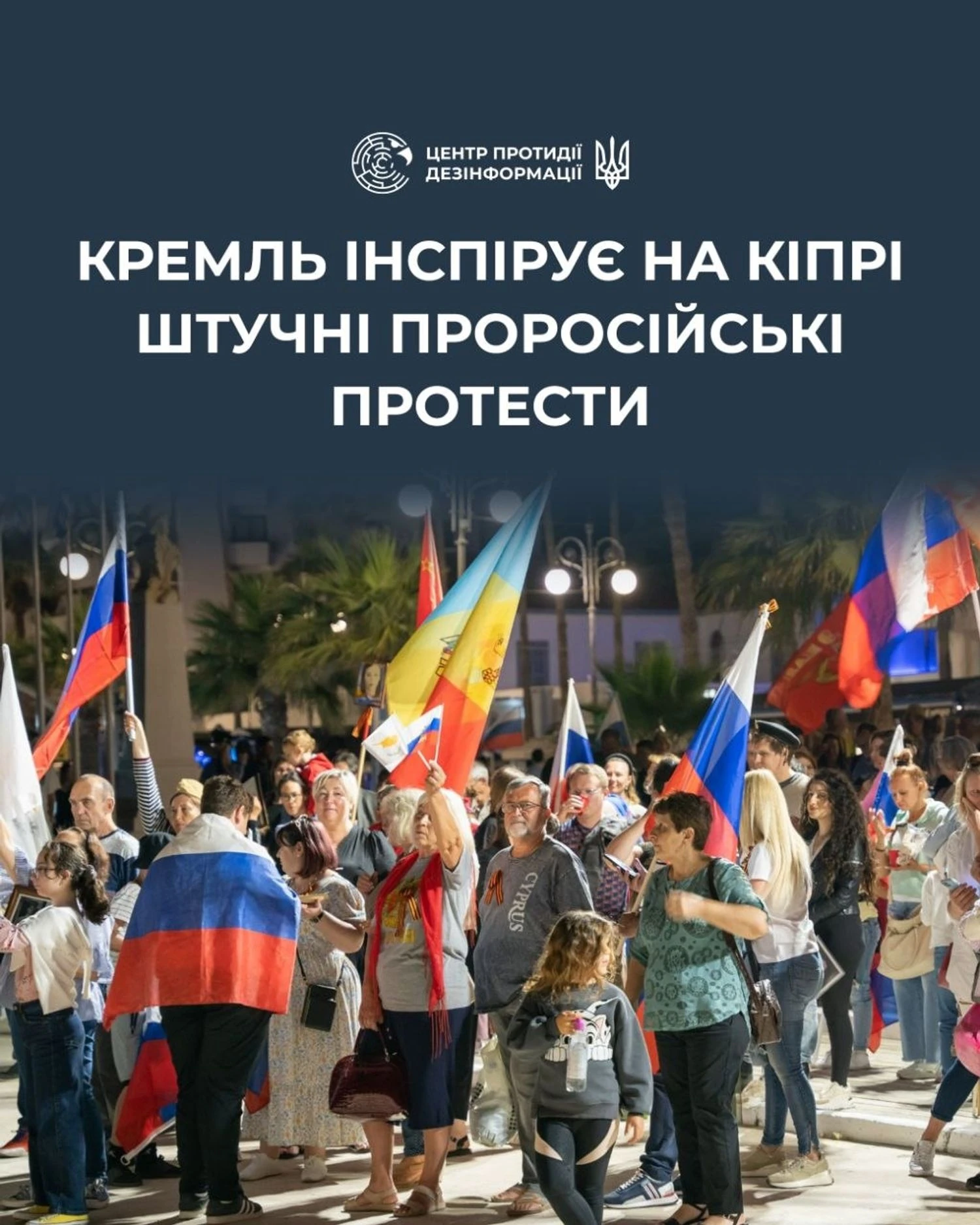
Russian intelligence agencies are orchestrating fake protests in Cyprus against EU aid to Ukraine, according to security officials in Kyiv. The Center for Countering Disinformation of Ukraine’s National Security and Defense Council has revealed that these demonstrations are being coordinated by Russian state actors under the guise of grassroots movements.
According to the Ukrainian security body, multiple Russian entities are involved in organizing the protests, including the Russian embassy in Cyprus, “Rossotrudnichestvo” structures, and various pro-Russian associations. The “Russian Cultural Center” has been identified as the main coordinator of these activities.
“Such organizations, under the guise of cultural projects, purposefully promote Russia’s influence and propaganda outside the country,” the Center reported in its statement.
The artificially manufactured protests are scheduled to run until April 25 and will reportedly adopt anti-war slogans. Their central demand is expected to be “the immediate cessation of financing the war in Ukraine by the EU,” directly targeting the European Union’s recent decision to provide Ukraine with a €90 billion loan.
This Russian influence operation comes at a critical moment when the EU has fulfilled its commitment to provide substantial financial support to Ukraine. European Commission President Ursula von der Leyen recently confirmed that the first tranche of the €90 billion package could be disbursed as early as this quarter, representing a significant boost to Ukraine’s war-torn economy.
Cyprus represents a strategic target for such Russian operations. The island nation has historically maintained cultural and economic ties with Russia, with a substantial Russian expatriate community and significant Russian investments. However, as an EU member state, Cyprus has aligned with European policy on Ukraine and has supported sanctions against Russia following its full-scale invasion in 2022.
“Cyprus systematically supports Ukraine and its territorial integrity, because for it the principle of territorial integrity is also extremely important,” the Center noted, highlighting the parallel concerns that Cyprus has regarding its own territorial disputes.
The Ukrainian security body has confirmed that it has informed EU structures about the artificial nature of these protests and identified the individuals orchestrating them. This early warning is part of Ukraine’s broader efforts to counter Russian disinformation and influence campaigns across Europe.
Russian influence operations have intensified across Europe as Moscow seeks to undermine Western support for Ukraine. Similar patterns of orchestrated protests, disinformation campaigns, and political interference have been documented in multiple European countries since the beginning of Russia’s full-scale invasion.
These influence operations typically aim to exploit existing social divisions, economic concerns, and anti-war sentiment within European societies. By creating the appearance of grassroots opposition to aid for Ukraine, Russian actors hope to pressure European governments to reduce their support and create political complications for continued assistance.
The targeting of the €90 billion aid package is particularly significant as it represents one of the largest financial commitments to Ukraine since the war began. The funds are crucial for maintaining Ukraine’s economic stability and government services amid ongoing Russian attacks on its infrastructure and economy.
Security experts note that Russian cultural centers and related organizations have long served as fronts for intelligence activities and influence operations worldwide. These entities operate under diplomatic protection while conducting activities that go far beyond cultural promotion.
European intelligence agencies have increased their scrutiny of such organizations in recent years, with several countries expelling Russian diplomats and restricting the activities of Russia-affiliated cultural centers due to concerns about espionage and influence operations.
As the war approaches its third year, these information battles highlight that the conflict extends far beyond Ukraine’s borders, playing out in a complex landscape of international politics, public opinion, and financial support networks that are crucial to Ukraine’s continued resistance.
Fact Checker
Verify the accuracy of this article using The Disinformation Commission analysis and real-time sources.

14 Comments
The alleged Russian involvement in these protests in Cyprus is concerning. It seems like a calculated attempt to undermine European support for Ukraine. I hope the authorities can effectively counter this disinformation campaign and maintain public unity on this issue.
You make a good point. Geopolitical conflicts often involve sophisticated information warfare tactics. Careful analysis and transparent communication from authorities will be crucial to combat these efforts to sow division and erode support for Ukraine.
It’s concerning to see Russia allegedly stoking anti-EU sentiment in Cyprus through these protests. Undermining support for Ukraine aid is clearly a priority for the Kremlin. I hope the EU and Cypriot authorities can effectively counter this Russian influence operation.
Absolutely. The EU and its member states need to be vigilant and proactive in identifying and responding to these types of information warfare tactics from Russia. Maintaining public trust and unity is critical during this conflict.
This situation highlights the ongoing information battleground between Russia and the West over the war in Ukraine. Both sides seem to be using various tactics to sway public opinion, which makes it challenging for citizens to get an objective picture. Transparency around the evidence would be valuable.
I agree. Maintaining a balanced and impartial perspective is crucial when dealing with geopolitical conflicts and accusations of disinformation. Careful analysis of credible sources is needed to navigate these complex issues.
This news about Russia funding anti-Ukraine aid protests in Cyprus is really troubling, if true. It’s a clear attempt to interfere in domestic issues and undermine European unity. I hope the authorities can effectively expose and counter this Russian influence operation.
Absolutely. Maintaining a strong, united front against Russia’s aggression in Ukraine is critical. Authorities need to be vigilant in identifying and addressing these kinds of disinformation campaigns that aim to sow discord and erode public support.
Interesting allegations about Russia’s involvement in these protests in Cyprus. It’s concerning to see foreign interference in domestic issues, especially around sensitive topics like the war in Ukraine. I wonder what evidence the Ukrainian security body has to support these claims.
You raise a good point. It would be helpful to see the evidence backing up these allegations before drawing conclusions. Geopolitical conflicts often involve complex information warfare, so it’s important to look at sources critically.
This news about Russia funding anti-Ukraine aid protests in Cyprus is troubling, if true. It’s a reminder of the broader geopolitical tensions and information battles playing out around the war. Careful evaluation of the evidence will be important going forward.
I agree. Navigating these complex issues requires a thoughtful, evidence-based approach. It’s important to avoid jumping to conclusions and to seek out reliable, impartial sources of information.
The claims of Russian involvement in these protests in Cyprus are concerning. It’s a reminder of the larger information war being waged alongside the military conflict in Ukraine. Careful analysis of the evidence and transparent communication will be essential to counter this alleged disinformation campaign.
Well said. Geopolitical conflicts often involve complex dynamics, including the use of information warfare tactics. A measured, evidence-based approach is needed to navigate these issues and maintain public trust.