


Listen to the article
Australian Social Media Flooded with Antisemitic Responses Following London Ambulance Attack
A new study has revealed an alarming surge in antisemitic responses from Australian social media users following a suspected terrorist attack on Jewish emergency vehicles in London.
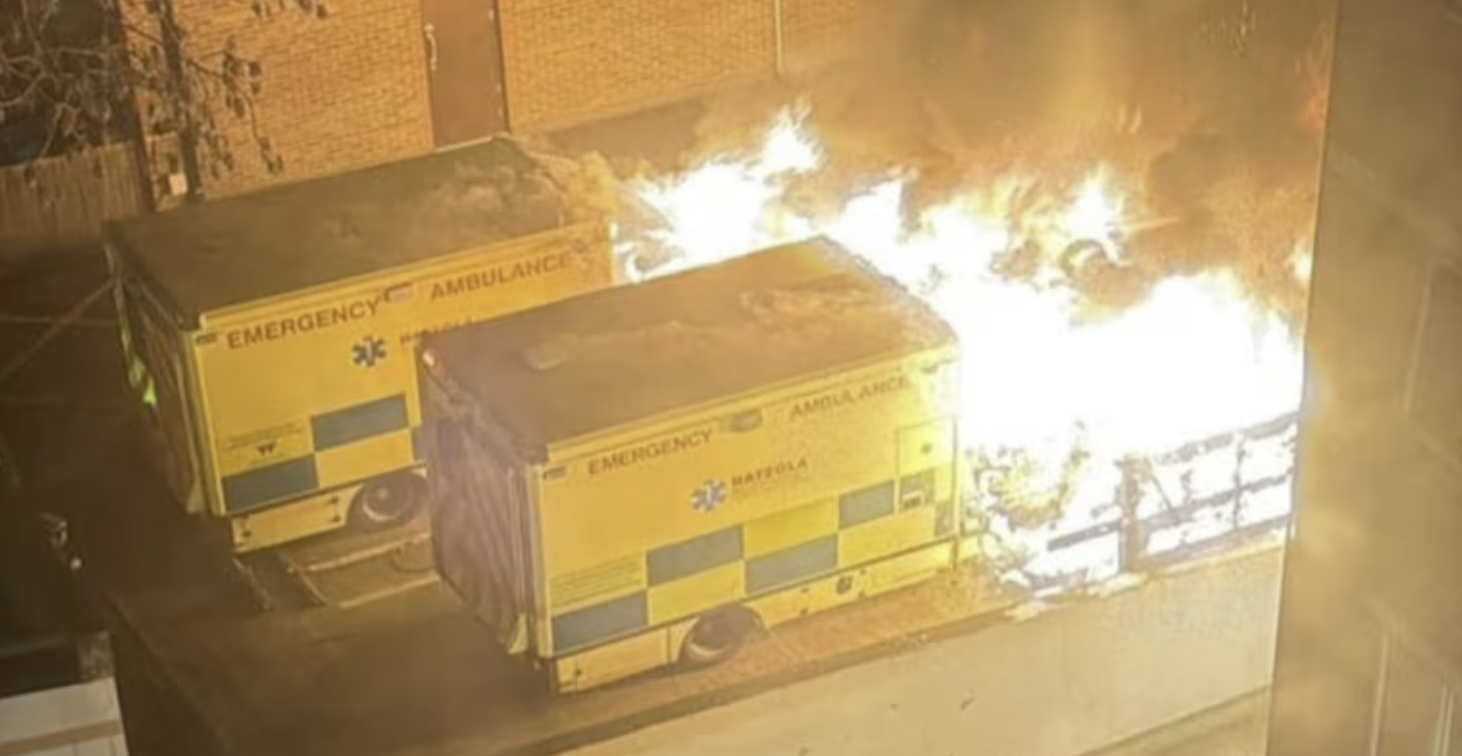
The report, titled “Australian responses to the attack on London ambulances,” analyzes reactions to a Facebook post by the Australian Financial Review about the firebombing of four Hatzolah ambulances in Golders Green on March 23, 2026.
The incident occurred around 1:45 am when attackers set fire to ambulances belonging to Hatzolah (known as Hatzala in the UK), a Jewish-run charity providing free emergency medical care in north London. Golders Green, an area with a significant Jewish population, became the site of what London Metropolitan Police are treating as an antisemitic hate crime.
Counter-terrorism officers are leading the investigation after a group calling itself Harakat Ashab al-Yamin al-Islamiya, linked to the Iranian regime, claimed responsibility via Telegram. The organization has previously claimed attacks on Jewish sites in the Netherlands and Belgium.
Experts from the International Centre for Counter-Terrorism in the Netherlands suggest the pattern indicates Iranian hybrid warfare, which combines physical attacks with coordinated online disinformation campaigns.
Within hours of the Australian Financial Review reporting the incident on March 24, social media reactions and comments surged. By March 28, more than 5,500 reactions had been recorded, with 71 percent using the laughing emoji — not to express humor but to mock or dismiss serious events involving Jewish victims.
Researchers analyzed the first 523 comments posted within 10 hours of the article being shared. About 10 percent had already been removed or deleted. Of the remaining comments, 261 — more than half — were classified as antisemitic.
The most prevalent theme, described as “atrocity distortion,” made up 68.6 percent of the hateful content. These comments claimed the attack was staged by Israel or Mossad to frame Iran or justify military action. Thirty percent of all comments, 153 in total, directly blamed Israel or Mossad. A further 4 percent accused the Jewish community itself, suggesting the ambulances were burned for insurance or other self-serving reasons.
“Atrocity denial” appeared in 13 percent of comments, with users dismissing the attack as fake or propaganda. Traditional antisemitic tropes, including claims of Jewish control of the media or responsibility for the death of Jesus, constituted 10.3 percent of the analyzed comments.
Some users justified the attack as retaliation for Israeli actions, while others openly praised the violence or invoked Holocaust denial narratives.
The report notes these patterns mirror responses seen after the 2025 Bondi Beach terror attack and synagogue arson attacks in Melbourne, where online campaigns sought to shift blame onto Jewish victims.
According to the study, this represents a deliberate Iranian-linked disinformation strategy using “DARVO” — deny, attack, reverse victim and offender — a method that inverts reality to portray perpetrators as victims. By flooding social media with false claims, the strategy aims to reduce public sympathy for Jewish communities, weaken responses to antisemitism, and erode social cohesion.
Hatzolah, founded in New York in 1965 and operating in the United Kingdom since 1979, provides emergency care to all, regardless of faith or ability to pay. Its volunteers were among the first responders at the Bondi attack.
The report calls for Meta to reverse its 2025 decision to scale back automated hate speech detection, which its own data shows led to a significant drop in content removals. It also urges the Australian government to strengthen its Basic Online Safety Expectations and require platforms to address hate in comment sections.
Media outlets are advised to disable comments where moderation is not possible and to train staff to identify antisemitism. The study further recommends a national strategy to counter foreign disinformation campaigns, including public education, greater platform transparency, and stronger action against coordinated inauthentic behavior.
Dr. Oboler, from the report’s publishing organization, warned that unregulated social media is harming society by fueling antisemitism and other forms of hate. He pointed to the proposed under-16 social media ban and recent U.S. court cases as signs of growing awareness but emphasized that more action is needed. He suggested the Royal Commission into Antisemitism and Social Cohesion should examine the issue closely.
The organization behind the report, Australia’s only specialist charity focused on online hate and extremism, has tracked these troubling trends for more than a decade.
Fact Checker
Verify the accuracy of this article using The Disinformation Commission analysis and real-time sources.

13 Comments
This is a concerning report. Disinformation and antisemitic rhetoric following attacks on minority groups is deeply troubling. It’s crucial we counter such hateful narratives with facts and empathy.
Absolutely. Spreading misinformation and scapegoating vulnerable communities only serves to further divide society. We must respond with compassion and promote understanding.
The report highlights the urgent need to address the proliferation of disinformation, particularly when it targets minority groups. We must remain vigilant and work together to counter hateful rhetoric with facts and compassion.
The rise in antisemitic responses from Australian social media users is alarming. We must be vigilant in calling out hate speech and work to promote tolerance and respect for all people.
I agree. Disinformation and extremism can’t be allowed to take hold, especially in the wake of tragic events. Education and fact-based dialogue are key to preventing the spread of harmful narratives.
The report’s findings on the surge in antisemitic responses are extremely concerning. We must remain vigilant in calling out hate speech and work to build a more inclusive, tolerant society.
The targeting of Jewish emergency services is abhorrent. I hope the investigation uncovers the full truth and that the perpetrators are swiftly brought to justice. Hateful ideologies must be confronted head-on.
This report highlights the urgent need to address the proliferation of disinformation, especially when it targets minority groups. Social media platforms must do more to curb the spread of hateful rhetoric.
Completely agree. Tackling disinformation requires a multi-pronged approach involving tech companies, policymakers, and civil society. We must be proactive in shutting down hate speech before it takes hold.
This is a troubling example of how disinformation can spread rapidly in the aftermath of a tragedy. It’s critical that we counter such narratives with facts and promote understanding between all members of the community.
Absolutely. Disinformation and extremism thrive in the absence of truth and empathy. Robust fact-checking and inclusive dialogue are essential to preventing the normalization of hate.
This is a deeply troubling incident. Attacks on minority communities and the subsequent spread of disinformation are unacceptable. We need a concerted effort to promote understanding and counter extremist narratives.
Agreed. Disinformation and scapegoating can have dire consequences. Fact-based, compassionate responses are crucial to prevent further escalation and protect vulnerable groups.