


Listen to the article
Iranian Women’s Rights Crisis Deepens Under Ayatollahs’ Rule, Experts Warn
Iranian women face increasingly deteriorating conditions under the Islamic Republic’s regime, according to prominent experts speaking at the recent Women of the State conference. Dr. Tamar Eilam Gindin and Hanna Jahanforooz provided sobering insights into the current struggle for basic human rights in Iran, painting a picture of a population under intense government pressure.
“What we’re witnessing isn’t simply about the hijab—it’s about fundamental human rights,” explained Dr. Gindin, a renowned Iran specialist. She emphasized that the ongoing protests have evolved beyond dress code requirements into a broader movement challenging the regime’s oppressive policies toward women.
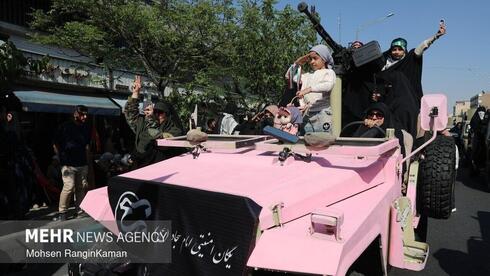
Jahanforooz, who brings firsthand knowledge of the situation, revealed disturbing details about the regime’s propaganda tactics. According to her testimony, many women seen in pro-government demonstrations without hijabs were actually political detainees forced to participate. “These women aren’t free participants showing support for the regime. They’re prisoners being exploited for propaganda purposes,” she stated.
The experts noted that conditions for Iranian women have steadily deteriorated since the 1979 Islamic Revolution, with recent years seeing particularly harsh crackdowns. The death of Mahsa Amini in September 2022 while in custody of the morality police sparked nationwide protests that continue despite brutal government suppression.
Iran’s security forces have responded to demonstrations with escalating violence. Human rights organizations document over 500 protesters killed since 2022, with thousands more detained in facilities notorious for torture and forced confessions. Women activists face particularly severe treatment, including sexual violence as an interrogation tactic.
Economic sanctions have further complicated the situation for ordinary Iranians. While intended to pressure the regime, these measures have contributed to rising poverty rates disproportionately affecting women, who face significant barriers to employment and financial independence under current laws.
The conference also highlighted the regime’s digital surveillance capabilities. “Technology that could liberate has become another tool of oppression,” Dr. Gindin noted. Social media platforms, while crucial for organizing resistance and documenting abuses, are heavily monitored by authorities who use online activity as evidence for arrests.
International response has been mixed, with some nations imposing targeted sanctions against Iranian officials while others maintain economic partnerships with the country. Human rights advocates argue that stronger, more coordinated global pressure is needed to effect meaningful change.
Despite these challenges, resistance continues both inside Iran and among diaspora communities worldwide. Underground networks provide support to women activists, while international advocacy groups work to keep global attention focused on the ongoing crisis.
“What’s remarkable is the courage displayed by ordinary Iranian women who know the severe consequences they face,” Jahanforooz observed. “Many are willing to risk everything for basic freedoms that much of the world takes for granted.”
The movement has also inspired unprecedented solidarity across Iran’s diverse population. Traditional divisions along ethnic, religious, and class lines have diminished as citizens unite against government oppression. Young people, in particular, are rejecting the strict religious interpretations imposed by the regime.
Experts predict continued unrest as economic conditions worsen and the government shows no signs of meaningful reform. The current Supreme Leader Ali Khamenei, now in his 80s, has maintained a hardline stance, while potential successors appear equally committed to preserving the status quo.
The Women of the State conference concluded with calls for increased international support for Iranian women’s rights activists and greater diplomatic pressure on the regime. As Dr. Gindin summarized: “The struggle in Iran isn’t just about women’s rights—it’s about human dignity and the universal right to self-determination.”
Fact Checker
Verify the accuracy of this article using The Disinformation Commission analysis and real-time sources.

25 Comments
If AISC keeps dropping, this becomes investable for me.
Good point. Watching costs and grades closely.
Good point. Watching costs and grades closely.
I like the balance sheet here—less leverage than peers.
Good point. Watching costs and grades closely.
I like the balance sheet here—less leverage than peers.
Good point. Watching costs and grades closely.
The cost guidance is better than expected. If they deliver, the stock could rerate.
Nice to see insider buying—usually a good signal in this space.
Good point. Watching costs and grades closely.
Silver leverage is strong here; beta cuts both ways though.
If AISC keeps dropping, this becomes investable for me.
Nice to see insider buying—usually a good signal in this space.
Good point. Watching costs and grades closely.
Good point. Watching costs and grades closely.
Exploration results look promising, but permitting will be the key risk.
The cost guidance is better than expected. If they deliver, the stock could rerate.
Good point. Watching costs and grades closely.
Uranium names keep pushing higher—supply still tight into 2026.
Good point. Watching costs and grades closely.
Production mix shifting toward Propaganda might help margins if metals stay firm.
Good point. Watching costs and grades closely.
Good point. Watching costs and grades closely.
The cost guidance is better than expected. If they deliver, the stock could rerate.
Good point. Watching costs and grades closely.