


Listen to the article
The Sultan of Perak has issued a stark warning to religious leaders worldwide, urging them to recognize that artificial intelligence algorithms are now competing with traditional faith authorities for the attention and trust of young people. Speaking at a major international gathering, Sultan Nazrin Shah emphasized that the battle for youth engagement is increasingly taking place on digital platforms that religious institutions neither control nor fully understand.
Addressing the 3rd International Summit of Religious Leaders in Kuala Lumpur, the Sultan described a sobering reality facing faith communities globally. Young people today are navigating multiple crises simultaneously, from climate anxiety and global conflicts to economic instability, all while searching for meaning, belonging, and sources of trust in an increasingly fragmented world.
The demographic stakes could not be higher. Sultan Nazrin pointed out that nearly 1.8 billion young people constitute the largest generation in human history, with Muslims representing the youngest major faith community among them. Despite their numbers and influence, he argued that religious institutions have failed to adequately include youth in decision-making processes.
“We have spent a great deal of time talking about young people, and far too little time listening to them and sharing power with them,” the Sultan said. He highlighted a phrase now commonly used by young peacebuilders themselves, noting that it “should sting us” as they ask to be treated as co-creators rather than mere consultants. The call represents a fundamental shift in how religious leadership must approach intergenerational engagement.
The Sultan painted a vivid picture of the competition faith leaders face in the digital age. Violent extremists, he warned, are actively recruiting young people using the same language and scriptures that traditional religious authorities employ, but with a crucial difference. These extremists skillfully manipulate young people’s hunger for meaning, purpose, and dignity, redirecting it away from mercy and toward grievance.
“He offers the sense of belonging that comes from having an imagined enemy,” Sultan Nazrin explained. “If all we offer in return is a sermon young people find remote, in a language they have stopped speaking, delivered inside a building they have stopped entering, then we have come armed with a manuscript to a contest being fought on iPhones.”
The analogy underscores the urgency of the situation facing religious institutions. In an era where algorithms curate content specifically designed to capture attention and shape beliefs, traditional methods of religious instruction risk becoming obsolete if they fail to adapt to how young people actually consume information and form communities.
Drawing on recent papal guidance, Sultan Nazrin referenced Pope Leo XIV’s encyclical, Magnifica Humanitas, which addresses the challenges of preserving human dignity in the age of artificial intelligence. The Sultan emphasized a key distinction from that document: while screens can deliver vast amounts of information, only human beings can deliver genuine meaning.
Global trust indicators paint a troubling picture that amplifies these concerns. According to the 2026 Edelman Trust Barometer cited by the Sultan, seven in ten people worldwide are hesitant to trust someone with different values or beliefs. Even more concerning, only one in three people believe the next generation will enjoy better circumstances than the current one. These findings suggest a crisis of confidence that religious leadership is uniquely positioned to address.
Sultan Nazrin argued that faith traditions, at their best, teach people to look beyond themselves and recognize the inherent dignity and moral worth of all human beings. This perspective becomes increasingly vital in a world where people are often reduced to consumers, competitors, or digital avatars rather than being seen as complete persons.
The path forward, according to the Sultan, requires religious leadership to be simultaneously rooted in inherited wisdom and responsive to contemporary realities. Each generation encounters new circumstances and asks new questions that demand thoughtful engagement rather than rigid repetition of old answers or abandonment of core principles.
“The task is not to dilute faith for our youth, nor to abandon inherited wisdom, but to bring that wisdom into living conversation with the conditions of the present world,” he stated.
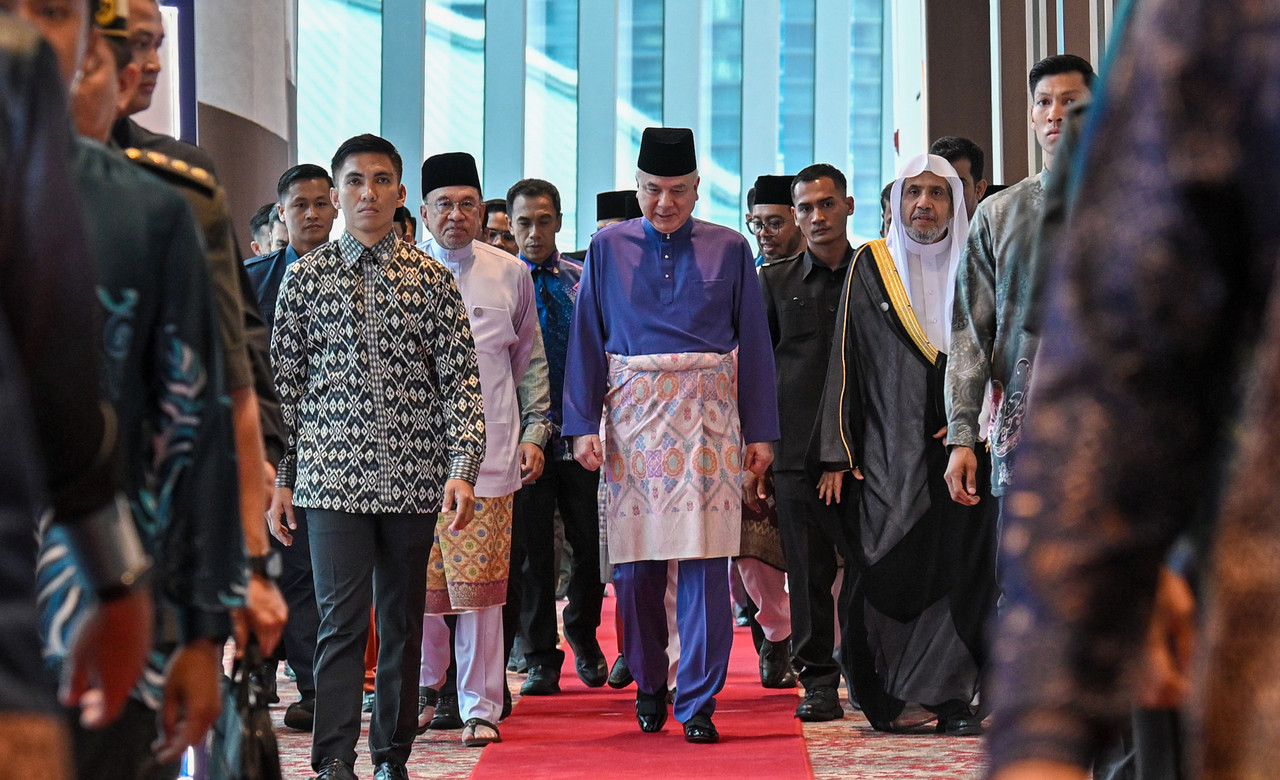
The summit, jointly organized by Malaysia’s Department of Islamic Development and the Muslim World League, brought together approximately 1,500 scholars, policymakers, and religious leaders from 31 countries. Also in attendance were Malaysian Prime Minister Datuk Seri Anwar Ibrahim, Muslim World League Secretary-General Sheikh Dr Mohammad Abdul Kareem Al-Issa, and Minister for Religious Affairs Datuk Dr Zulkifli Hasan. The gathering’s theme, “Religious Leaders and Youth Empowerment: Advancing Coexistence and Social Harmony,” reflects growing international recognition that youth engagement represents both a challenge and an opportunity for faith communities worldwide.
Fact Checker
Verify the accuracy of this article using The Disinformation Commission analysis and real-time sources.

11 Comments
I like the balance sheet here—less leverage than peers.
Exploration results look promising, but permitting will be the key risk.
Good point. Watching costs and grades closely.
Good point. Watching costs and grades closely.
Nice to see insider buying—usually a good signal in this space.
Good point. Watching costs and grades closely.
Good point. Watching costs and grades closely.
Nice to see insider buying—usually a good signal in this space.
Exploration results look promising, but permitting will be the key risk.
Good point. Watching costs and grades closely.
Exploration results look promising, but permitting will be the key risk.