


Listen to the article
In a significant move to battle the rising tide of digital misinformation, the Manila Standard has joined forces with the Presidential Communications Office (PCO) and eight other major Philippine publications in a coordinated effort to fight fake news across digital and social media platforms.
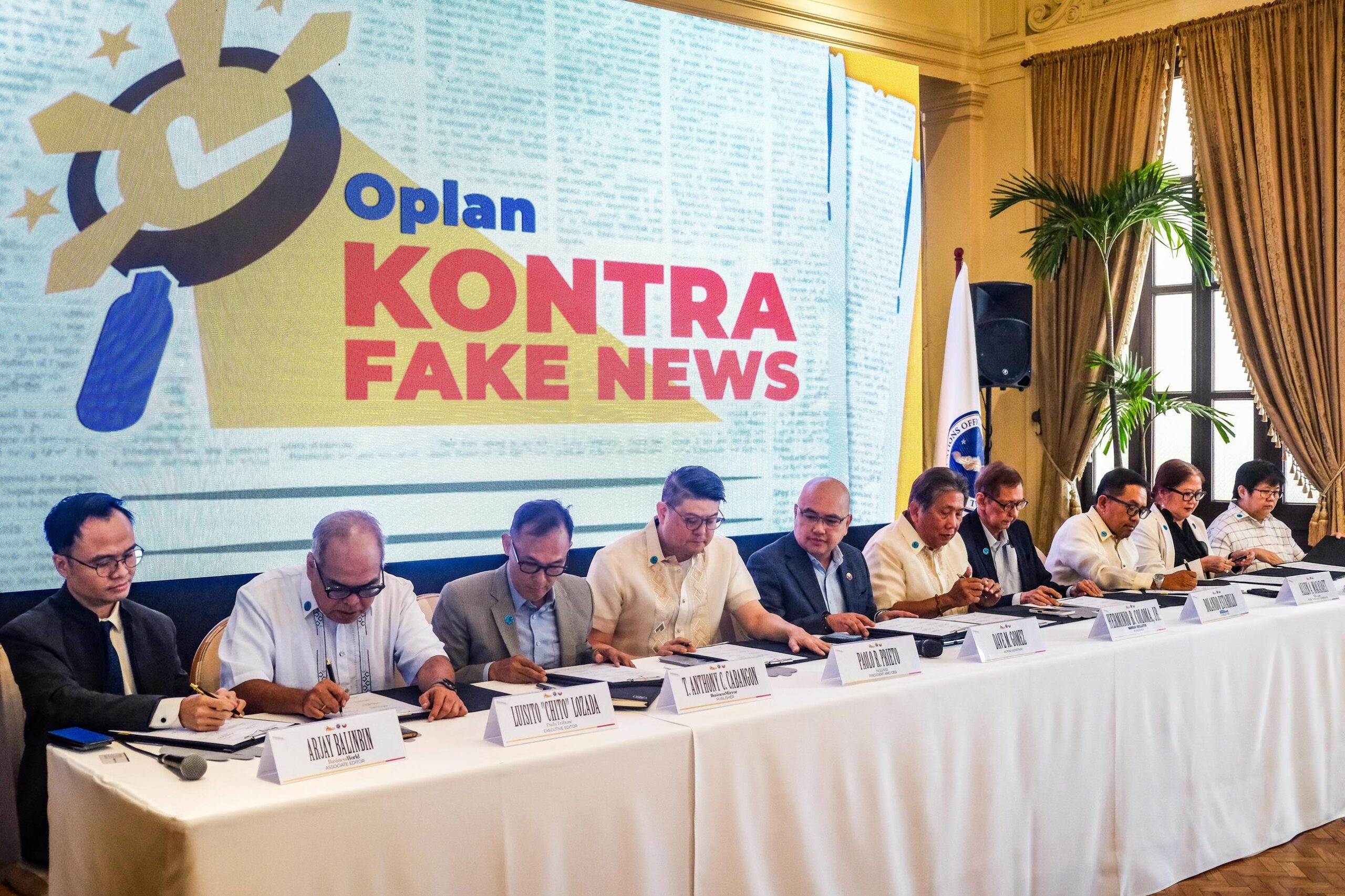
The coalition formalized their commitment on Wednesday by signing a Memorandum of Understanding that establishes “Oplan Kontra Fake News,” a nationwide initiative designed to promote transparency, enhance media literacy, and encourage fact-based reporting and responsible information sharing.
PCO Secretary Dave M. Gomez emphasized the importance of this collaboration in strengthening public confidence in legitimate news sources while preserving press freedom.
“Disinformation thrives in darkness—in confusion, distortion, and deliberate deceit. But truth has always been like daylight,” Gomez stated during the signing ceremony. “Just as a magnifying glass focuses sunlight to reveal what is hidden, this collaboration concentrates the light of verified information, sharpening clarity and exposing falsehoods. In shining that light, we dispel the shadows where fake news attempts to hide.”
The agreement brings together a powerful coalition of the country’s most influential news organizations, including Manila Standard, Business Mirror, Business World, Daily Tribune, Malaya Business Insight, Manila Bulletin, Philippine Daily Inquirer, The Manila Times, and The Philippine Star. Each publication has committed to upholding accurate reporting standards while maintaining their editorial independence.
This initiative comes at a critical time when the Philippines, like many countries globally, faces increasing challenges from digital misinformation that can rapidly spread through social media channels. The proliferation of fake news has become particularly concerning in a country where social media usage rates are among the highest in the world, with approximately 76 million active users as of 2023.
Under the MOU, fake news is specifically defined as content that lacks factual foundation or is materially misleading, is deliberately created or shared with intent to deceive, and has the capacity to cause public harm. Such harm includes inciting panic, provoking violence, damaging reputations, or interfering with democratic processes.
The campaign establishes several concrete objectives, including strengthening systems for verified information dissemination, advancing media and information literacy among the public, enabling quick responses to disinformation during crises, and creating clear channels for verifying claims circulating on social media platforms.
To implement these goals, the PCO has established a dedicated Anti-Fake News Desk where both the public and media partners can report suspicious content. Reports received will undergo evaluation and, when warranted, be referred to appropriate government agencies such as the Department of Information and Communications Technology or the Department of Justice for further action.
The PCO has also indicated that it plans to pursue individuals and organizations responsible for spreading false information online. Additionally, the office will coordinate with major tech platforms including Meta and Google to counter coordinated disinformation campaigns and promote accountability in digital spaces.
Media analysts view this collaboration as potentially transformative for Philippine journalism, particularly as the country approaches future election cycles when disinformation typically intensifies. The initiative represents one of the most comprehensive public-private partnerships to address fake news in Southeast Asia.
While the campaign has been broadly welcomed, some press freedom advocates have expressed caution, emphasizing the need for any anti-fake news measures to be implemented with careful safeguards to prevent potential overreach that could inadvertently restrict legitimate journalism or free expression.
The success of “Oplan Kontra Fake News” will likely depend on the coalition’s ability to maintain editorial independence while effectively coordinating efforts to identify and counter deliberately false information that threatens public welfare.
Fact Checker
Verify the accuracy of this article using The Disinformation Commission analysis and real-time sources.

10 Comments
This seems like a positive step, but I wonder about potential challenges in terms of defining ‘fake news’ and ensuring the process remains objective and transparent.
That’s a fair point. Defining the boundaries and criteria for identifying misinformation will be crucial to maintaining the credibility of this initiative.
Fake news can have serious consequences, especially in the digital age. This initiative to promote transparency and responsible information sharing is a welcome development.
Absolutely. Shining a light on falsehoods and dispelling the shadows where misinformation thrives is crucial for maintaining the integrity of news and information.
Glad to see the media and government working together on this issue. Promoting media literacy and fact-based reporting is essential for a well-informed public.
Curious to see how this coalition between the government and major media outlets will unfold in practice. Strengthening public confidence in legitimate news sources is an important goal.
Yes, the details of how they plan to implement this campaign will be interesting to follow. Preserving press freedom while combating fake news is a delicate balance.
It’s good to see major Philippine publications coming together with the government to tackle this issue head-on. Collaboration between the media and authorities can be an effective way to combat the spread of misinformation.
I agree, the ‘Oplan Kontra Fake News’ campaign sounds like a positive step. Fact-based reporting and media literacy are key to countering the damaging effects of fake news.
This is an important initiative to combat the growing problem of fake news and disinformation. Empowering legitimate media sources to expose falsehoods and promote transparency is crucial for maintaining public trust.